Buckthorn Removal Services in Grayslake, IL
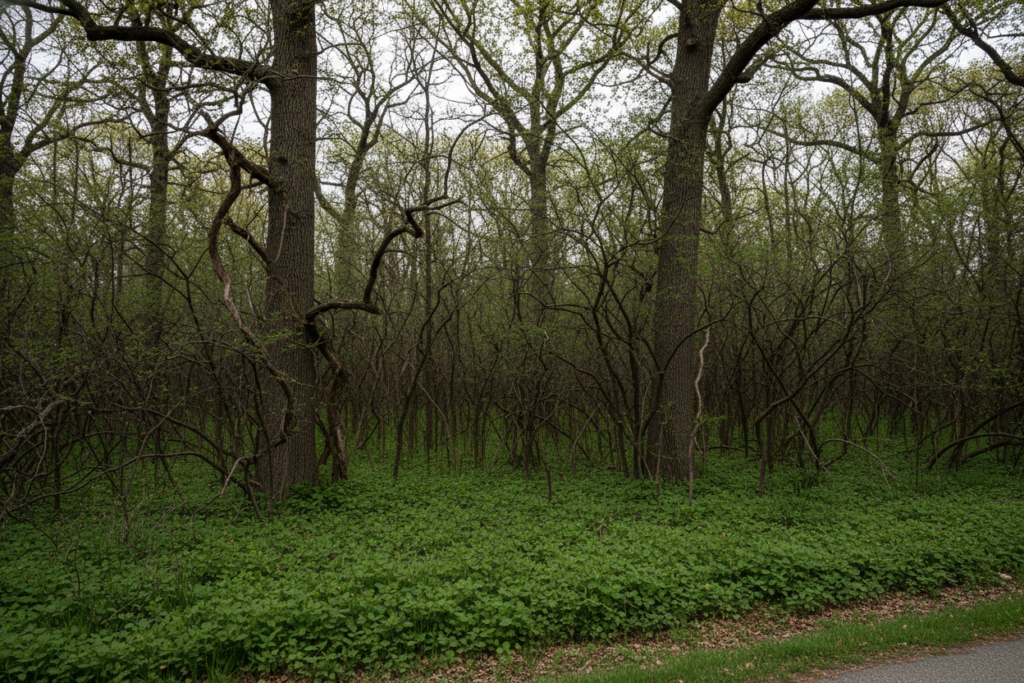
Buckthorn removal in Grayslake starts with one hard fact. If you only cut it down, it comes back. Buckthorn is the shrub that turns a Lake County backyard or woodlot into a dark wall of stems where nothing else grows. Birds eat the black berries and drop the seeds everywhere, so one plant at the fence line turns into hundreds within a few years.
A lot of people find that out the hard way. They cut it, it grows back thicker, and now there’s more of it than before.
That is the only thing this page is about: getting buckthorn off your property and keeping it off. Eubanks Environmental is a Grayslake company on Route 45, and we remove buckthorn on properties all over Lake County. If your property has other problem plants too, our invasive plant management service covers the full list.
TLDR:
- Buckthorn removal in Grayslake means cutting every stem and treating each stump the same day so it can’t resprout
- Small seedlings get pulled by hand, roots and all
- Late fall is the easiest time to find it, because buckthorn stays green after native plants drop their leaves
- Seeds already in the soil keep sprouting for a few years, so follow-up visits are part of the job
- Replanting the cleared ground with native plants is what keeps buckthorn from taking it back
- Price depends on how thick it is, how big the area is, and how easy it is to get to
How Do You Know It’s Buckthorn?
A lot of people have lived next to buckthorn for years without knowing its name. It looks like a normal shrub or small tree. That is part of the problem.
Here is what we look for when we walk a property:
- Leaves that stay green late. In November, when the oaks and maples are bare, buckthorn is often still green. From the road it looks like a green band at the bottom of the woods.
- Black berries. Female plants carry small dark berries in late summer and fall, sometimes all winter.
- A thorn at the tip. Common buckthorn often has a short sharp spike at the end of a twig.
- Orange inside. Scrape the bark with your thumbnail and the wood underneath is bright orange-yellow.
There are two kinds in Lake County. Common buckthorn grows in yards, fence lines and woods. Glossy buckthorn likes wet ground, so we see it near ponds, wetlands and lake edges. They are handled the same way.
If you’re not sure what you have, have us walk it. It takes a few minutes to tell, and it saves you from cutting the wrong shrubs.
How We Remove Buckthorn
The method depends on the size of the plant.
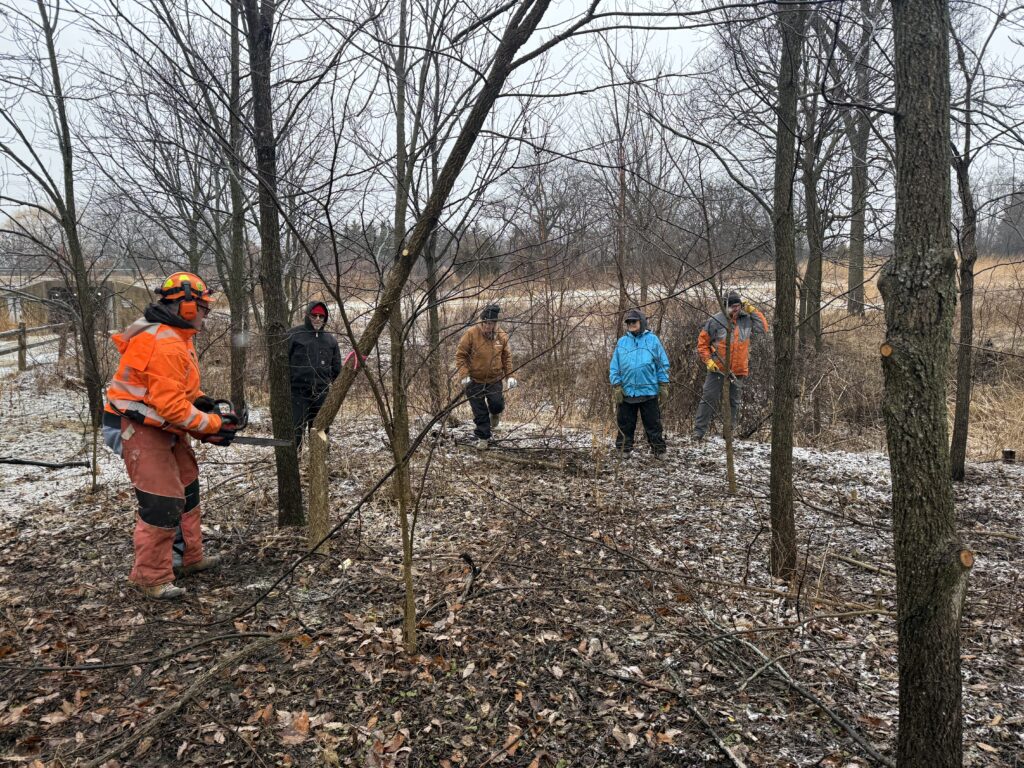
Seedlings and small plants. Anything small enough to pull, we pull. The whole root has to come out. If a piece of root breaks off in the ground, it can sprout again.
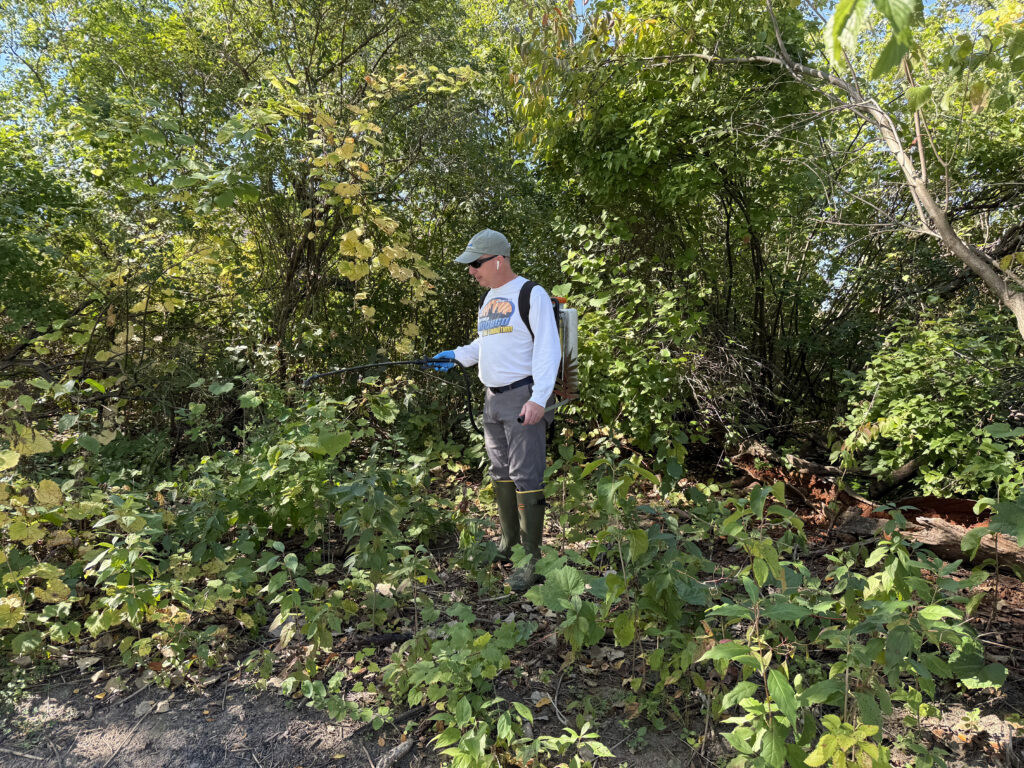
Shrubs and small trees. We cut them low to the ground, then treat the fresh stump with herbicide right away. This step is the whole job. A stump left alone sends up a bunch of new shoots by the next summer. Treated stumps don’t.
Big, thick stands. On a property where buckthorn has taken over, we work in sections. We clear one area, treat it, and move on, so you see real progress and the cleared ground doesn’t sit bare.
We are careful around the plants you want to keep. Herbicide goes on the cut stumps, so the oaks, natives and garden beds next to the buckthorn are left alone.
When we’re done, you can see through your woods again. People are usually surprised at how much room they had.
Why Does Buckthorn Grow Back After Cutting?
Buckthorn is built to survive being cut. Its root system stays alive under the ground. Cut the top off and the roots push up new stems from the stump, often several where there used to be one. That’s why a hedge of buckthorn that gets trimmed every year just gets thicker.
Then there’s the seed in the soil. A property that has had buckthorn for years has thousands of seeds sitting in the dirt. When you open up the ground and let light in, those seeds sprout. This is normal, and it’s why the first year after removal you will see little seedlings popping up.
None of this means removal failed. It means the job has two parts: kill the big plants, then keep after the seedlings until the seed in the ground runs out. That usually takes a few seasons.
When buckthorn comes back after a removal, it’s almost always because the stumps weren’t treated or nobody came back for the seedlings. We plan for both from the start.
When Is the Best Time to Remove Buckthorn?
You can cut buckthorn most of the year, but late fall and winter are the best time for most properties.
Here’s why:
- It’s easy to find. Buckthorn holds its leaves into November. Everything else is bare, so the buckthorn stands out and nothing gets missed.
- Less damage to everything else. Native plants are dormant. Walking through the woods and dragging brush out does far less harm in cold weather.
- Frozen ground helps. Hard ground holds up better under foot traffic and equipment than wet spring soil.
- No nesting season. Birds aren’t nesting in the brush in winter.
Spring and summer work still happens, especially pulling seedlings and follow-up visits. Seedlings are easier to pull when the soil is soft after rain.
If you’re reading this in the fall, now is a good time to call. If it’s spring, it still makes sense to get on the schedule and start with what can be done now.
What Happens After the Buckthorn Is Gone?
Clearing the buckthorn is the first step, not the last one. Bare ground left on its own fills back in, and usually with more buckthorn or other weeds.
After removal we come back to check the area. We pull or treat new seedlings before they get big enough to make berries. Each visit there are fewer of them.
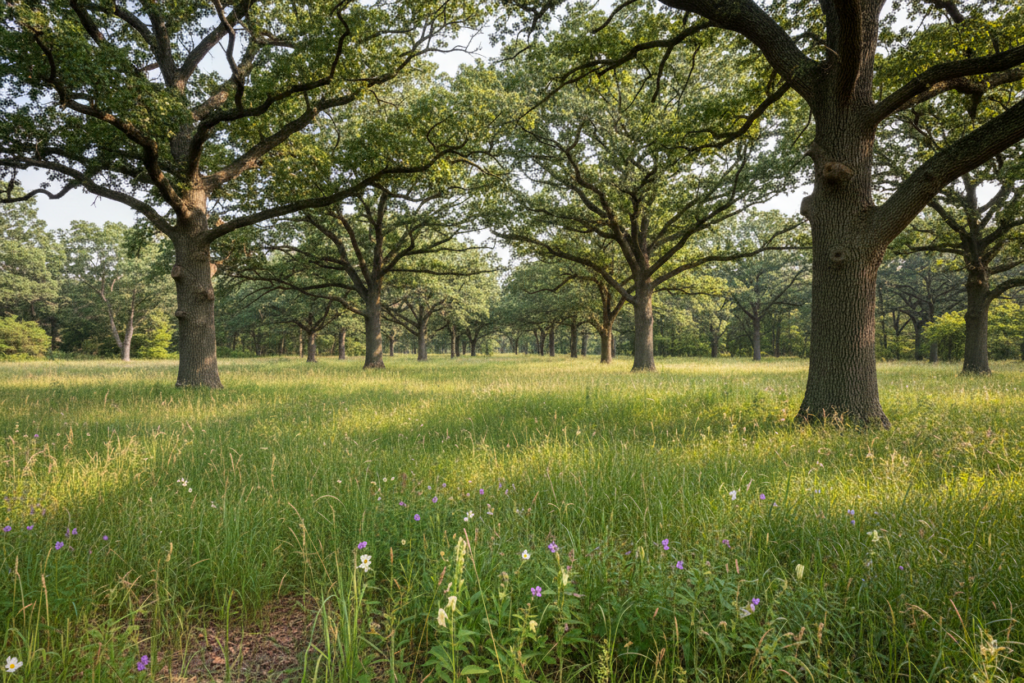
The best long-term fix is to fill the space with plants that belong here. Native grasses, wildflowers, shrubs and young oaks shade the ground and take up the room buckthorn would use. We do that work too, so the same team that clears the property can handle the native planting that comes next.
On some larger properties, a prescribed burn is part of keeping woody seedlings down once the buckthorn is gone. We can talk through whether that fits your land.
What Does Buckthorn Removal Cost?
Two yards that look alike can be very different jobs. Here’s what changes the price:
- How much area. A fence line is a different job than two acres of woods.
- How thick it is. A few shrubs go fast. A solid wall of 15-foot buckthorn takes a lot more cutting and treating.
- How big the plants are. Seedlings get pulled. Trunks need a saw and more stump treatment.
- How easy it is to get to. Slopes, wet ground, ravines and tight spaces between houses slow the work down.
- What happens to the brush. Cut buckthorn has to go somewhere. We’ll go over the options for your property.
- Follow-up and replanting. Return visits and native planting are part of most plans.
Catching it early always costs less. A few shrubs this year is a short visit. The same shrubs left alone become a thicket that takes days.
The easiest way to get a real number is to have us walk the property. We’ll tell you what’s there, what it will take, and what it costs.
Why Grayslake Homeowners Choose Eubanks Environmental for Buckthorn Removal
We are local. Our office is at 34121 N US Route 45 in Grayslake, and we work on properties all over Lake County, including Round Lake, Lake Villa, Libertyville, Mundelein, Gurnee, Antioch and Wauconda.
We are a restoration company, not a lawn service that also cuts brush. The same team handles removal, stump treatment, follow-up, native planting and prescribed burns. You don’t have to hire three companies and hope they agree.
We also tell you the truth about time. Buckthorn doesn’t disappear in one weekend. We’ll tell you how many seasons your property needs and what each visit is for.
And we’re members of Landscape Illinois, the state trade group for landscape professionals.
If you’d like to see the rest of what we manage, here’s our page on other invasive plants like honeysuckle and garlic mustard.
Frequently Asked Questions
How much does buckthorn removal cost?
It depends on the size of the area, how thick the buckthorn is, how big the plants are and how easy the ground is to reach. A short fence line costs much less than acres of woods. We walk the property and give you a real price. Here’s what goes into the price.
Will buckthorn grow back after cutting?
Yes, if the stump isn’t treated. Cut buckthorn sends up new shoots from the root. We treat every cut stump the same day and come back for the seedlings that sprout from seed in the soil. More on why cut buckthorn comes back.
What is the best time of year to remove buckthorn?
Late fall and winter for most properties. Buckthorn stays green after other plants drop their leaves, so it’s easy to find, and the ground and native plants handle the work better while dormant. See month-by-month timing.
What should I plant after removing buckthorn?
Native plants that fill the space and shade the ground, like native grasses, wildflowers, shrubs and young oaks. Bare ground left alone fills back in with buckthorn. Here’s what to plant in the cleared space.
Ready to Get Rid of Your Buckthorn?
The first step is a walk of your property. We’ll find the buckthorn, show you what it is, and tell you how much of your land it covers.
From there you get a plan and a price: what we cut, how we treat the stumps, when we come back, and what we plant. The Illinois Department of Natural Resources has a good overview of invasive plants in Illinois if you’d like to read more first.
Call Eubanks Environmental at (847) 456-5604 or send us a message. Buckthorn removal is available throughout Grayslake and Lake County.