Professional Shoreline Restoration in Grayslake, IL
Shoreline restoration in Grayslake doesn’t announce itself. It starts quietly. A few inches of bank washing away after a storm, some exposed roots where there used to be solid ground. By the time most homeowners notice, the problem is already years in the making. Waves, ice heave, and runoff have been undercutting banks season after season while the yard looked fine from the house.
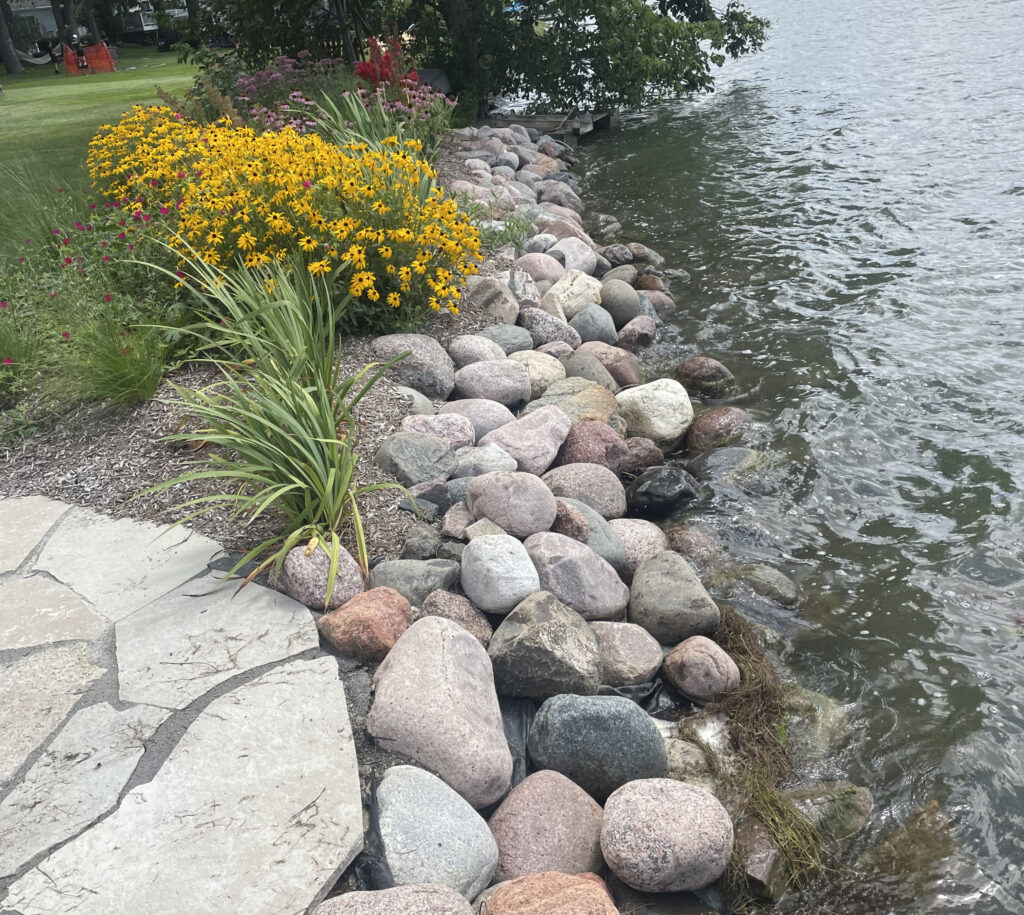
We stabilize shorelines using deep-rooted plantings, terracing, and bioengineering methods that actually work in Lake County conditions. Not the quick fix that looks good for one season then fails. The kind of shoreline stabilization that improves year-round as root systems develop, water quality improves, and wildlife comes back to a lakeshore that was slowly losing ground.
TLDR:
- Shoreline erosion in Grayslake is caused by wave action, ice heave, runoff, and missing ground cover. Each requires a different solution
- Deep-rooted grasses and sedges provide better long-term bank stabilization than rock or concrete alone
- Terracing and slope grading slow water movement and create stable areas for new growth
- Bioengineering techniques like brush layering, live stakes, and coir logs provide immediate erosion control while roots take hold
- Proper installation timing and seasonal scheduling determine whether the process succeeds or fails
- Restored shorelines become self-maintaining by year three. Wildlife habitat and water quality both improve over time
- Most shoreline work in Lake County requires permits. We handle the entire process
Restoring Your Shoreline Permanently
Understanding Your Waterfront Erosion Problem
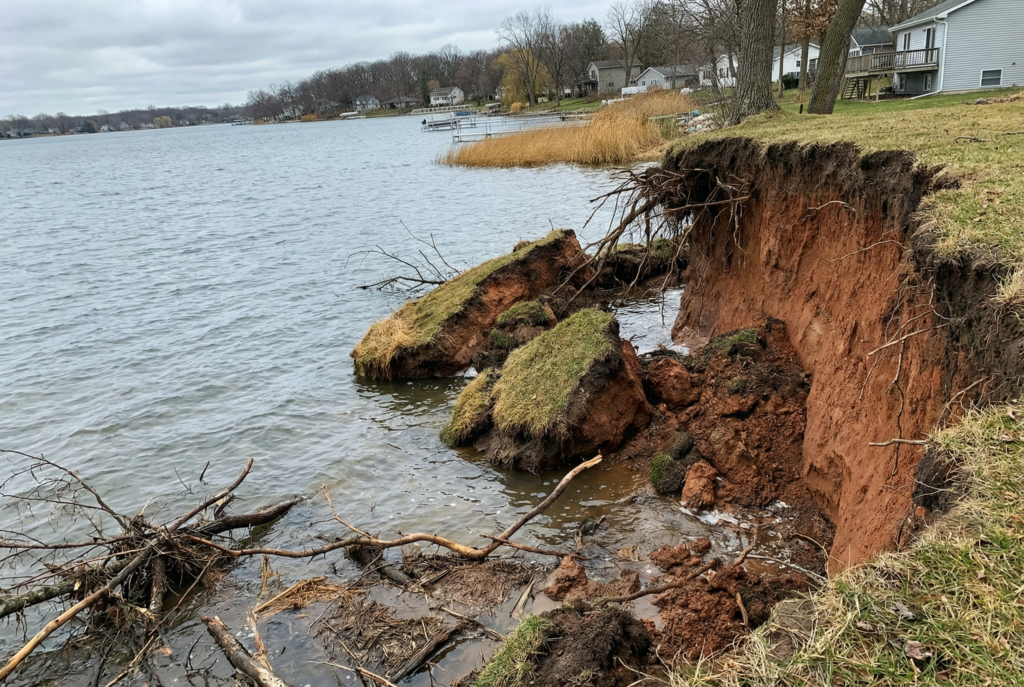
Providing shoreline restoration services in Grayslake means understanding that bank loss happens for specific reasons on every lakeshore property. Wave action undercuts banks. Winter ice pushes soil during freeze-thaw cycles. Runoff channels water down slopes carrying topsoil into the lake. Bare ground means nothing holds soil in place. We evaluate what’s causing damage on your property, including slope angle, soil type, existing ground cover, water depth at the shore, and drainage from upland areas.
A boat dock with heavy traffic creates different problems than a quiet sandy stretch with no watercraft. Different causes need different solutions. A bank failing from wake action needs different treatment than one losing ground to runoff. Understanding the actual problem determines what approach works long-term versus quick fixes that fail within seasons. Owners who skip that evaluation end up paying for the same job twice.
Designing for Wave Action and Ice
Lake County shorelines face harsh conditions. Boat wakes pound banks during busy weekends. Ice expansion during winter pushes everything outward. Spring thaw undermines slopes. Summer storms carry away loose soil. Design accounts for these forces rather than ignoring them. Terracing breaks up slopes reducing how fast water moves down. Deep-rooted grasses and sedges hold soil against constant pressure. Bioengineering techniques use natural materials instead of concrete or steel. Strategic placement of larger stones protects vulnerable areas. Designs work with natural forces, not against them. This approach creates stable shorelines that improve over time as growth matures.
Native Vegetation for Bank Stabilization
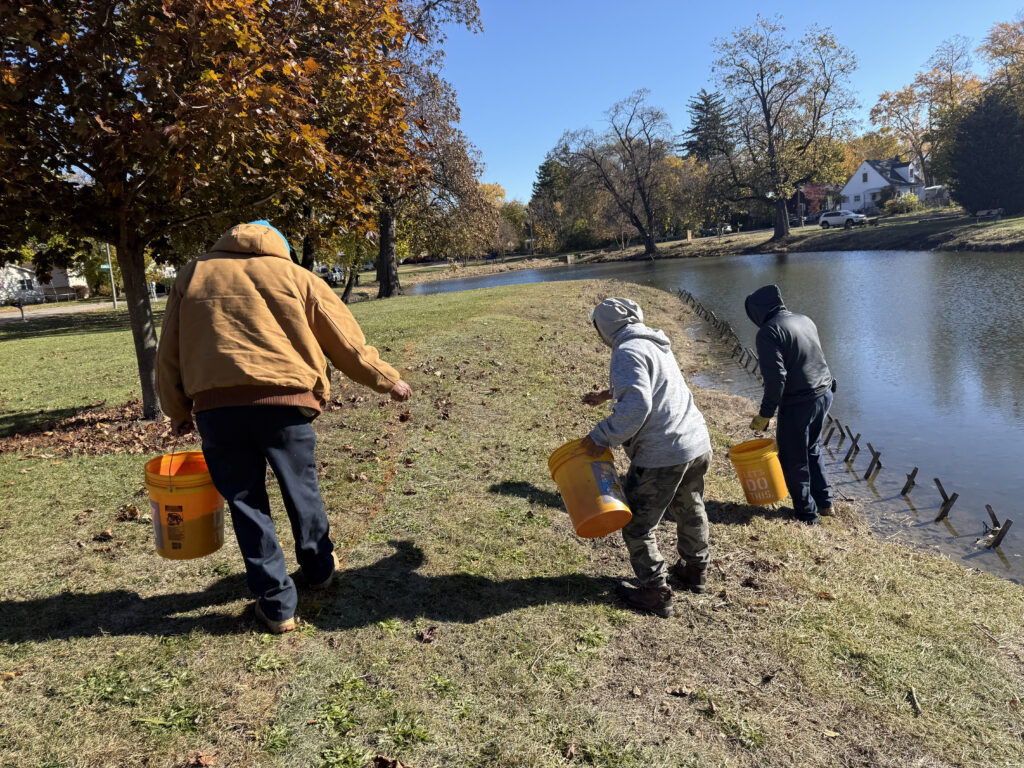
Native plants stabilize shorelines better than any other approach. Deep root systems hold soil that shallow ornamentals can’t. Species adapted to wet conditions thrive in saturated soils along water edges. Sedges, rushes, and wetland grasses tolerate flooding and constant water movement. Upland prairie species transition from water’s edge to dry slopes. These root systems interlock creating living protection that strengthens annually. Our installation techniques ensure proper establishment in challenging shoreline conditions. Chemical treatments and fertilizers stay away from the lake. Natives don’t need them anyway. Properly selected species handle conditions that kill traditional landscaping within one season, while supporting habitat along the natural shoreline for years to come.
Terracing and Slope Grading
Steep slopes erode faster than gradual ones. Water runs down quickly gaining erosive force. Terracing creates level areas breaking up slope length. Each terrace slows water, captures soil, and provides space for new growth. Grading work shapes slopes to angles that naturally resist erosion, usually 3:1 or gentler. Too steep and nothing holds. Proper grading also addresses drainage from upland areas directing water away from vulnerable banks.
Sometimes this work integrates with hardscape elements like stone walls or timber frames creating structure while looking natural. The goal is stable slopes that support healthy growth, protect the lakeshore, and handle storm events without washing away. Homeowners with steep lakeshore banks see the most dramatic results from proper terracing and grading work.
Bioengineering Techniques
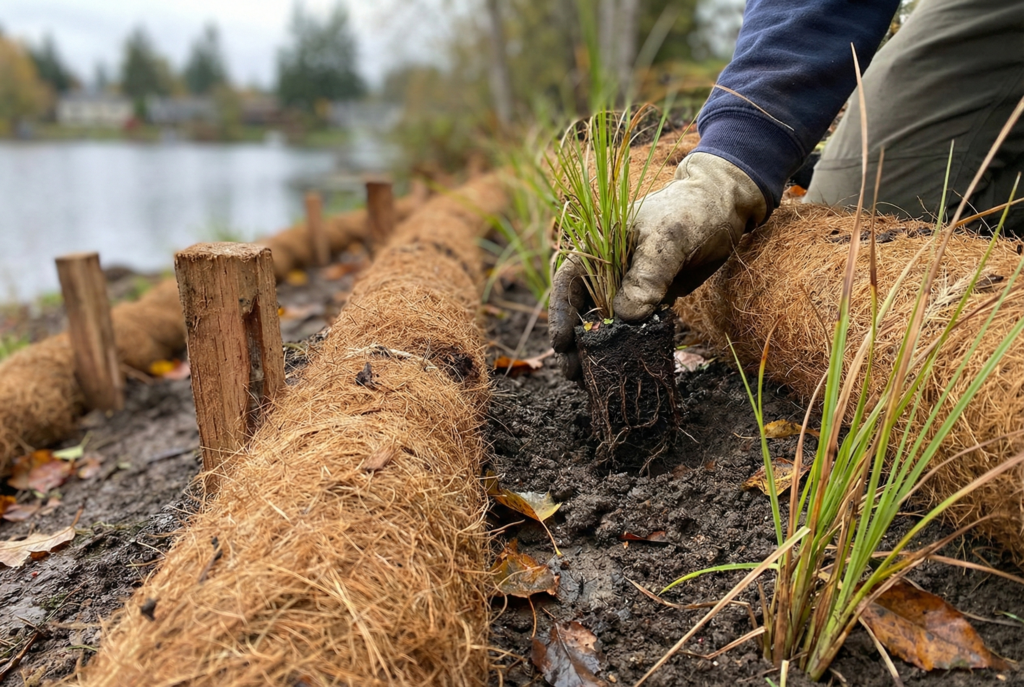
Bioengineering uses living plant materials combined with structural elements for erosion control. Our methods follow established standards to protect your natural shoreline. Brush layering installs live cuttings in terraced slopes that root and grow. Live stakes driven into banks sprout creating instant ground cover. Coir logs made from coconut fiber hold soil while roots establish through them.
These methods provide immediate shoreline protection while living materials develop. Over time, the living components strengthen as roots mature. Eventually growth provides all the erosion control needed while supporting wildlife habitat, improving water quality, and bringing life back to the lakeshore. This approach works better long-term than rip-rap, concrete, or steel because it improves with age rather than deteriorating.
Installation Timing and Methods for Shoreline Stabilization
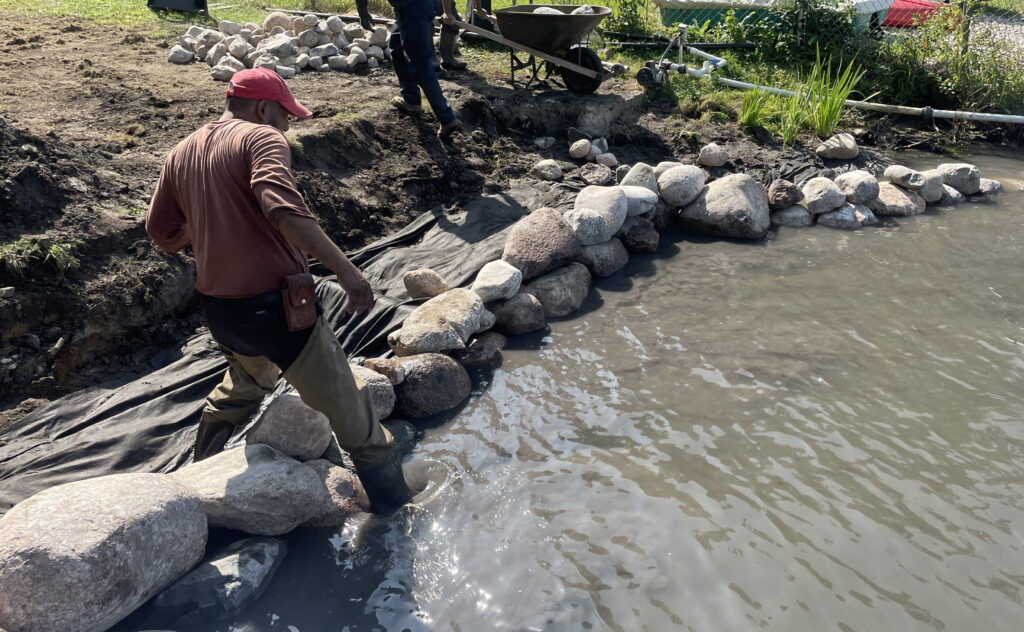
Timing matters enormously for shoreline work. Spring and fall provide ideal planting conditions when roots establish before heat stress or winter dormancy. Working during low water levels allows access to erosion zones. High water periods make installation impossible. We schedule projects around these seasonal cycles rather than fighting them. Installation methods protect disturbed areas immediately. Erosion control fabric, temporary barriers, careful staging of work.
Bare soil doesn’t stay bare long. Quick establishment of ground cover prevents new erosion while permanent growth develops. Every installation considers what happens during the first major storm before roots fully establish. Homeowners who consult with us early get better results. Scheduling a consultation before spring or fall windows open means your lakeshore work happens at the right time, not whenever a crew happens to be available.
Long-Term Maintenance and Monitoring of Shoreline Repair
First few years determine whether shoreline work succeeds. New growth needs establishment support. Watering during dry spells, weed control until natives dominate, occasional replanting where establishment fails. Erosion control materials may need adjustment after major storms. We provide clear maintenance guidance covering what to watch for and when to address issues. By year three, properly restored shorelines become self-maintaining. Native cover fills in completely. Root systems interlock creating permanent soil stabilization.
Annual maintenance becomes minimal. Occasional invasive species removal, monitoring after severe storms, nothing more. Properties we restored fifteen years ago still function perfectly with almost zero ongoing care. That kind of year-round performance is what separates real shoreline repair from temporary fixes. Wildlife habitat improves, water quality stabilizes, and the lakeshore recovers in ways that benefit homeowners and the broader conservation of Lake County’s water bodies for years to come.
Few Contractors Handle Shoreline Work
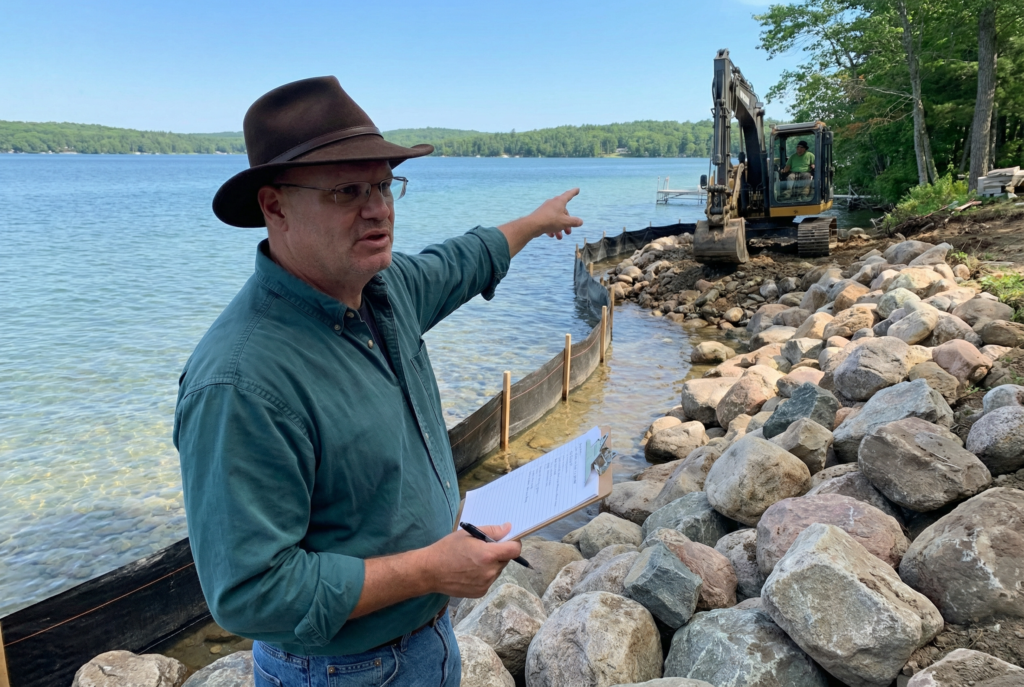
Most landscape contractors avoid shoreline work. It’s specialized work requiring understanding of erosion patterns, wave dynamics, native wetland species, and bioengineering techniques. Easier to install patios or mow lawns. We’ve restored lakefront properties throughout Lake County since the late 1990s when even fewer contractors worked on shorelines. That experience means recognizing erosion causes most people miss, knowing which stabilization methods actually work versus looking good initially then failing, and understanding how restored shorelines perform through multiple storm seasons and winter ice cycles. Specialization matters when your shore literally erodes into the water without proper intervention.
Storm Events Test Everything
Real test of shoreline work happens during severe storms. Heavy wake activity, torrential rainfall, rapid water level changes. These events reveal whether the job was done properly or just made to look decent. Properties we finished years ago handle major storms without new bank loss. Slopes stay stable. Ground cover holds. Terracing functions as designed. That performance comes from understanding the forces at work and building protection that addresses actual conditions rather than cosmetic improvements that fail during the first significant weather event.
Frequently Asked Questions: Shoreline Restoration in Grayslake
How much does shoreline restoration cost?
Costs vary based on bank condition, linear footage, slope conditions, project size, and techniques required. Some property owners qualify for cost-share grant programs through local conservation districts. We provide detailed estimates after evaluating your specific site.
Do I need permits for this work?
Most shoreline work requires permits from local municipalities and possibly the Illinois Department of Natural Resources (IDNR) depending on project scope. The DNR review process adds time but ensures the work meets state standards. We handle permit applications and ensure compliance with all regulations.
How long does the project take?
Installation timeline depends on project size. Simple jobs take 3-5 days while larger jobs with extensive terracing can require 2-3 weeks. Establishment takes 2-3 growing seasons for full maturity, but erosion control begins immediately.
How do you repair shoreline erosion?
Repair starts with evaluating the cause (wave action, ice, runoff), then stabilizing banks through terracing, deep-rooted ground cover, and bioengineering techniques like coir logs. Effective work addresses the source rather than applying temporary fixes that fail within seasons.
Why not just use riprap or rocks alone?
Riprap without living cover provides immediate control but can be costly to repair when stones shift during storms. Living shorelines strengthen annually as root systems develop and look more natural than pure rock solutions.
Ready to Stop Shoreline Erosion?
Let’s evaluate your lakefront erosion problems and discuss permanent solutions.
Call (847) 456-5604 for shoreline restoration. Serving lakefront properties throughout Grayslake, Lake County, and southern Wisconsin.