
Will Buckthorn Grow Back After Cutting in Lake County, IL?
Yes, you will see buckthorn grow back after cutting unless the stump is treated right away, because the roots are still alive and push up a cluster of new shoots within weeks. One cut stump can turn into a bush with several stems by the end of the season. The second reason it comes back is the seed bank. Seeds already in the soil keep sprouting for a few years, even after every big shrub is gone.
David Eubanks has worked in woodlands and natural areas around here since the early 1990s, and buckthorn that came back after a cutting is one of the most common things people ask him to fix. This page covers why it comes back, the two kinds of regrowth you’ll see, and what actually stops it. All of it is part of our buckthorn clearing service.
TLDR:
- Cut buckthorn sprouts again from the stump unless the stump gets treated.
- New seedlings also pop up from seeds already sitting in the soil.
- A stump treatment right after the cut kills the roots.
- Plan on a few years of checking for seedlings.
- Mowing, trimming and cutting alone only reset the clock.
Why Does Buckthorn Grow Back After Cutting?
A buckthorn shrub keeps most of its stored energy down in the roots. When you cut the top off, the roots don’t care. They push that energy into buds near the cut and around the base, and new shoots come up all around the stump.
Instead of one trunk, you get a bunch of skinny stems. They grow fast because they’re feeding off a root system built for a much bigger plant. Within a year or two that stump looks like a shrub again, and it’s usually thicker and harder to get into than before.
It’s the same reason trimming buckthorn like a hedge never gets rid of it. Every cut makes it branch more. Mowing works the same way. It keeps small buckthorn short, but the roots stay alive and the plant just keeps coming back each time the mower stops.
There are two kinds you’ll run into here. Common buckthorn is the one in most Lake County yards and woods, the shrub with dark berries and a little thorn at the tip of its twigs. Glossy buckthorn shows up more in wet ground, along ponds and in low woods. Both sprout hard after cutting, and both need the same basic answer.
If you scrape the bark on a cut stem, the wood underneath is orange or yellow. That’s a handy way to know you’re looking at buckthorn and not a native shrub before you cut anything.
Stump Sprouts and Seedlings Are Two Different Problems
When people say “it came back,” they usually mean one of two things, and the fix isn’t the same.
Sprouts From the Stump
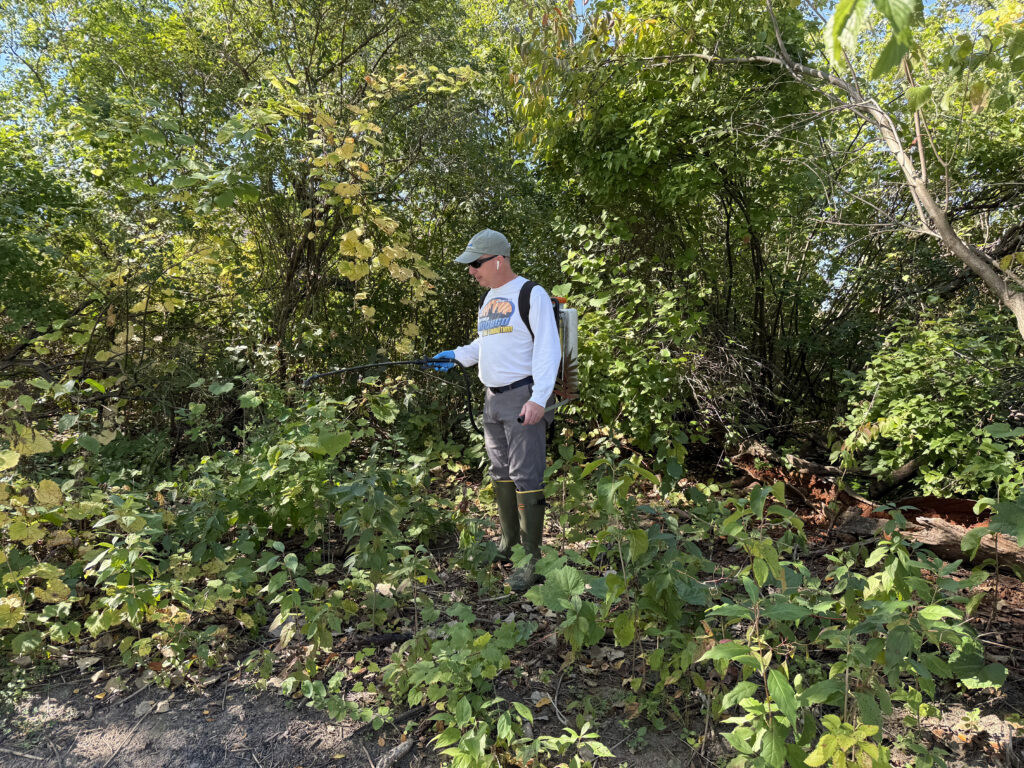
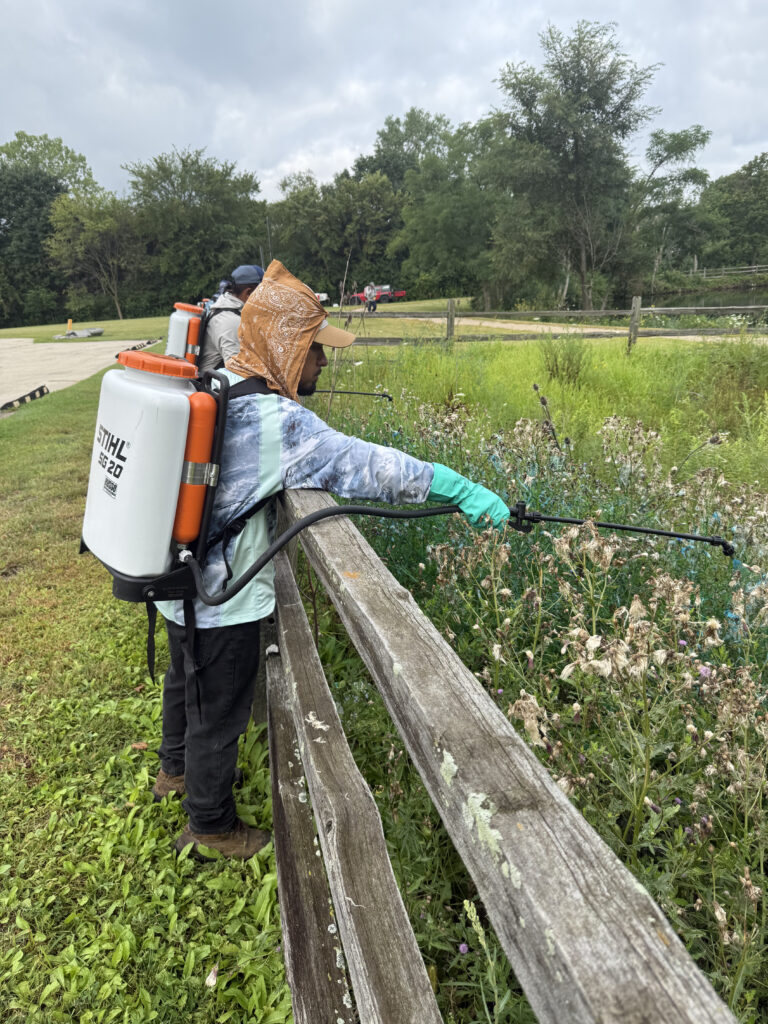
These come up in a tight bunch right at the old cut. They mean the root never died. The fix is a cut-stump treatment put on the fresh cut right after cutting, or a basal bark treatment on young stems that sprouted. Products with triclopyr or glyphosate are the usual choices, and a licensed applicator does that work and follows the label.
Seedlings From the Seed Bank
These pop up all over the open ground, not just near stumps, and they come up one at a time. Birds eat buckthorn berries and drop the seeds everywhere, and seeds already in the soil wait for light. When a thicket gets cleared, sun hits the ground and a flush of seedlings shows up. That’s normal. It doesn’t mean the job failed.
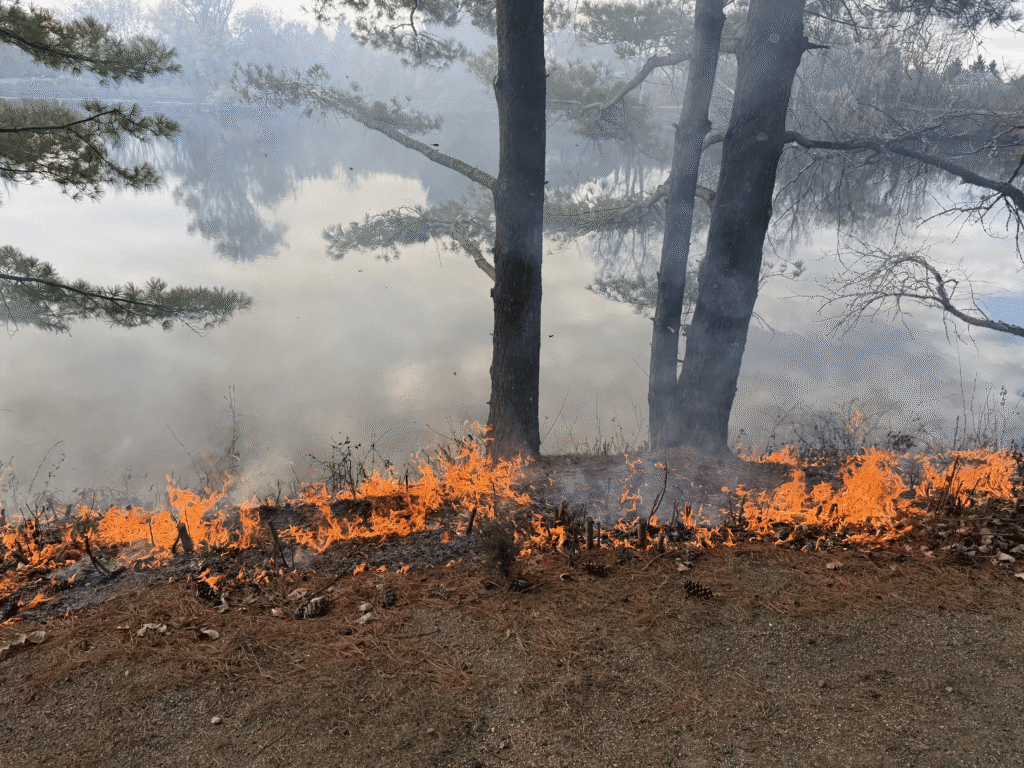
Seedlings are the easy part if you stay on top of them. Small ones pull out by hand when the soil is damp. Bigger patches get a careful spray on the leaves of the regrowth. In oak woods and prairie, a prescribed burn can knock them back too.
The mistake is treating both the same way. Spraying seedlings won’t help a stump that’s still alive, and treating stumps won’t stop seeds from sprouting. A good plan handles both, on purpose.
Things That Make Regrowth Worse
A few mistakes show up over and over:
- Cutting in late spring. Stump treatment works poorly in May and June, when the plant is pushing out new leaves.
- Waiting to treat. The herbicide has to go on a fresh cut. Once the stump dries, it doesn’t soak in nearly as well.
- Cutting high. A tall stump has more buds to sprout from. Cut low, close to the ground.
- Pulling big shrubs. Ripping out large roots churns up the soil and wakes up even more seeds.
- Leaving the ground bare. Sun on open soil is exactly what buckthorn seeds want.
- Ignoring the berry shrubs next door. If female buckthorn on the next lot keeps fruiting, birds keep planting it on your side.
Any one of these can undo a lot of hard work. Two or three together and you’re right back where you started, with more stems than you had before.
This is a big part of why buckthorn and invasive species removal gets planned over a few seasons and not done in one weekend.
How to Stop Buckthorn From Coming Back for Good
There’s no single trick. It’s a few steps done in order.
- Cut low and treat every stump the same day it’s cut.
- Take out the berry-producing shrubs first, so fewer new seeds land.
- Walk the area each fall. Buckthorn stays green after most native shrubs drop their leaves, so it’s easy to spot in late October and November.
- Pull or spot-treat seedlings while they’re small.
- Fill the open ground with native grasses, sedges and shrubs.
How long does the follow-up last? The Minnesota DNR’s buckthorn management guide notes that most seeds in the soil sprout within two years, so the first couple of seasons after clearing are the busiest. Birds keep bringing new seed in, though, so a quick yearly walk-through is just good habit after that.
You can pull seedlings yourself. If you use any herbicide at all, follow the label to the letter. For big shrubs, slopes, wet ground or anything near water, it’s worth having a licensed applicator handle the treatment.
On larger natural areas, a prescribed burn after the big shrubs are gone helps keep the seedling flush in check. Our prescribed burn services are often part of that follow-up on oak woodland and prairie sites.
Why Property Owners Trust Eubanks Environmental When Buckthorn Keeps Coming Back
David has been doing restoration and native landscape work here for about 30 years. He doesn’t look at buckthorn as a one-day clearing job. He sees it as the first step in getting a woodland, a yard edge or a prairie back to what it should be.
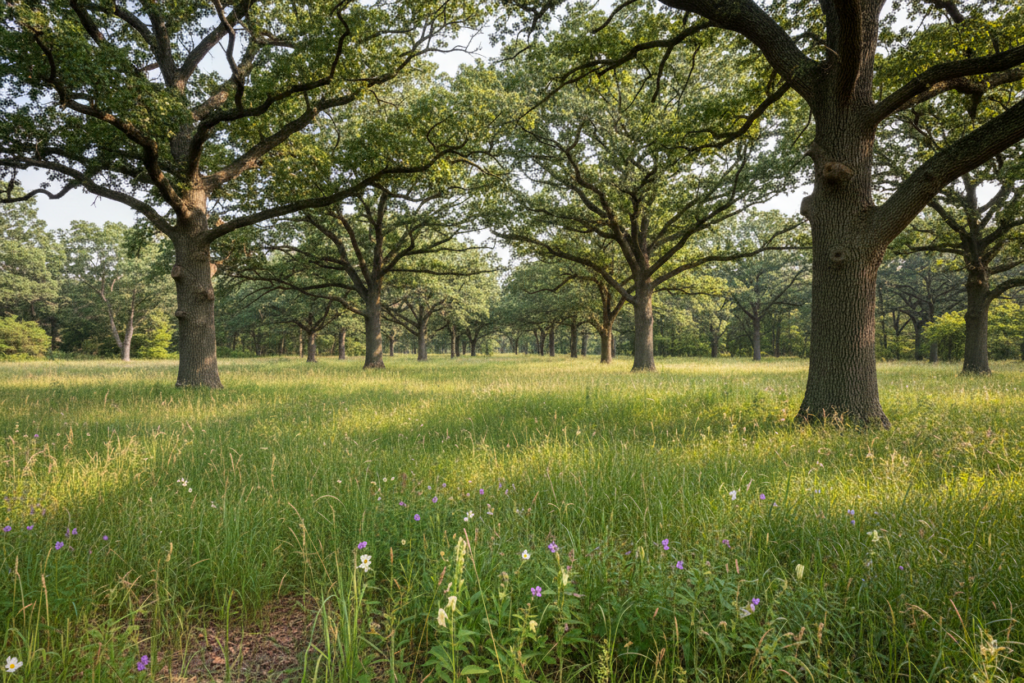
That’s why regrowth gets planned for from day one. Stumps are treated as they’re cut. Seedlings get checked on later visits. And because the same team handles prescribed burns, oak woodland work and native planting, the ground doesn’t sit bare waiting for the next crop of buckthorn.
We do this work from our Grayslake office out to Libertyville, Mundelein, Gurnee, Lake Forest and Lake Bluff. David is also a member of Landscape Illinois.
If buckthorn came back on you after someone else cut it, we can look at what’s sprouting and tell you which kind of regrowth you have. Here’s more on how we handle buckthorn from start to finish.
Frequently Asked Questions
How do you keep buckthorn from coming back once it’s cut?
Treat the stump right after it’s cut so the roots die, then go back for the seedlings that sprout from seed over the next few years. Planting the open ground with native grasses, sedges and shrubs is the last piece, since shade and competition make it much harder for new buckthorn to take hold.
Will mowing buckthorn kill it?
Not really. Mowing keeps small buckthorn short, but the roots stay alive and keep sending up new stems as soon as you stop. On a lawn edge it can buy you time, but the plants still need to be pulled or treated before they’re truly gone.
Can you burn buckthorn to stop it from growing back?
A prescribed burn in an oak woodland or prairie can knock back young buckthorn seedlings and help keep them in check. It won’t kill big shrubs on its own, since they sprout again from the roots, so burns work best as follow-up after the large plants are cut and their stumps treated.
Will vinegar or other home remedies stop cut buckthorn from sprouting?
Vinegar can brown the leaves, but it doesn’t reach the roots, so the stump keeps sprouting. The main option without herbicide is covering each cut stump with a heavy black bag or cap and leaving it on for a year or more so the sprouts starve, or pulling small stems out whole.
Buckthorn Came Back? Here’s How to Get Ahead of It
If you cut buckthorn and it’s sprouting again, you haven’t wasted your time. The big wood is down, which is the hardest part. Now it’s about killing the roots that are left and catching the seedlings before they grow up.
David can walk the area with you, show you which stems are stump sprouts and which are new seedlings, and lay out a plan for the next few seasons. Sometimes that’s a round of treatment on the resprouts and a fall check. Sometimes it’s a bigger cleanup and some native planting to close the gap.
Call David at (847) 456-5604 or reach out through our contact page to set up a time. Fall is a great window to spot buckthorn, since it’s still green when almost everything else has dropped its leaves.