
What Are the Real Disadvantages of Living Shorelines in Lake County, IL?
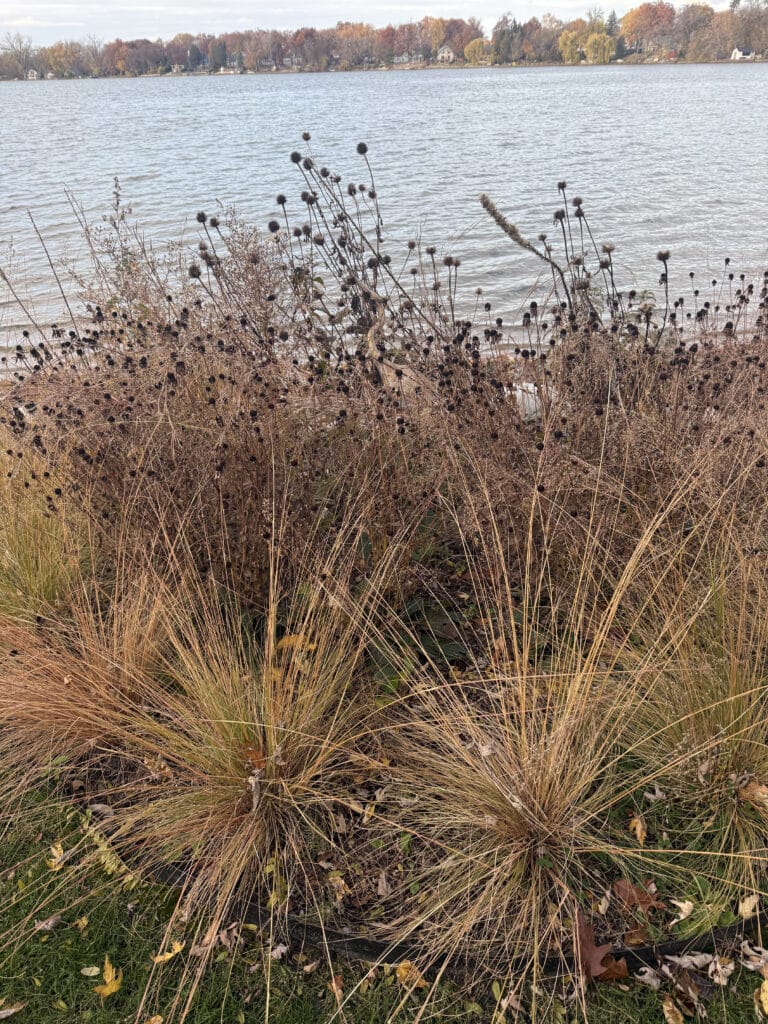
The real disadvantages of living shorelines are that they take two to three growing seasons to fill in, need watering and weeding early on, and can get eaten by geese before the roots take hold. They also look wilder than a mowed lawn, need permits, and aren’t enough by themselves on every high-energy stretch of shore. None of that is a deal breaker, as long as you plan for it.
David Eubanks has been planting lake edges in Lake County for about 30 years, working out of Grayslake. We build living shorelines more than anything else on the water, so we’d rather you hear the downsides from us than find them out the hard way. Below is each one, plain, and what we do about it. For the bigger picture, start with how we restore a lake edge.
TLDR:
- A new planting is weakest in its first season. It takes two to three growing seasons to fill in.
- New plugs need watering in dry spells and weeding until the natives take over.
- Canada geese love young plants and can wipe out a fresh planting fast without fencing.
- Some neighbors think a native edge looks messy compared to turf.
- Not every spot can be held by plants alone. Steep, wave-battered banks may need stone at the toe.
- Permits are required, and you usually can’t turn the whole frontage into sand beach.
The Disadvantages of Living Shorelines, Up Front
A living shoreline means using plants, roots and natural materials like coconut fiber to hold a lake bank, instead of a wall or a band of bare rock. We think it’s the right answer for most inland lake edges. But it’s not magic, and it’s not instant.
Here are the downsides we tell every homeowner about before they sign anything:
- It takes time. You won’t have a full, thick edge on day one.
- It needs care early. Water, weeding and a few repairs in the first couple of years.
- Geese are a real threat to young plants.
- It looks different. A native edge is taller and looser than lawn.
- It isn’t enough everywhere. Some spots take too much of a beating for plants alone.
- It still needs permits, and it changes how much of your shore can be open sand.
Each of those is real. Each one also has a fix, or at least a way to plan around it. The rest of this page goes through them one at a time, so you know what you’re getting into before the first plug goes in the ground. If you’ve already decided you’re curious, our page on shoreline restoration planning shows how we lay out a job.
The Biggest One: Waiting for the Roots
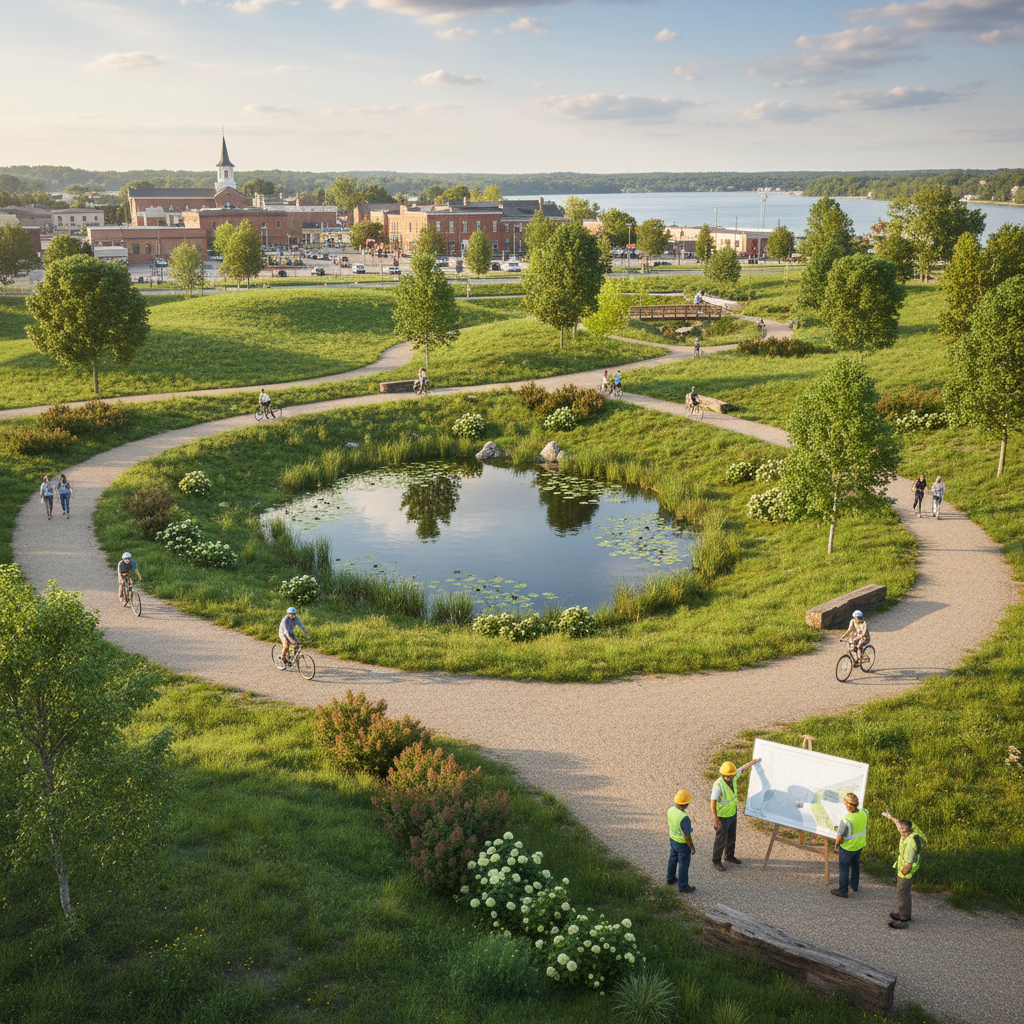
Everything good about a living shoreline comes from roots. Native sedges, rushes and grasses send roots several feet down, and over time they knit together into a mat that holds the bank. The catch is that a brand-new plug has a root ball about the size of your fist. It takes two to three growing seasons for those roots to spread and lock together.
That gap is the weak window. A big storm or a busy boating weekend in the first summer can do damage the same storm wouldn’t touch in year three.
We don’t leave the bank on its own during that window. Coir logs, which are long rolls of packed coconut fiber, get staked along the waterline to break small waves. Erosion blanket covers the bare soil on the slope. Live willow and dogwood stakes go in where we need roots fast. Those materials hold things while the plants grow in, and they rot away slowly as the roots take over.
Timing matters too. We plant in spring or fall, when roots grow quickly and summer heat won’t fry them. Getting the right plant in the right zone helps the most. Wet-footed plants go at the water, and drier prairie plants go up the slope.
The Other Downsides Worth Knowing
Watering and Weeding Early On
New plugs need water in dry spells their first summer. Weeds will try to move in before the natives fill the space. Both get much easier once the planting closes up, usually by the third year.
Geese
Canada geese love tender new shoots, and a flock can graze a fresh planting to bare dirt. We string goose fencing around new plantings until they’re tall and tough enough to be left alone.
The Wild Look
A native edge is taller, with seed heads in fall. Some people love it. Some neighbors think it looks overgrown. We design the top edge so it ties cleanly into your lawn, with a crisp border.
Less Open Sand
You can’t turn the whole frontage into beach and still have roots holding it. We usually leave a planned opening for a dock or a spot to get in the water.
Permits
Work at the water’s edge needs permits from the state, the US Army Corps of Engineers and the county. We handle that paperwork for you.
Where Plants Alone Aren’t Enough
This is the part a lot of companies skip, because it’s easier to sell one answer for every shore. But some spots really can’t be held by plants alone, at least not at first.
A point that catches wind from across the whole lake is one. So is a shore next to a busy channel where wakes roll in all day. A tall, steep bank with waves cutting its toe is another. On those, the bottom of the bank gets hit harder than young roots can handle.
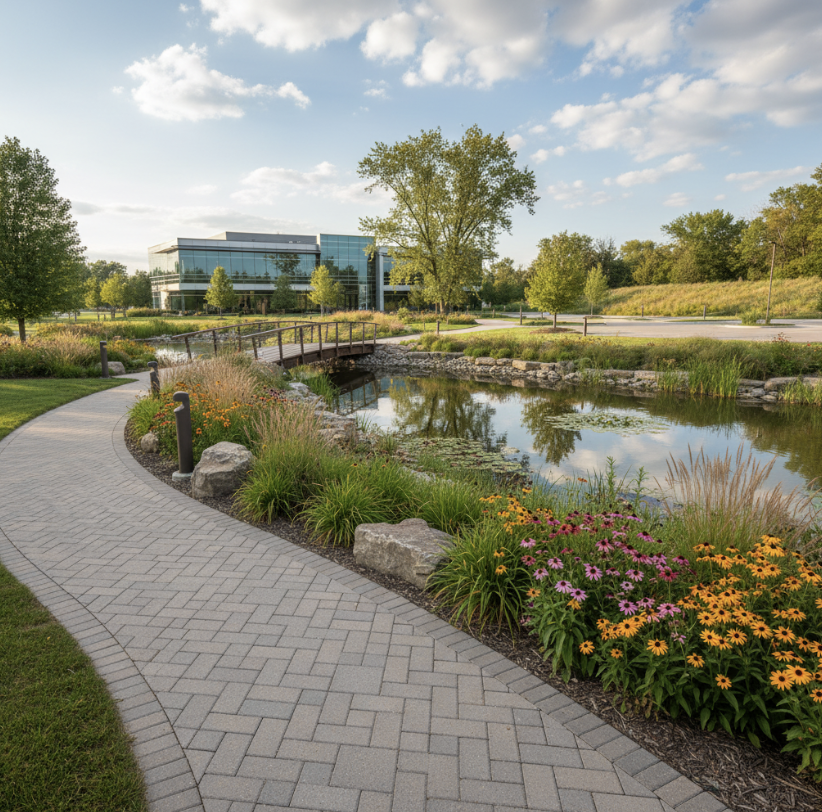
The fix isn’t to give up on plants. It’s to put stone where it’s needed, at the toe, and plant everything above it. Graded back to about 3:1 or gentler, a bank like that can still be mostly green and still soak up most of the wave energy. On really tall slopes, like the clay bluffs along Lake Michigan, the job looks different again. Terracing, drainage and deeper work come into it, and our page on clay soil bluff stabilization covers that.
So if someone tells you plants will fix any shoreline, be careful. And if someone tells you plants can’t work on yours, ask them to show you why. The honest answer is usually somewhere in between, and finding it is the first step of any shoreline repair we take on.
Why Lakefront Homeowners Trust Eubanks Environmental to Be Straight About Living Shorelines
We tell people the downsides first because we’d rather have a shoreline that works than a sale that doesn’t. David has been watching these plantings go through about 30 years of ice, high water and busy summers. He knows which plants hold at the waterline, which ones the geese go after first and which banks need a stone toe.
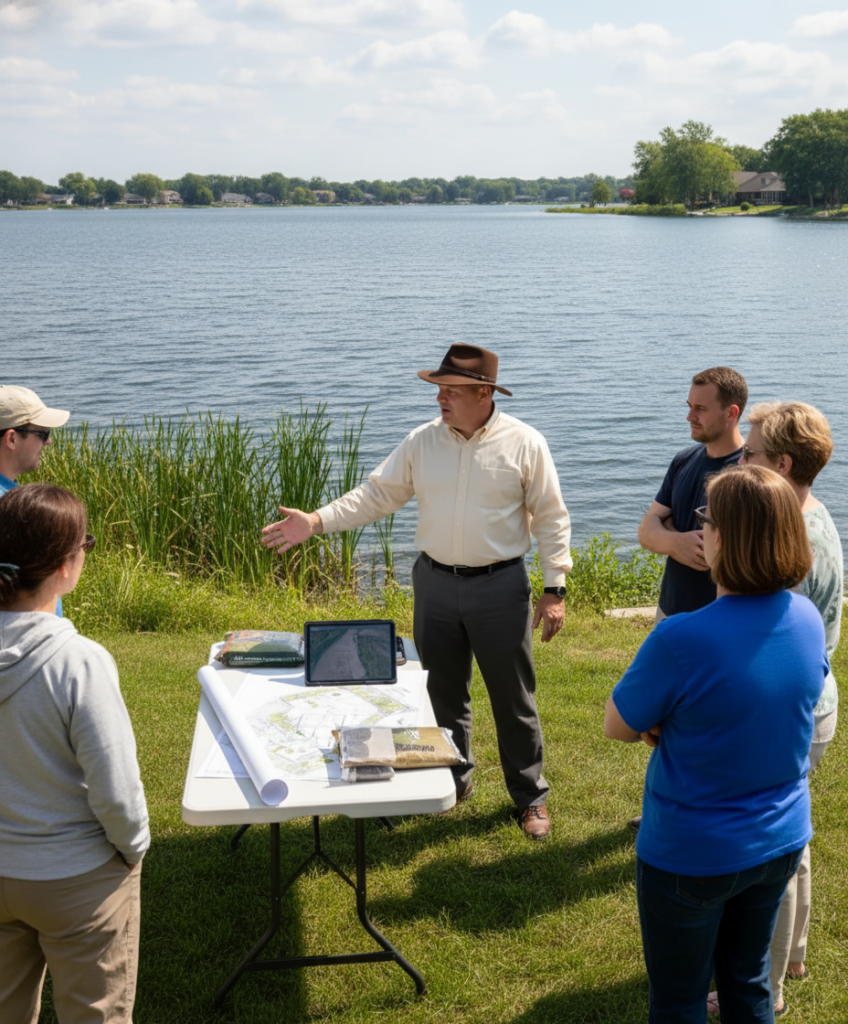
When we come out, we walk your shore and look at the slope, the soil, the water depth and how much wave and wake hits it. Then we tell you plainly what a living shoreline can do there and what it can’t. If you need stone in one stretch, we’ll say so.
We stick around for the hard part too, with a care plan for watering, weeding and goose fencing in those first seasons. We work on lakes from Grayslake out to Fox Lake, Antioch, Lake Villa and Wauconda. NOAA has a short, plain explainer on what a living shoreline is if you want an outside read. You can also see how we put it all together on our natural lakeshore restoration page.
Frequently Asked Questions
What does a living shoreline actually mean for my yard?
It means the edge of your lake is held by plants, roots and natural materials instead of a wall or a band of bare rock. You’ll see taller native grasses, sedges and flowers along the water, with a lawn or garden behind them. Stone may still show up at the toe where waves hit hardest.
Will a living shoreline hold up to winter ice?
Once it’s established, yes, and it often handles ice better than rock. Roots flex and grow back, while loose stone can get shoved out of place. The first winter or two is the riskiest, which is why we use coir logs and blanket to hold the bank until the roots fill in.
Can I still have a dock and a spot to swim?
Yes. We plan an opening for your dock and a path to the water as part of the design. Most homeowners keep a good spot for swimming or launching a kayak, with the planted edge protecting the rest of the bank on either side.
How long until a living shoreline looks finished?
Plan on two to three growing seasons. The first year looks thin, the second year fills in a lot, and by the third year most edges look full and mostly take care of themselves. After that, it’s a little weeding of invasives and a look after big storms.
Thinking About a Living Shoreline? Let’s Talk It Through
If you’ve read this far, you already know more than most people do before they start. The next step is seeing how those downsides play out on your own bank.
Call David at (847) 456-5604 or send us a note through our contact page. We’ll walk your shoreline with you, answer every question and give you a written plan.