
What Does a Living Shoreline Cost in Lake County, IL?
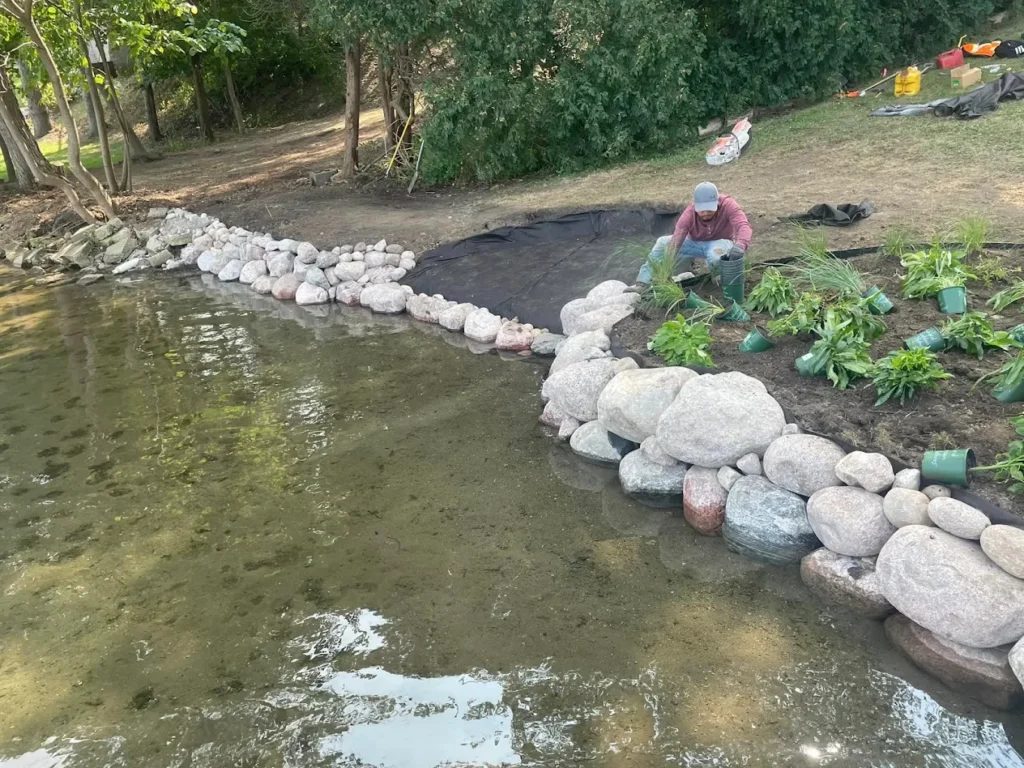
A living shoreline cost in Lake County depends mostly on how many feet of shoreline you have, how tall and steep the bank is, and how hard waves and ice hit it. After that come access for equipment, how much stone the toe needs, permits, and the first two or three years of care. Two lots on the same lake can price very differently, so we walk yours first.
David Eubanks has been pricing and building lake edges for about 30 years, out of Grayslake. People always want a number over the phone, and we get it. But a shoreline price guessed from a driveway is usually wrong in one direction or the other. Here is what really goes into the number, so you can read any bid with clear eyes. You can see the full approach on our lake edge restoration page.
TLDR:
- The length of your shoreline and the height and steepness of the bank drive most of the price.
- Waves, boat wakes and ice decide whether part of the edge needs a stone toe.
- Hard access, like steep yards, no gate, or no room for a machine, adds labor.
- Coir logs, erosion blanket, native plugs and live stakes are the main materials.
- Permits, and sometimes a survey, are part of almost every shoreline job.
- Care during the first two or three years is a real part of the cost. A bid that leaves it out isn’t cheaper, it’s just unfinished.
Feet of Shore and Bank Shape Drive Living Shoreline Cost Most
The single biggest thing is length. Most of the work, the grading, the coir logs, the planting, gets figured by the foot along the water. Fifty feet of edge and two hundred feet of edge are very different jobs.
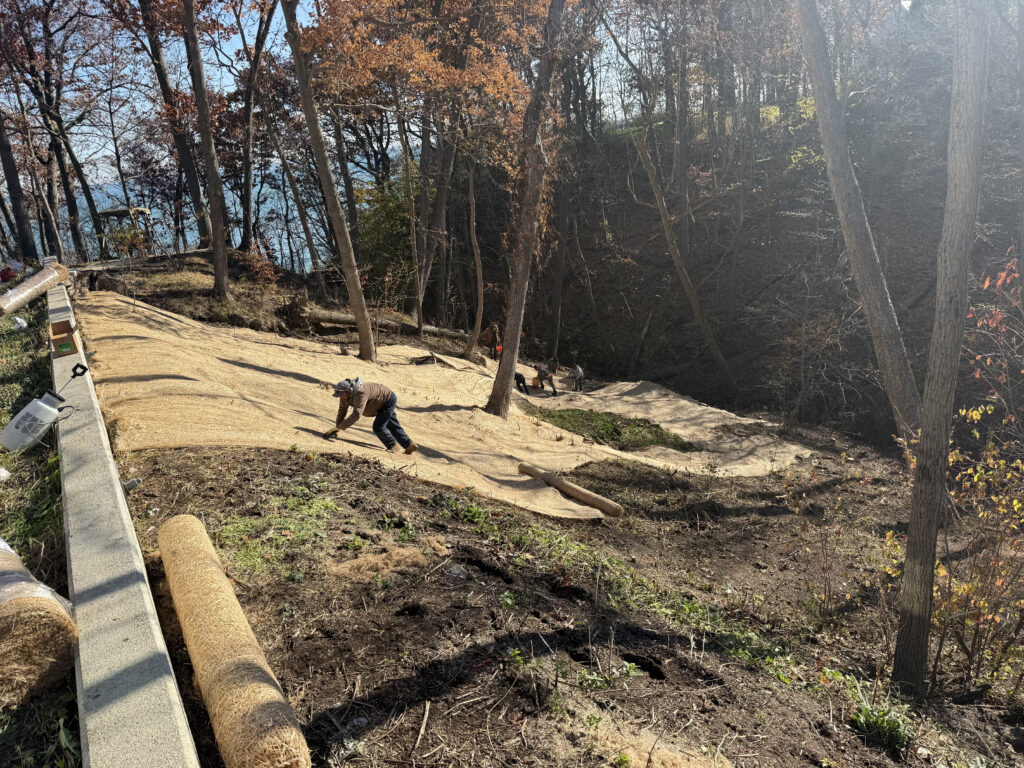
Right behind length is the bank itself. A low, gentle edge that only rises a foot or two out of the water might just need the turf pulled back and planted. A bank that drops five or six feet straight into the lake is a different animal. It has to be cut back and reshaped to about 3:1 or gentler before anything will hold, and on tall banks that often means terraces, more soil moved and more blanket to cover it.
How far gone it is matters too. A bank that’s just starting to show a notch at the waterline is quick to fix. One that has already slumped in, with trees leaning and roots hanging out, takes rebuilding before planting. Waiting usually makes the job bigger, not smaller.
So when people ask us what a living shoreline costs, the honest first answer is: how many feet, how high, and how bad? Those three questions decide most of the number before we even talk about plants.
The Other Things That Move the Price
Once we know the size and shape, a handful of other things push the number up or down.
Wave and Wake Exposure
A quiet cove with little boat traffic can often be held with plants and coir logs alone. A shore that faces a long stretch of open water, or sits near a busy channel, may need stone at the toe in the spots that take the hardest hits. That rock, and the labor to set it right, is one of the bigger swings in any bid.
Getting In and Out
If we can back a small machine to the edge, the job goes faster. If the only way down is a steep yard, a narrow side gate or a set of stairs, material moves by hand or by barge. That takes more hours.
Materials
The main ones are coir logs, erosion blanket, live willow and dogwood stakes, and native plugs. Plugs are planted closer together near the water and farther apart up the slope. A long, wet edge needs more of all of it.
Permits and Survey
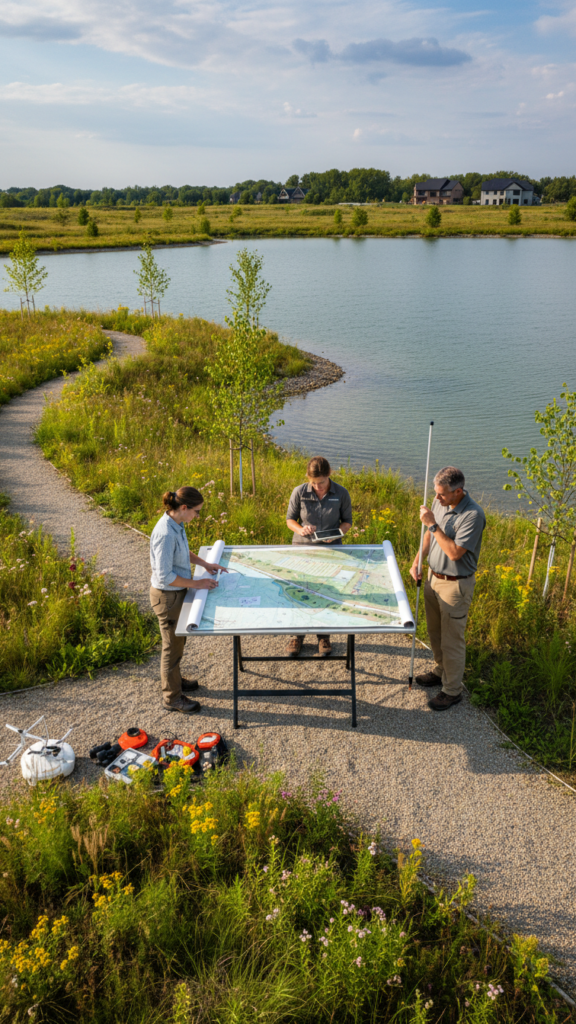
Most shoreline work needs permits from the state, the US Army Corps of Engineers and the county. Some jobs also need a survey to show where the water line sits. We handle that paperwork, but the time it takes is part of the job.
The Part of the Cost Most Bids Leave Out
Here’s what we see over and over. Two bids come in. One is lower. The homeowner picks it, and two summers later half the plants are gone and the bank is bare again.
The difference is almost always care after planting. A new living shoreline is weakest in its first season or two. The plugs need water in dry stretches.
Weeds need to be pulled before they crowd out the natives. Canada geese will graze young plants right down to the dirt if nothing stops them, so the planting needs goose fencing until it gets tall. And after a big storm, someone should check the coir logs and blanket and fix anything that moved.
Our approach builds that care into the plan from the start. That isn’t padding. It’s the difference between a shoreline that fills in and one you pay to plant twice. By about year three, a well-planted edge mostly takes care of itself, with a little invasive weed control and a look after bad storms.
So when you compare prices, ask each company the same thing: what happens in the first three years, and who does it? If the answer is “you,” that’s fine, as long as you know what you’re signing up for. Our page on native plant installation explains how we set plants up to make it through that stretch.
How a Living Shoreline Compares to Riprap or a Seawall Over Time
Price on the day it’s built is only half the story. The other half is what the edge costs you over the next twenty years.
A seawall or a long run of bare rock is a fixed thing. It’s as strong as it will ever be the day it goes in, and then it slowly gets weaker as ice shoves it, waves dig at the toe and soil leaks out from behind it. When it fails, the fix is usually big, and the new damage at the ends often lands on the neighbor’s bank.
A living shoreline works the other way. It starts out at its weakest and gets stronger every year as the roots spread and lock together. After the first few years, the ongoing work is small. That’s why we often see it come out lower in upkeep over time, even when a stone job looked simpler up front.
That doesn’t mean rock is never worth it. On spots that take a real beating, a stone toe under the plants is money well spent. We just don’t sell more of it than your bank needs, and that goes for every natural shoreline project we plan. Some homeowners also qualify for cost-share help through local conservation districts, and we’re happy to point you toward those programs. NOAA has a good plain-language page on how living shorelines hold up over time if you want an outside view.
Why Lakefront Homeowners Trust Eubanks Environmental With a Shoreline Budget
We don’t give a price over the phone because it wouldn’t be fair to you. Instead, David walks the shoreline with you. We measure the length, look at the bank height and slope, check the soil and the water depth, and note where the rain runs off your yard. Then you get a written number that spells out what’s included.
That number covers the grading, the materials, the planting, the permits and the care plan for the first few seasons. If part of the shore only needs a light touch, we say so. If one stretch really does need stone at the toe, we explain why and show you where.
We do this work on lakes from Grayslake out to Fox Lake, Antioch, Lake Villa and Wauconda, and David has been doing it for about 30 years. When you’re ready to see how a plan comes together, look at how we approach restoring a failing lakeshore.
Frequently Asked Questions
Does a living shoreline cost less than rock?
It often does, especially once you count upkeep over the years. Rock can look simpler at first, but it gets reset after ice and storms, while planted roots get stronger every season. Many banks end up best with a mix, a little stone at the toe and plants above it.
Why do two bids for shoreline work come in so different?
Usually one includes things the other leaves out, like grading the bank back, a stone toe where it’s needed, permits or care for the first few seasons. Ask each company to write down exactly what’s included, how many feet they measured and who handles watering, weeding and goose fencing early on.
Is there help paying for shoreline restoration?
Some homeowners qualify for cost-share programs through local soil and water conservation districts. These programs change from year to year and have their own rules. We’re happy to point you toward the right office and work with the plan they approve.
Can I do part of my shoreline now and the rest later?
Yes. Many people start with the stretch that is losing the most ground and finish the rest in a later season. We plan the whole edge first so the two pieces match up and the end of the first section doesn’t become a new weak spot.
Want a Real Number for Your Shoreline?
Every lake edge is different, and the only honest price comes from standing on it. We’ll measure it, tell you what’s causing the damage and lay out what a living shoreline would take.
Call David at (847) 456-5604 or send us a note through our contact page to set up a walk-through. You’ll get a written number with nothing hidden in it.