
Why Is Riprap Not Recommended for Lake Shorelines in Lake County, IL?
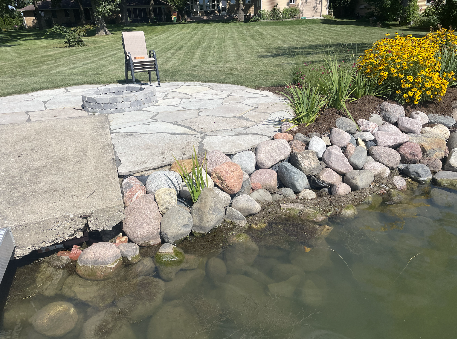
Most shoreline pros call riprap not recommended as the whole fix for a lake bank because a solid band of rock moves wave energy instead of soaking it up. It can push erosion onto the yard next door, heat the shallow water and give fish and frogs very little cover. Done wrong, it slumps or gets shoved around by ice. Stone still has a job. It just works best paired with plants.
David Eubanks has built and repaired lake edges in Lake County for about 30 years, working out of Grayslake. He uses stone. He just uses it in the places it actually earns its keep, and lets deep-rooted plants handle the rest. This page lays out where rock helps, where it hurts, and what we tend to build instead on the shorelines we restore.
TLDR:
- Riprap is a layer of loose rock laid on a bank to block waves. It is not always wrong.
- A full wall of stone bounces wave energy along the shore, and the bank next door often pays for it.
- Bare rock heats up in the sun, gives wildlife little to use and fills with weeds that are hard to pull.
- If the fabric or the toe is wrong, soil washes out behind the rock and the whole thing sags.
- The best answer on most inland lakes is a mix: stone at the toe where waves hit hardest, native plants above it.
When Is Riprap Not Recommended, and When Does It Still Make Sense?
Riprap is just rock, usually broken stone about the size of a football up to a small cooler, laid on a slope at the water’s edge. Underneath it should be a layer of filter fabric and sometimes a bed of smaller gravel. At the bottom, the stone should be dug into the lakebed a bit so it can’t slide out. That bottom row is called the toe.
Rock has real strengths. It works the day it goes in. It doesn’t need watering. And on a spot that takes a pounding, like a point that catches wind from across the whole lake or the corner beside a busy boat launch, plants alone may not be able to hold on while they get started.
So nobody serious says rock is always wrong. The problem is using it as the whole answer, end to end along a property, when the bank only needs help in a few places. That is where most of the trouble we get called about comes from.
A good way to think about it: stone is armor. Armor is great in the spot that gets hit. But you wouldn’t wrap your whole house in it, and a lake edge is the same. Most of a typical inland lake shoreline sees small waves, some boat wake and winter ice. That’s work deep roots can do, and they get better at it every year.

The Biggest Problem: Rock Moves Wave Energy Instead of Soaking It Up
When a wave hits a soft, planted edge, the stems and roots slow it down. Its energy gets spent in the plants. When the same wave hits hard, bare stone, a lot of that energy bounces back and slides sideways along the shore.
That sideways push goes somewhere. Usually it goes to the end of the rock, where it meets plain soil. That’s why you’ll often see a fresh bite taken out of the bank right where one property’s riprap stops and the neighbor’s lawn starts. Builders call it flanking. Homeowners call it a fight with the neighbor.
Bounced waves also stir up the bottom right in front of the stone. Over time that can dig out sand and muck at the toe. If the toe wasn’t set deep enough, the bottom row of rock starts to slip, and the rows above it follow.
Then there’s what happens behind the rock. Water still gets in between the stones on every wave and every rain. If the fabric under the rock is missing, torn or the wrong kind, that water pulls fine soil out through the gaps a little at a time. You won’t see it happen. What you’ll see is a sag in the stone, or a soft spot in the lawn just above it, a few years down the road.
None of that means stone is useless. It means a long, bare band of it can cause as many problems as it solves.
Other Reasons Stone Alone Lets You Down
Even when riprap is built right, a few other things come with it.
It Heats the Edge
Dark rock soaks up sun all afternoon and warms the shallow water around it. Warm, still shallows are where algae likes to grow. A planted edge stays cooler and shaded.
Wildlife Gets Little Out of It
Fish, frogs, turtles and the bugs they eat do much better in a soft edge full of stems and roots. A long run of bare stone gives them very little to hide in or feed on.
Ice Can Shove It
When an inland lake freezes, the ice pushes against the shore. It can lift and roll stones out of place, which leaves gaps the next storm can work into.
Weeds Move In
Seeds blow into the cracks and sprout. Pulling a weed with its roots wedged under a rock is miserable work.
Permits Still Apply
Placing rock below the waterline counts as fill in most cases. That takes the same permits a planted shoreline does, from the state, the US Army Corps of Engineers and the county.
What Most Companies Skip: A Mixed Edge Usually Wins
The quick job is to back up a truck, dump rock along the whole shore and call it done. It looks finished that afternoon. It’s also the job we end up redoing most often.
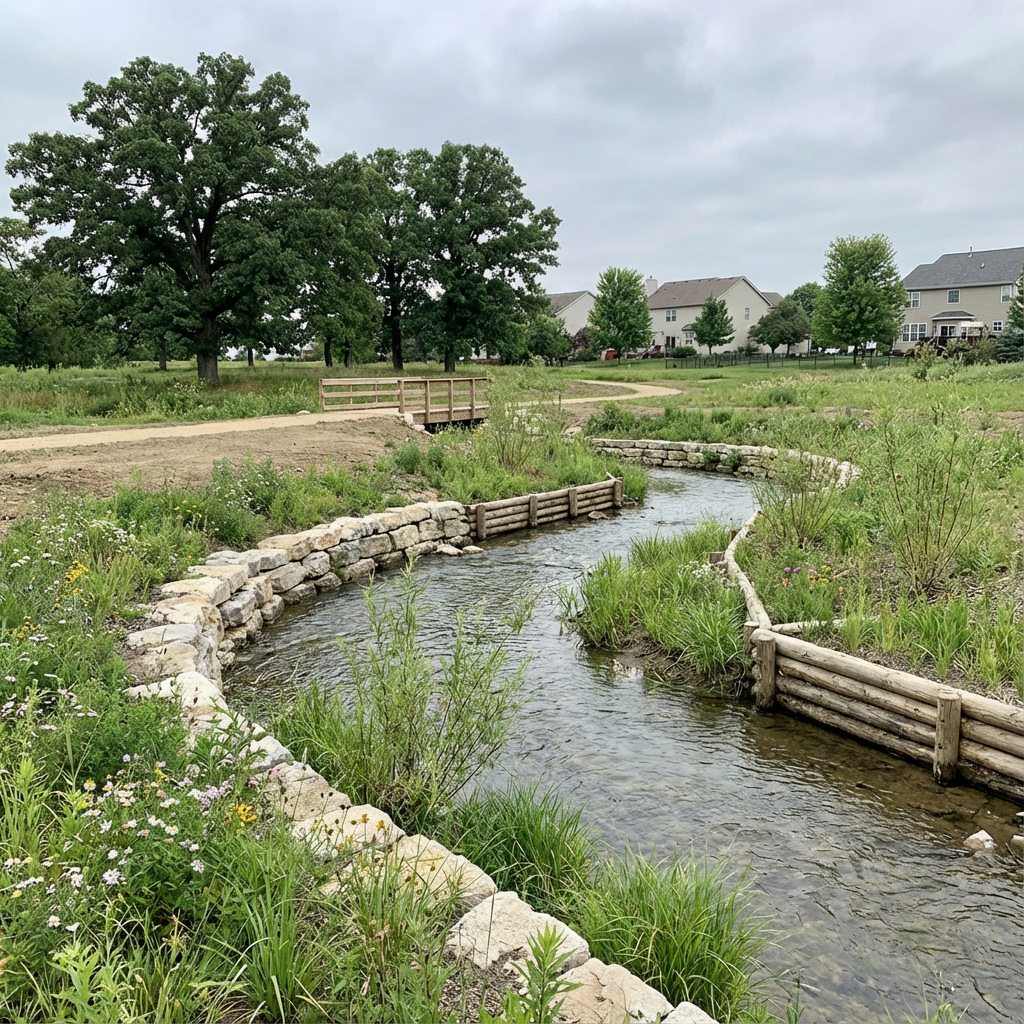
What we build on most inland lakes is a mix. Stone goes at the toe, only along the stretches that take the hardest hits. Above and behind it, the bank gets graded back to about 3:1 or gentler and planted with deep-rooted sedges, rushes and native grasses. Coir logs hold the softer spots while the roots fill in. In some places we push live willow or dogwood stakes right through the joints in the stone, so the rock ends up laced together with roots.
You end up with an edge that can take a hit where it needs to, but still soaks up most of the wave energy instead of throwing it at your neighbor. It looks like a lake edge, not a parking lot. And the part that does most of the work gets stronger every year instead of slowly sliding out of place.
If you already have riprap, you don’t have to tear it out. A lot of old rock edges can be planted, reset at the toe or trimmed back where they aren’t needed. Our bank repair and planting approach covers how that fits together.
Why Lakefront Homeowners Trust Eubanks Environmental With Riprap Decisions
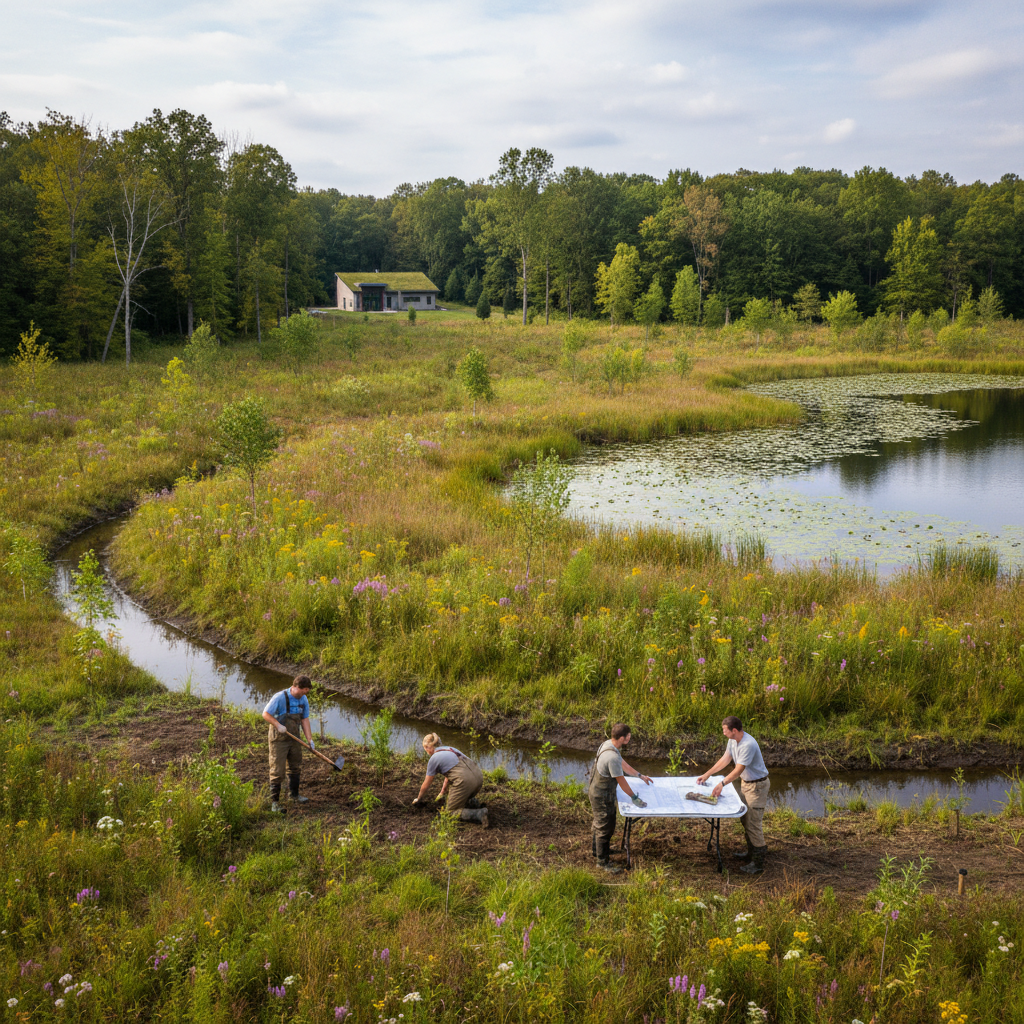
We don’t have a rock pile we need to get rid of, and we don’t have anything against stone either. David has been setting both stone and plants at the water for about 30 years, and he has seen how each one holds up after a lot of winters. That’s why we can give you a straight answer about where rock belongs on your bank and where it doesn’t.
When we come out, we look at the things that decide it. How far wind can blow across the water toward your shore. How much boat traffic goes by. How steep the bank is, what the soil is like and where your rain runs off. Then we show you which stretch, if any, really needs stone, the same way we start every lakefront bank restoration.
We also handle the permits, which is the part a lot of homeowners dread. We do this work on lakes from Grayslake out to Fox Lake, Antioch, Lake Villa and Wauconda. If you’d like to compare options yourself first, NOAA has a plain guide to natural and structural ways to protect a shoreline.
Frequently Asked Questions
Will rock alone stop erosion on my lake bank?
It can slow it at the waterline, but it often moves the problem instead of fixing it. Waves bounce off bare stone toward the ends of the rock, and water can still pull soil out from behind it. Rock at the toe with deep-rooted plants above it usually holds a lake bank far longer.
What should go under riprap?
A layer of filter fabric, and on some banks a bed of smaller gravel, goes down first. That layer lets water pass through but keeps the soil from washing out between the stones. Skip it, and the bank behind the rock slowly empties out until the stone sags.
Does water flow through riprap?
Yes, and that’s by design, because water moves in and out between the stones on every wave and every rain. That’s exactly why the fabric underneath matters so much. Without it, all that moving water carries fine soil out of the bank, a little at a time, until you have a hollow behind the rock.
Can I add plants to the riprap I already have?
Often, yes. We can push live stakes through the gaps, tuck native plugs into soil pockets and plant the bank above the stone. Over a few seasons the roots tie the rock and soil together, and the edge starts to look and work more like a natural shoreline.
Thinking About Rock for Your Shoreline? Talk to Us First
Before you order a load of stone, have someone look at what’s actually eating your bank. You might need rock in one spot, or nowhere, or a few old stones reset with plants above them.
Call David at (847) 456-5604 or reach us through our contact page. We’ll walk your shoreline, tell you where stone makes sense and give you a written plan for the rest.