
How Do You Stop Lake Shoreline Erosion in Lake County, IL?
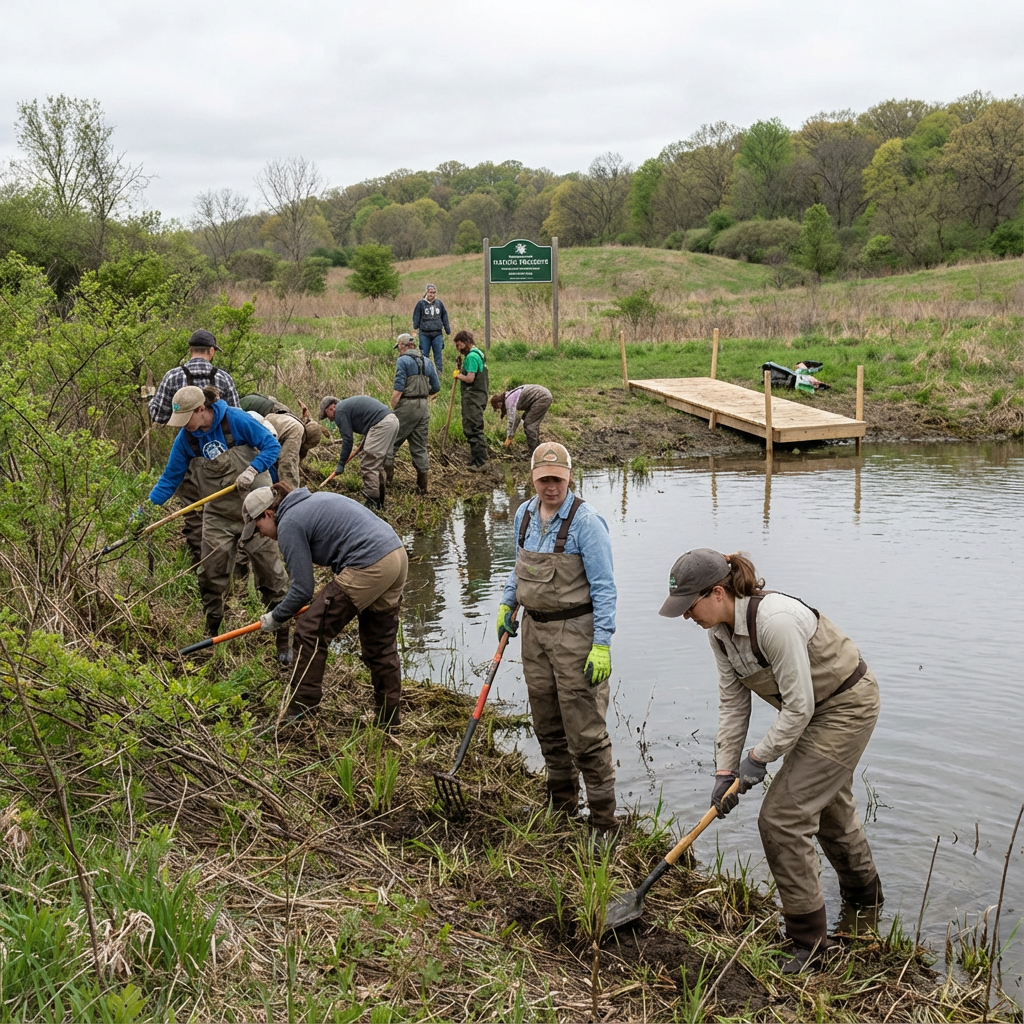
The way to stop lake shoreline erosion is to find out what is pulling the soil away, then fix that cause with deep-rooted native plants, coir logs, live stakes and a gentler slope. Stone goes only where the waves hit hardest. Most banks wash out because of boat wakes, winter ice, runoff from the yard or bare dirt. Each one needs its own fix, so guessing usually means paying twice.
David Eubanks has been doing ecological restoration and native landscape work in Lake County for about 30 years, out of an office in Grayslake. A good chunk of that time has been spent on lake banks that lose a little more ground every spring. Below is how we figure out why a bank is failing and what actually holds it. For the full picture, see how we handle lakeshore restoration.
TLDR:
- Find the cause before you fix anything. Wakes, ice, runoff and bare soil each need a different answer.
- Native sedges, rushes and grasses hold soil with roots that reach several feet down. Lawn grass roots stop at a few inches.
- Coir logs, erosion blanket and live stakes hold the bank while those roots grow in.
- A steep bank graded to about 3:1 or gentler slows water down so it can’t carry soil off.
- Stone belongs at the few spots that take the hardest hits, not along the whole shore.
- Most work at the water’s edge needs permits. We take care of that part.
Why a Lake Bank Washes Away in the First Place
Walk your shoreline and look close. A bank rarely fails all at once. It gets nibbled. A few inches after a storm, a lip of sod hanging over the water, roots sticking out where there used to be dirt. On the lakes around here, that nibbling almost always comes from one of four things.
Waves and Boat Wakes
Every wave hits the bottom of the bank and pulls a little soil back with it. On a busy weekend, wakes do that all day long. The bottom gets carved out, the top has nothing under it, and it slumps into the lake. If your bank has a dark notch right at the waterline, this is your problem.
Winter Ice
When a lake freezes, the ice sheet grows and shoves outward against the shore. It can push soil, rocks and even small trees up the bank. Then spring thaw leaves that loosened ground soft and easy to wash off.
Runoff From the Yard
Sometimes the water doing the damage is coming from behind you. A downspout, a patio or a sloped lawn sends rain straight down the bank. You’ll see little gullies cut from the top down.
Bare Ground and Mowed Grass
Turf mowed right to the edge looks neat. But its roots are shallow, and they don’t hold much when the water comes up.
Deep Roots Do Most of the Real Work
If there’s one thing that stops a bank from washing away, it’s roots. Not rock. Roots.
Kentucky bluegrass, the lawn grass most people have, roots a few inches deep. Native sedges, rushes and prairie grasses are a different animal. Their roots go down several feet and lace together into a mat that grabs the soil from the waterline all the way up the slope. When a wave hits a bank like that, there’s something holding on.
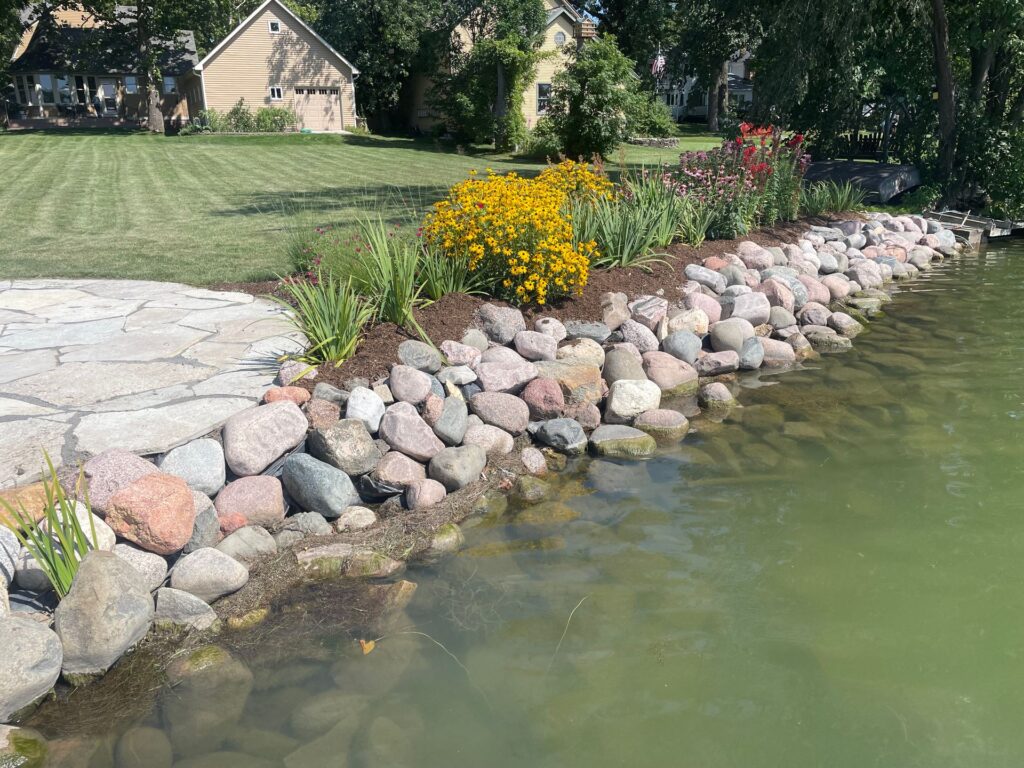
We plant in zones. Right at the water we use plants that like wet feet, like tussock sedge, soft-stem bulrush and blue flag iris. A little higher up, plants that handle being flooded part of the year. At the top, upland prairie grasses and flowers that tie into your yard. Each zone protects the one below it.
There’s a bonus to this. Those plants catch fertilizer and grass clippings before they wash into the lake, so you get less algae near your dock. We never use fertilizer or chemicals near the water. Natives don’t need them, and the lake doesn’t want them.
The catch is time. A new planting is weakest in its first season, before the roots spread. That’s why the next part matters so much. If you want to see how the plants and the shaping fit together on a real bank, here’s how we rebuild a failing lake edge.
What Holds the Bank While the Roots Grow In
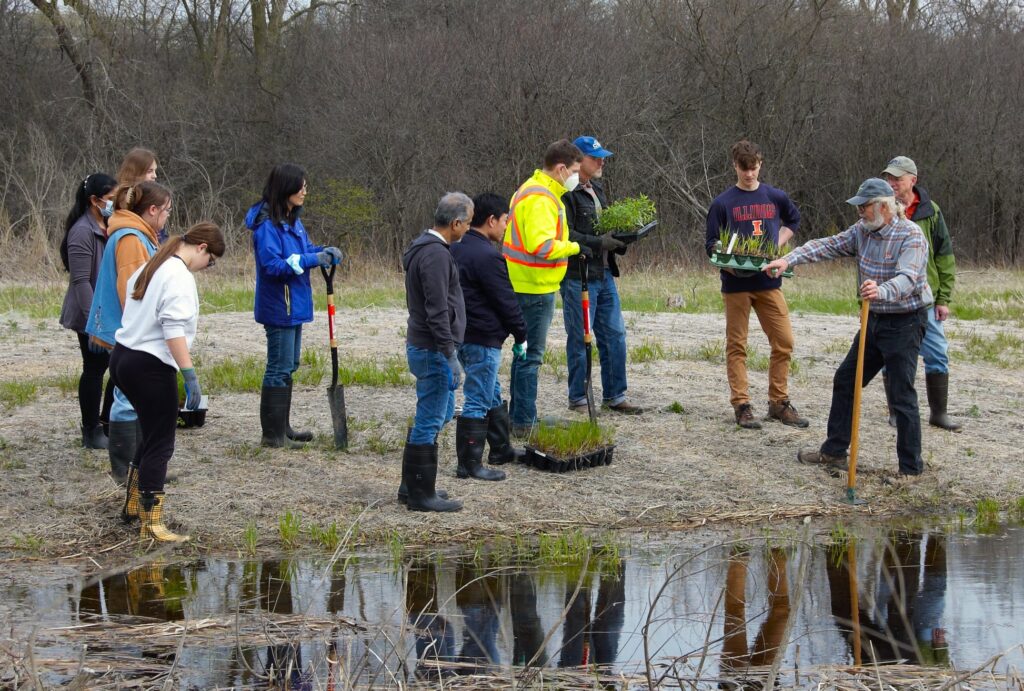
New plants need a year or two before they can carry the load alone. In the meantime, a few tools hold the soil in place.
Coir Logs
These are long rolls of packed coconut fiber, staked along the waterline. They break up small waves, catch soil and give plants a spot to root right into. Over a few years they rot away, and by then the plants have taken over the job.
Live Stakes and Brush Layering
Cut branches from willows and dogwoods get pushed into the bank or laid in rows across it. They sprout roots and grow into shrubs. It’s about as cheap and simple as bank work gets, and it works. Our page on erosion control and bioengineering goes deeper on these.
Grading the Slope
A bank that drops straight down will keep falling no matter what you plant. We shape it back to about 3:1 or gentler, which means three feet out for every foot down. On tall banks, terraces break one long slope into shorter steps, so water can’t build up speed.
Stone, but Only Where It Earns It
Some spots take a beating, like a point that catches wind across the whole lake or the area next to a busy dock. There we may set larger stone at the toe, then plant right above it.
What Most Companies Skip When They Fix a Shoreline
We see the same shortcuts again and again.
The first is skipping the cause. Someone plants a nice edge, but a downspout keeps dumping water down the slope. A year later there’s a gully right through the new plants. If runoff is part of it, we deal with that first, with a swale, a rain garden or just a redirected pipe.
The second is walking away after planting day. The first summer decides everything, since new plugs need water in dry spells and weeds need pulling before they choke things out. Canada geese love young plants, too. A flock can graze a fresh planting to the dirt in a weekend, so we string goose fencing until the plants get tall enough to be left alone.
The third is rock from one end of the yard to the other. It looks done on day one. But a long wall of stone can bounce wave energy onto the bank next door, and ice can shove it out of place. Then there’s the soil behind it, which can still wash out through the gaps if the fabric under it isn’t right.
Timing gets skipped too. We plant in spring or fall, when roots grow fast and the heat won’t cook them. Low water makes the edge easier to reach. Planting in July just to get it done usually means replanting.
Why Lakefront Homeowners Trust Eubanks Environmental With Shoreline Erosion
David has watched restored banks go through about 30 winters of ice and a lot of busy boating summers. That’s the part you can’t fake. You learn which plants hold at the waterline and which ones quit, and how a bank that looked fine in May handles its first big storm.
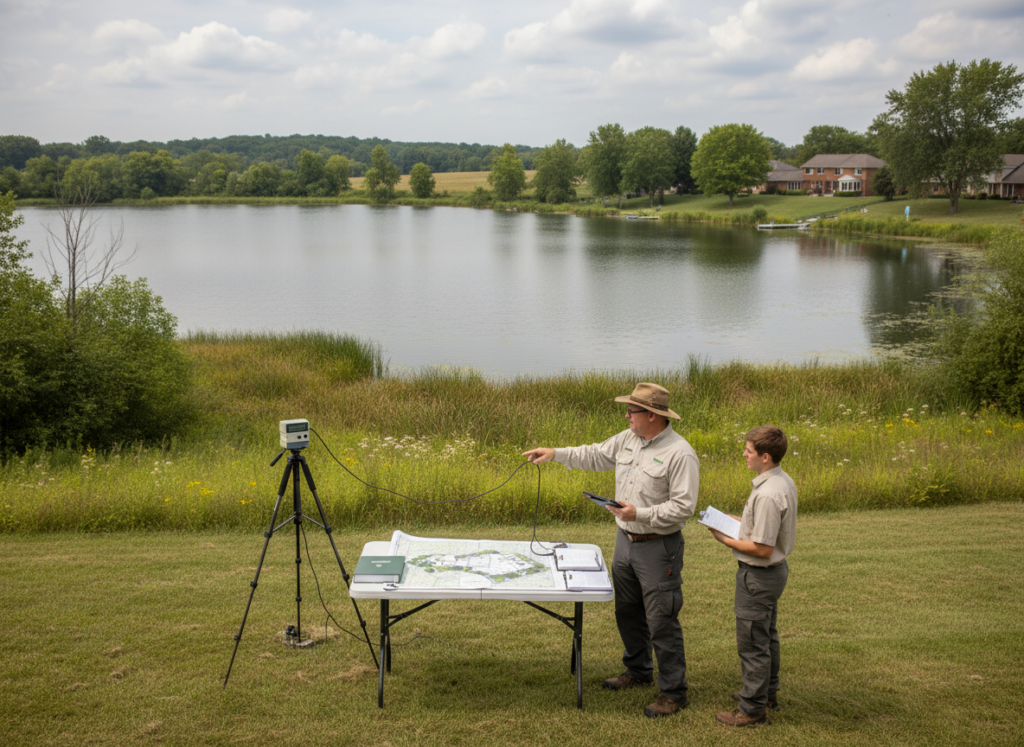
We start every job the same way. We walk the shoreline with you and look at the slope, the soil, the water depth and where the rain comes from. Then we tell you what’s really going on, even if the answer is smaller than you expected.
Permits are part of almost every shoreline job, and that’s the part most homeowners dread. We handle the paperwork with the Illinois DNR, the US Army Corps of Engineers and the county. If you like to read the rules yourself, the state lists its water resources permit programs online.
We do this work on lakes from Grayslake out to Fox Lake, Antioch, Lake Villa and Wauconda. David is also a member of Landscape Illinois. If you want the bigger view of what we build and why, read about our natural shoreline approach.
Frequently Asked Questions
What can I put on a pond or lake bank right now to slow erosion?
Seed with a quick cover like annual rye and lay erosion blanket over any bare soil, then stake it down so it buys you time. If the bottom of the bank is being cut by waves, add a coir log at the waterline. For a lasting fix, swap the turf for deep-rooted native plants.
Will mulch stop erosion on a lake bank?
Not for long, because wood mulch floats and the first high water or hard rain carries it right into the lake. It can help a little on a flat spot up top, but on the slope itself, erosion blanket made of straw or coconut fiber works much better, because it stays put and lets plants grow through it.
What is the cheapest way to stop a shoreline from eroding?
Stop mowing the last few feet before the water and let deep-rooted plants take that strip. Native plugs and live stakes cost far less than a wall of rock. A bank that is already caving in is different, though, and usually needs grading, coir logs and planting together.
Can a washed-out lake bank be rebuilt?
Yes, in most cases. We pull the bank back to a gentler slope, set coir logs or stone at the toe where it’s needed, then plant it in zones. The soil you lost is gone, but the new bank can end up stronger than the old one once the roots fill in.
Ready to Stop Lake Shoreline Erosion on Your Property?
If your bank is dropping a little more each year, it won’t fix itself. Waves and ice don’t take seasons off. The sooner you know the cause, the more of your yard you keep.
Call David at (847) 456-5604 or send us a note through our contact page. We’ll walk the shore with you, tell you what’s causing it and give you a written plan you can count on.