Why Grayslake Homeowners Hire a Landscape Designer Instead of Doing It Themselves?
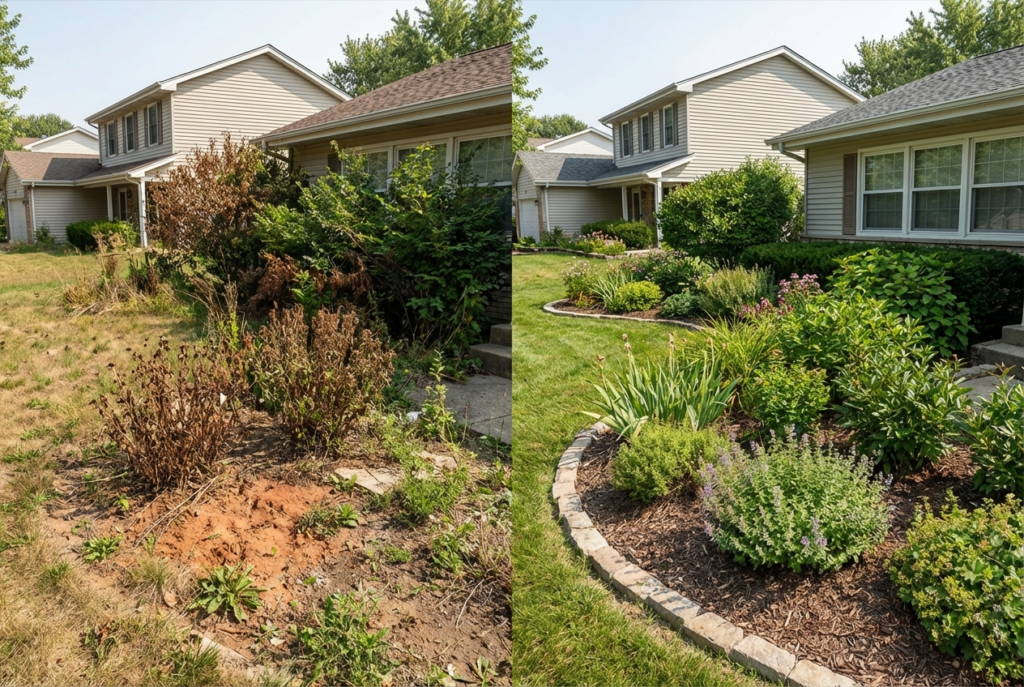
Why Grayslake homeowners hire a landscape designer instead of doing it themselves because DIY landscaping in Lake County almost always costs more in the long run than hiring a professional upfront. The soil fails plants that work fine everywhere else. The drainage problems don’t show up until the patio is already in. The shrubs that looked perfect at the nursery are pushing against the foundation three years later. By the time the mistakes are obvious, fixing them costs two to three times what a designer would have cost before anything went in the ground.
Most homeowners who go DIY in Grayslake don’t regret starting. They regret year two. That’s when the clay soil claims the plants that weren’t built for it, when the first hard spring rain floods the hardscape, and when the yard that looked fine on day one starts showing what happens without a plan behind it.
This page covers exactly why that pattern repeats — and what a landscape designer in Grayslake does differently from the start.
Why Do Grayslake Homeowners Hire a Landscape Designer Instead of Doing It Themselves?
Lake County Clay Makes Plant Selection a Specialist Job
Walk into any garden center in Lake County and you’ll find hundreds of plants that look great and fail in Grayslake clay. Nobody there is going to tell you that. The tag doesn’t say “will drown in clay soil after the first wet spring” or “root system won’t survive a Lake County freeze-thaw cycle.” You find that out in year two when half of what you planted is dead.
Clay soil here holds water longer than most plants can handle. It compacts easily, drains slowly, and swings between waterlogged in April and bone dry in August. Plants that work fine in other parts of Illinois don’t always work here. The freeze-thaw cycle alone — ground freezing hard, thawing, freezing again between November and March — destroys root systems that weren’t built for it.
The plants that actually perform in this soil are the ones with deep root systems that tolerate both extremes. Big bluestem, Pennsylvania sedge, coneflower, native prairie grasses — these are built for Lake County conditions. They don’t need replacing. They don’t need babying. They come back stronger every year.
Most DIY homeowners learn this the hard way. They buy what looks good, lose half of it, replace it, lose it again, and eventually spend more on failed plantings than a conversation with someone who has worked in this soil for decades would have cost before anything went in the ground.
Drainage Planning Is Where DIY Goes Wrong Most Often
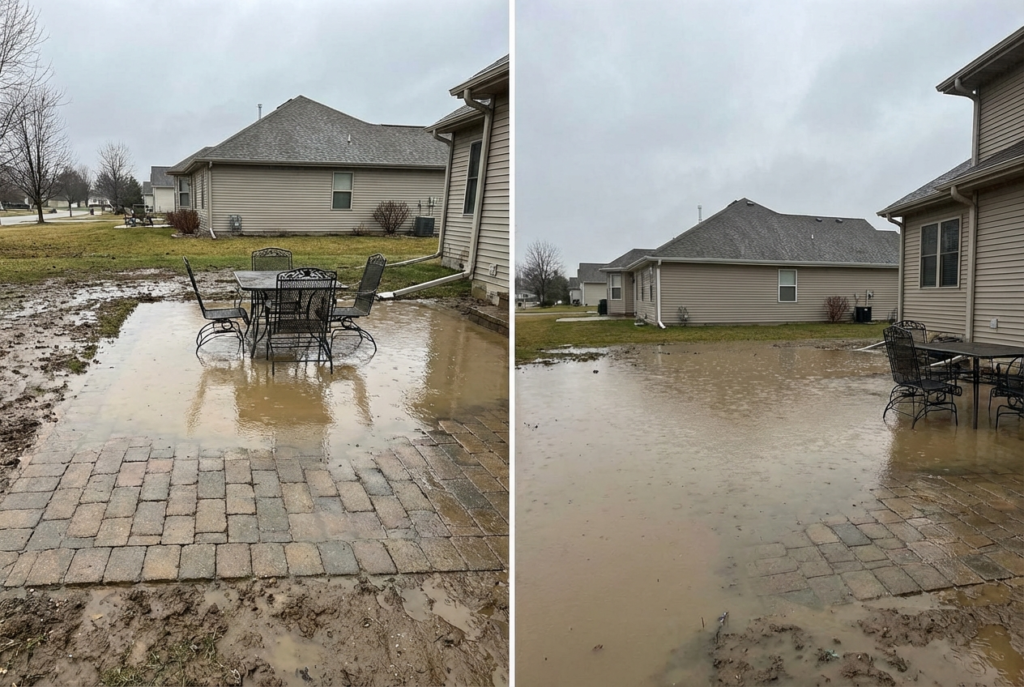
Grayslake sits in a low-lying part of Lake County where water moves slowly and clay soil makes it worse. After a hard rain, water has nowhere to go fast. It pools in low spots, saturates the clay, and stays there longer than most people expect. Most homeowners don’t think about this until the patio floods, the retaining wall starts leaning, or the basement takes on water every spring.
The problem with DIY drainage is the sequencing. Hardscape goes in first because that’s the exciting part — the patio, the walkway, the retaining wall. Drainage gets figured out later, or not at all. By the time the flooding starts, the hardscape is already in the way. Fixing it means pulling up pavers, regrading underneath, and reinstalling. That’s not a small job.
Drainage planned before anything gets built costs a fraction of drainage retrofitted around existing hardscape. A properly graded yard, a bioswale in the right spot, or a rain garden that moves water away from structures — these solutions are straightforward when they’re part of the plan from the start. They’re expensive headaches when they’re afterthoughts.
Most DIY homeowners in Grayslake don’t skip drainage on purpose. They just don’t know to think about it before the fun stuff goes in. According to the University of Illinois Extension, clay soil drainage management is one of the most overlooked factors in residential landscaping failures across northern Illinois. That’s exactly the kind of sequencing mistake a professional prevents before the first shovel hits the ground.
A Designer Sees the Whole Property Not Just the Parts
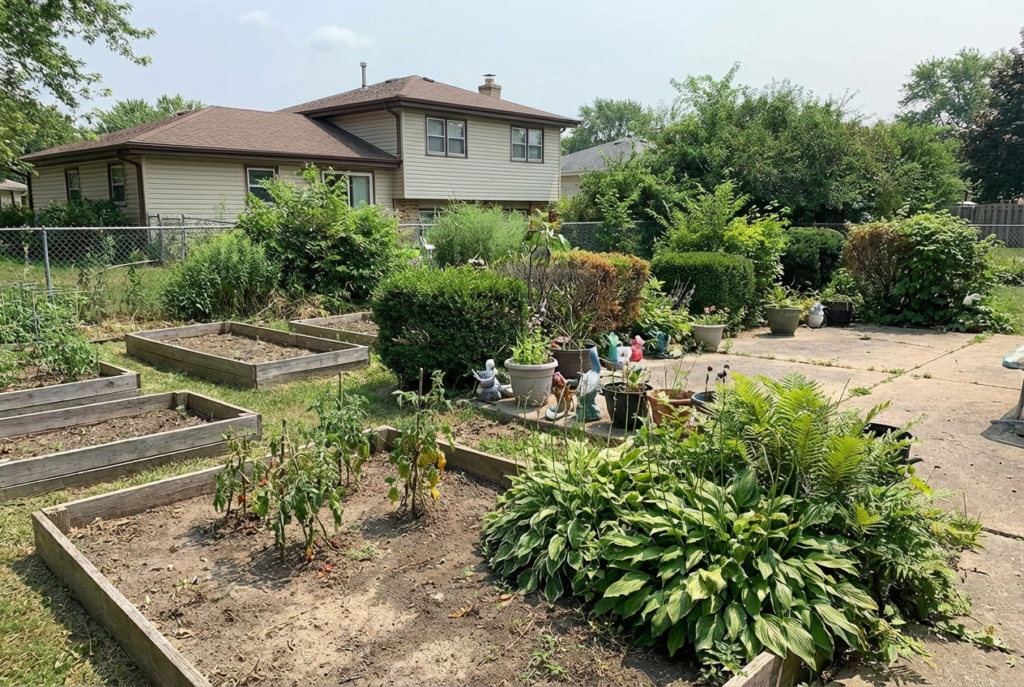
DIY landscaping tends to happen in pieces. A bare spot gets a shrub. A corner looks empty so something goes in. A sale at the garden center leads to three plants that don’t quite fit anywhere but end up in the ground anyway. Three years later the yard has stuff in it but doesn’t feel like it goes together — because it doesn’t. It was never designed as a whole.
That piecemeal approach creates problems that aren’t obvious at first. The shrub that filled the bare spot is now six feet wide and crowding the walkway. The tree that went in the corner because it seemed small is growing into the roofline. The spring-blooming perennials look great in May and dead the rest of the year because nobody thought about what comes after.
A designer looks at the whole property at once — what’s already there, what’s worth keeping, what needs to go, and what the yard should look like in July, September, and January — not just the day everything gets planted. Mature size gets accounted for before anything goes in. Seasonal interest gets planned across all four seasons. The parts get designed to work together instead of against each other.
That kind of thinking doesn’t happen naturally when you’re making decisions one plant at a time. If you want to see what that looks like on a Grayslake property, start with a conversation about your yard before a single decision gets made.
Local Permit Knowledge Protects You From Costly Mistakes
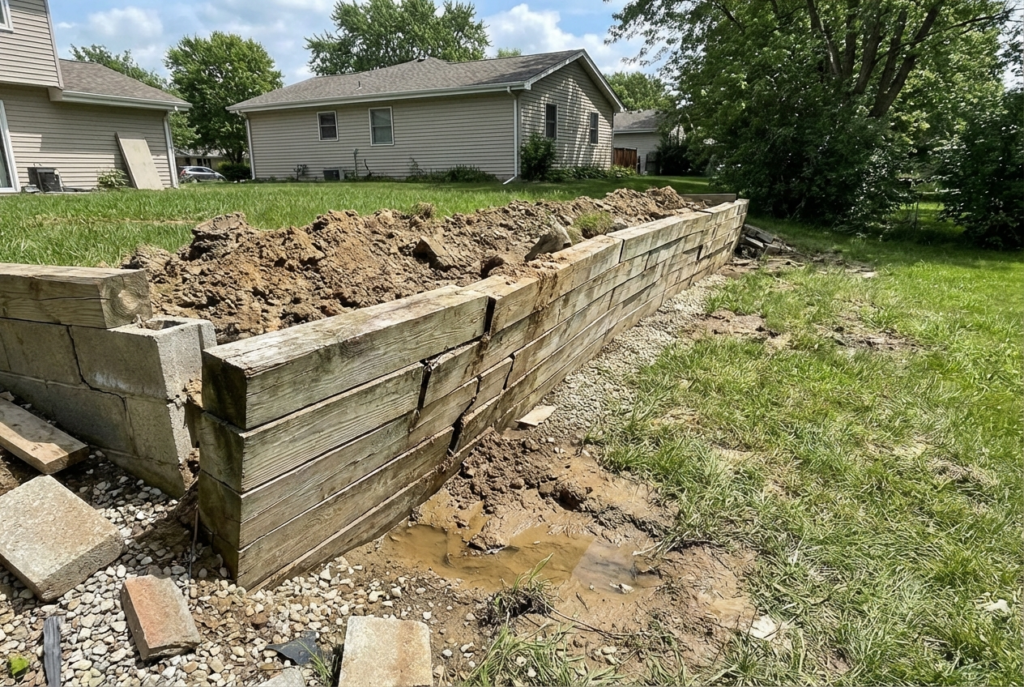
Most homeowners don’t know that certain landscape work in Lake County requires a permit before anything gets built. Grading changes that redirect water flow, retaining walls over a certain height, and any work near a wetland buffer all have requirements that vary by municipality. Highland Park, Lake Forest, and Lake Bluff each have their own steep slope ordinances. Grayslake has its own thresholds. None of this is intuitive and none of it gets posted at the garden center.
The homeowner who builds a retaining wall without checking permit requirements finds out about them after the fact — usually from a neighbor complaint or a municipal inspector. At that point the options are pay the fine, remove the wall, or go through the permit process retroactively, which is more expensive and more time consuming than doing it right upfront. None of those are good options.
Work near wetlands is even more sensitive. Lake County has significant wetland coverage and buffer requirements that restrict what can be built, graded, or planted within certain distances. A homeowner who doesn’t know where the wetland boundary is on their property can unknowingly do work that requires remediation to undo.
A designer who has worked in this area for decades knows these requirements before the plan gets drawn. Permits get pulled correctly, work gets sequenced around approval timelines, and nobody gets a surprise visit from a municipal inspector six months after installation.
When Hiring a Landscape Designer in Grayslake Is the Obvious Call
There are situations where DIY landscaping makes sense. Planting a few annuals, laying mulch, basic pruning — none of that needs a professional. But there are situations where trying to handle it yourself is almost guaranteed to cost more than hiring someone who knows what they’re doing.
If your property has drainage problems, DIY is the wrong call. Drainage in Grayslake clay requires someone who understands how water moves on this specific terrain. A guess that’s slightly off creates a problem that’s expensive to undo.
If your yard needs a complete redesign, starting without a plan means making every decision twice. Once when you do it, and once when you fix it.
If your property is near a wetland, has a steep slope, or backs up to a ravine, the permit and regulatory landscape alone justifies bringing in someone who knows the requirements. The cost of getting that wrong isn’t just financial — it can mean required remediation that takes years to resolve.
And if you’ve already tried DIY and it didn’t work — the plants died, the drainage failed, the yard never came together the way you pictured — that’s the clearest sign that local expertise was what was missing from the start.
The reality is that most landscaping projects in Grayslake involve at least one of these situations. Clay soil, low-lying terrain, proximity to wetlands, and freeze-thaw cycles that stress everything from plants to hardscape — these aren’t edge cases here. They’re the standard conditions on most properties in this area. That’s what makes local expertise worth the investment on projects that go beyond basic maintenance.
It’s also worth thinking about the time factor. DIY landscaping isn’t just a financial commitment — it’s a time commitment that most homeowners underestimate. Researching what works in this soil, sourcing the right plants, understanding the permit requirements, figuring out drainage before hardscape goes in — each of those is a project on its own. A professional handles all of it so you don’t have to.
Most Grayslake homeowners who bring in a professional say the same thing afterward. They wish they’d picked up the phone before the first mistake instead of after the third one.