
Landscape Installation Services in Round Lake IL and Lake County
After 30 years providing landscape installation services in Round Lake and Lake County, we’ve learned that installation is where plans stop being ideas and start becoming reality. Plants go in the ground, hardscape gets built, drainage gets fixed.
Not all installation starts with a formal design. Sometimes you already know what you need—a rain garden in that low spot, native plantings along the shoreline, a patio that slopes away from the house. We can work from plans or just handle it based on what your property needs.
We focus on native plants because we know what survives Illinois winters and summer droughts without constant babysitting. Our approach aligns with habitat restoration efforts happening throughout the Great Lakes region,¹ using native species that support local ecosystems and wildlife. When we’re building hardscape or fixing erosion, we’re thinking about how water moves and how everything connects as a system.
Half-acre residential or twenty-acre shoreline restoration—we build it to last.
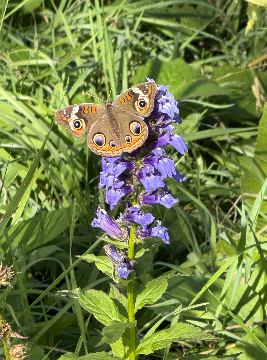
We install native plants—prairie grasses, woodland wildflowers, wetland species—that actually belong in Illinois. Installation isn’t just digging holes and dropping plants in. We look at your soil, how water drains, where the sun hits, and make sure everything goes in at the right depth and spacing. Native species need way less maintenance once they’re established, but only if they’re installed right from the start. We’ve been doing this since the early ’90s, so we know which plants handle transplant stress and which ones need extra care to make it through their first season.
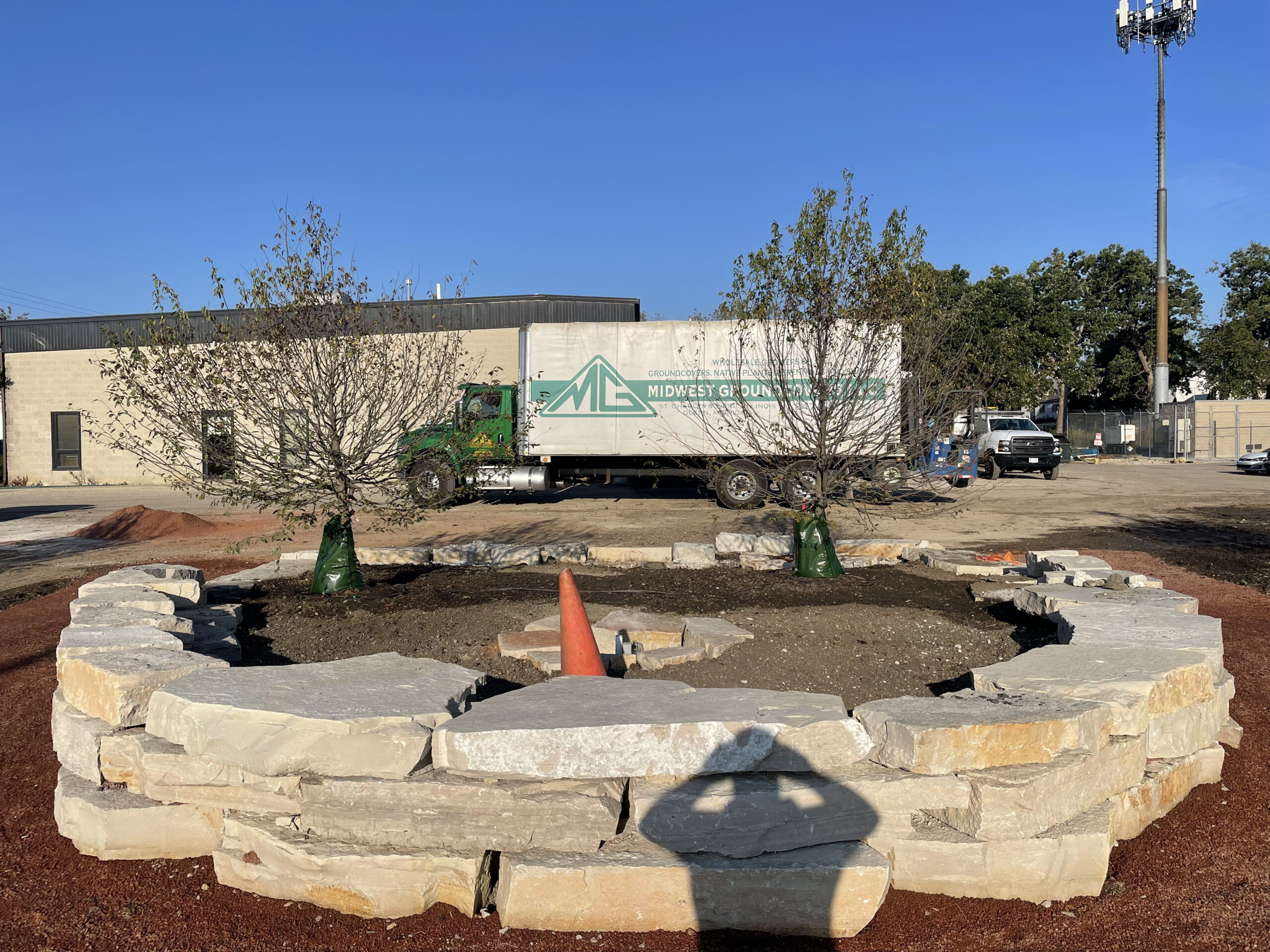
Hardscaping covers patios, walkways, retaining walls, fire pits—anything built with stone, pavers, or concrete. We use materials like flagstone, bluestone, and Unilock pavers. The difference between hardscape that lasts and hardscape that fails comes down to base prep and drainage. We’ve seen too many patios installed by crews cutting corners to save time, and a year later they’re sinking or holding water. We take the time to do it right—proper excavation, compacted base, correct slope for drainage—so you’re not dealing with problems three years down the road. Our mission is to create something beautiful that will last you not years, but decades to come.
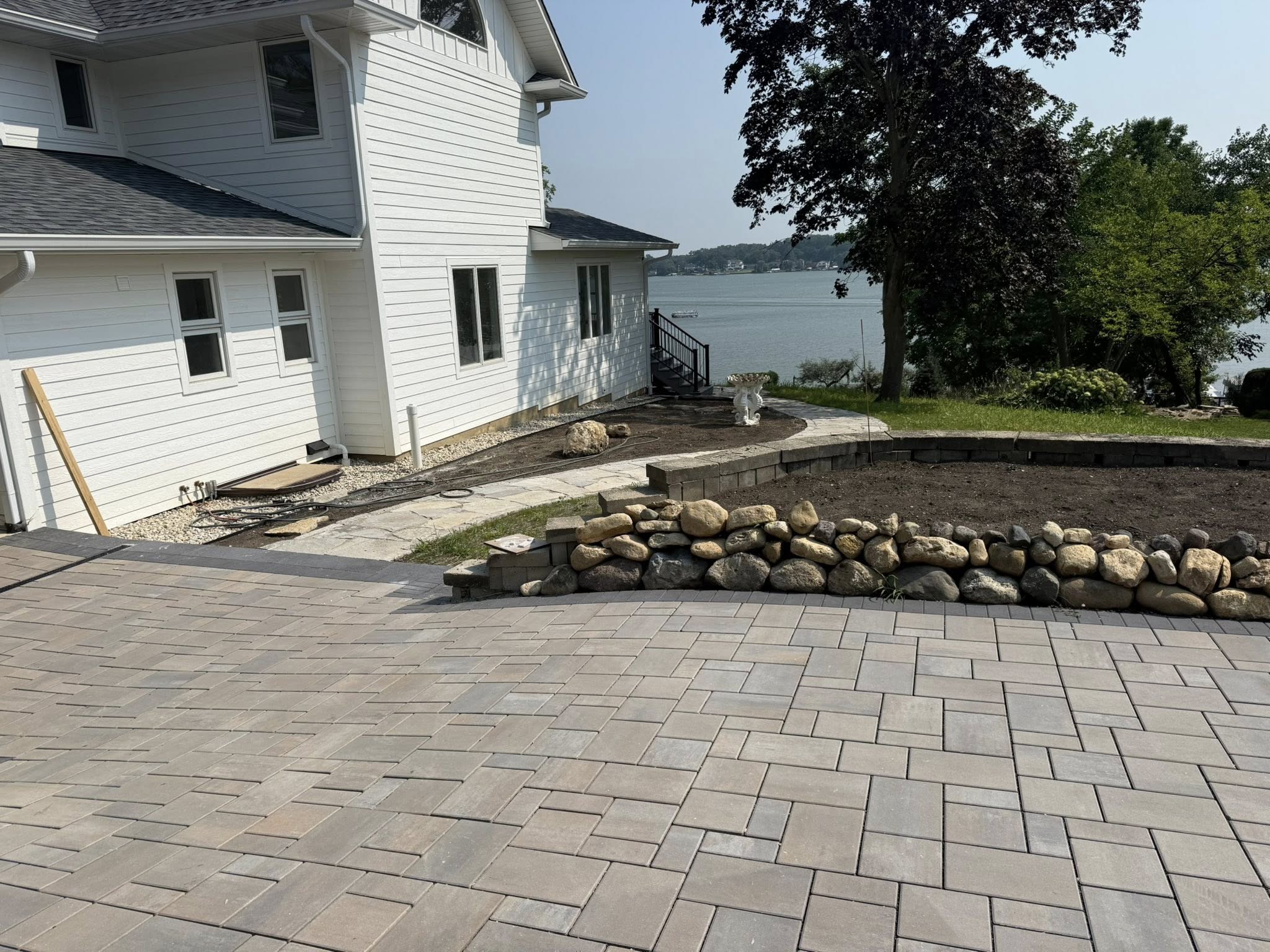
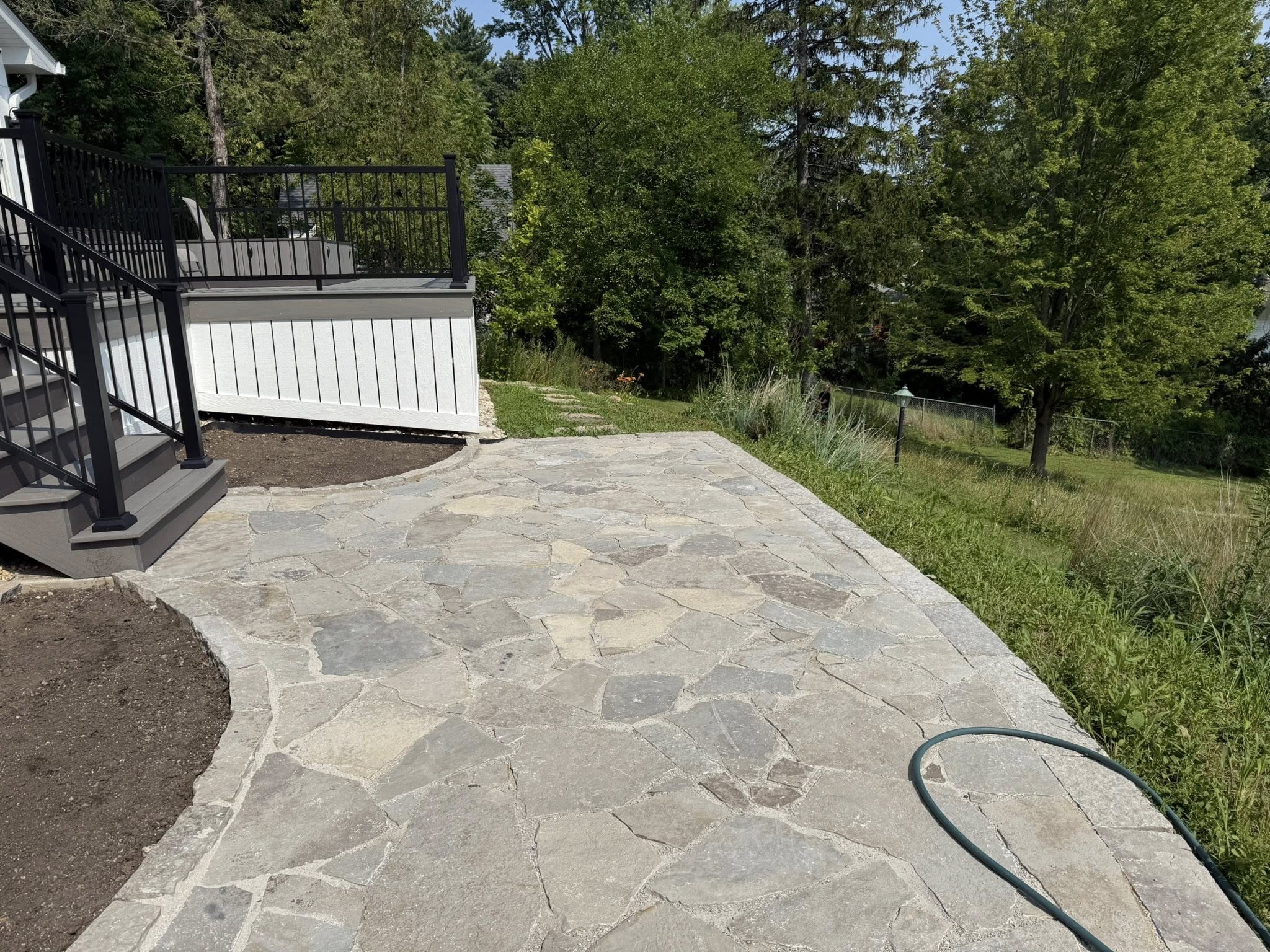
We install patios using pavers, flagstone, bluestone, and materials that can handle Illinois winters without cracking or shifting. Installation starts below ground—proper excavation and a compacted stone base built up in layers. This isn’t the exciting part, but it’s what keeps your patio from sinking in five years. Drainage matters too. If water pools against your foundation instead of running off, you’ve got problems. We’ve torn out and rebuilt enough bad patios to know exactly what happens when someone rushes the base work or ignores slope. Ours last through freeze-thaw cycles and decades of use.
Prairie installation involves planting native grasses and wildflowers that recreate the ecosystems that used to cover Illinois before development. We’re talking big bluestem, Indian grass, purple coneflower, black-eyed Susan—species that have deep root systems and handle drought once established. Installation requires proper soil prep, correct seeding rates, and timing that works with Illinois weather patterns. The first year or two, prairies don’t look like much while plants focus on root development underground. By year three, you’ve got something that supports pollinators, needs almost no maintenance, and actually looks better as it matures.
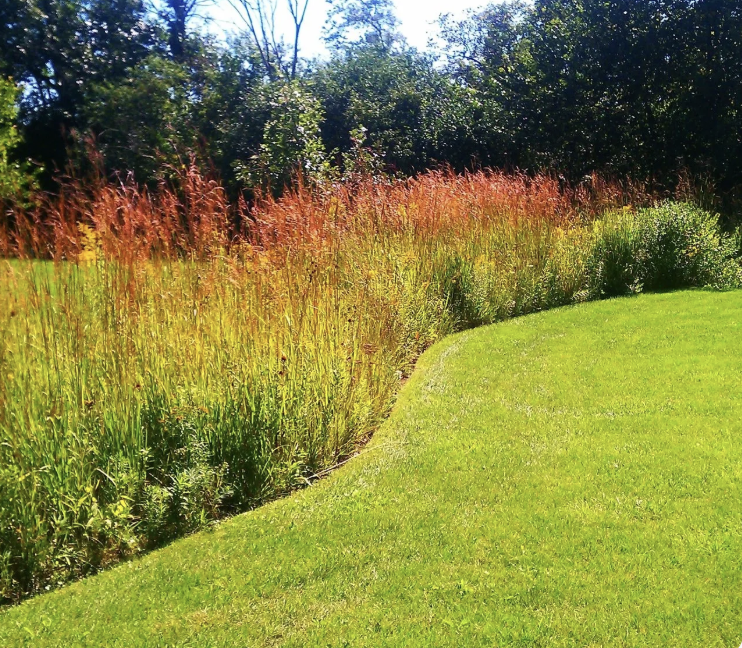
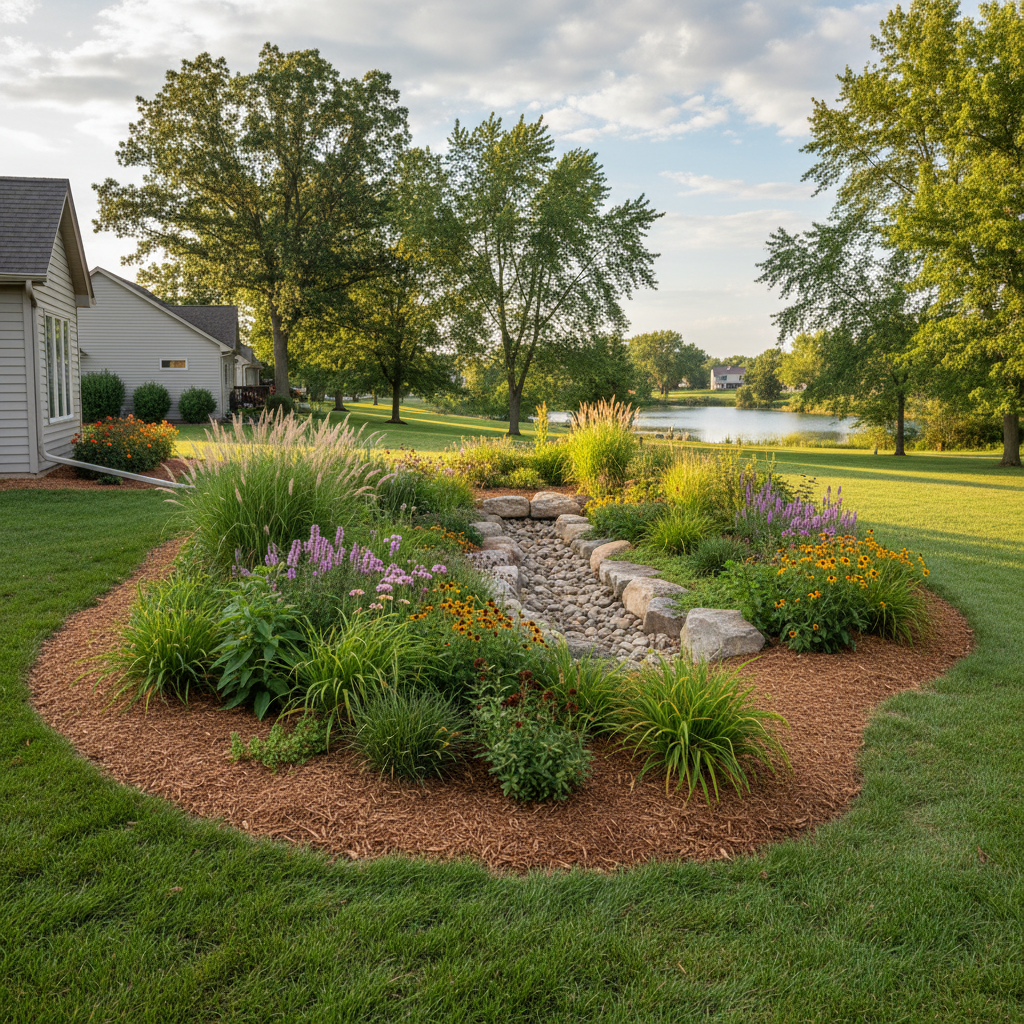
Rain gardens catch water from your roof and driveway and soak it into the ground instead of sending it to storm drains. We’ve built a lot of these around Lake County. The best ones go in spots where water already pools up after it rains. We use native plants that can sit in water for a few days, then survive when it’s dry for weeks. The hard part is digging to the right depth and making sure water flows in without washing away the soil and plants. A good rain garden fixes your drainage problem and looks like it’s supposed to be there.
Shoreline restoration protects lakefront and riverbank property from erosion using native plants and bioengineering techniques instead of just rip-rap or seawalls. We’ve worked on shorelines throughout Lake County where wave action and runoff have been washing away soil and destabilizing banks. Native plants with deep root systems hold soil in place naturally while creating habitat for fish and wildlife. Installation involves grading the slope correctly, choosing plants based on how much water exposure they’ll get, and sometimes using biodegradable materials to stabilize things while plants establish. It takes a couple seasons for roots to develop enough to really hold the bank, but once established, it’s way more effective than trying to armor everything with rock.

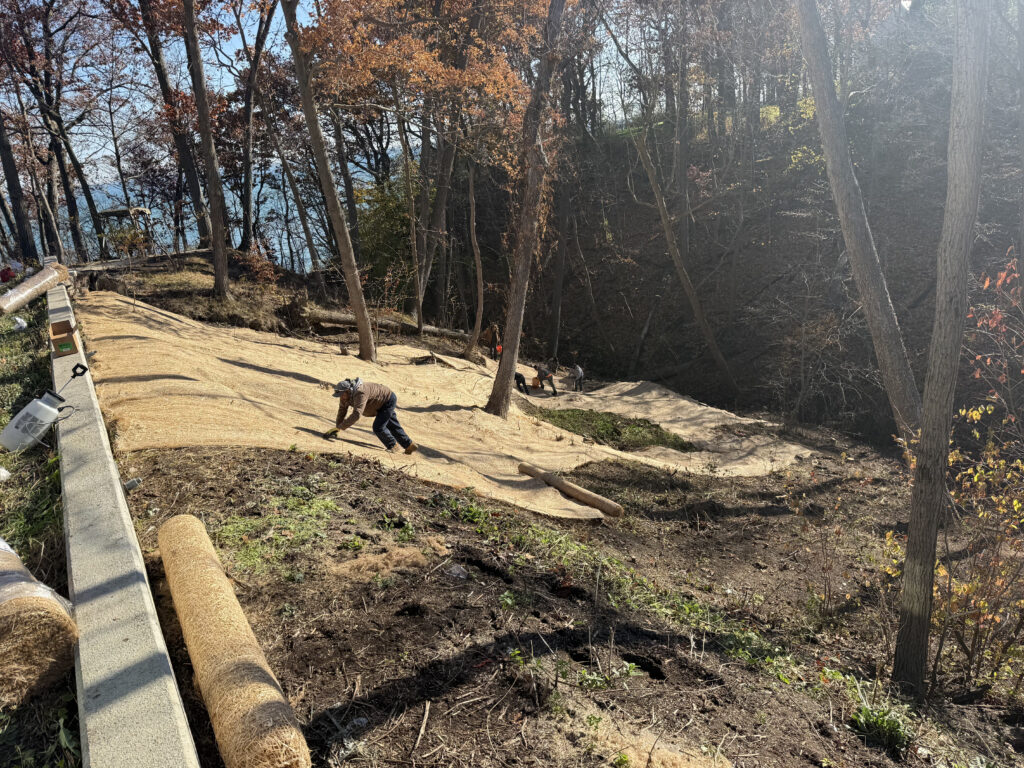
Erosion control and bioengineering use native plants and natural materials to stabilize slopes and prevent soil loss instead of relying only on rip-rap or concrete. We install solutions like coir logs, erosion control blankets, and deep-rooted native plants that hold soil in place on steep banks and slopes. This works for shorelines, ditches, hillsides—anywhere you’re losing soil to water or gravity. The materials we use break down over time as plant roots take over the stabilization work. It takes a season or two for plants to establish enough to really hold things, but once they do, you’ve got a system that works with nature instead of fighting it.
Retaining walls hold back soil on slopes and create level spaces for patios, planting beds, or walkways. We build them using stone, concrete block, or timber depending on how high the wall needs to be and what it’s holding back. The critical parts happen below ground—proper footing depth and drainage behind the wall so water pressure doesn’t eventually push the whole thing over. We’ve rebuilt enough failed walls to know exactly what happens when installers cut corners on base prep or skip the drainage step. Done right, a retaining wall handles Illinois freeze-thaw cycles for decades. Done wrong, it starts leaning or cracking in just a few years.
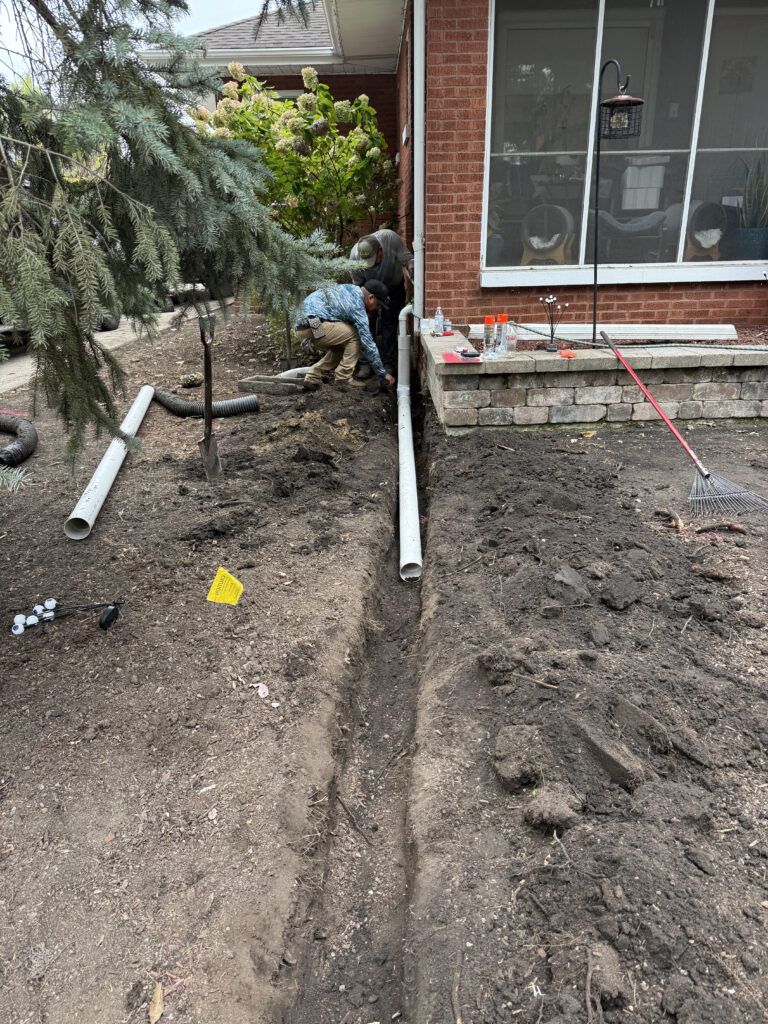
We’ve been fixing drainage problems around Lake County for 30 years, and honestly, most issues come down to water going where it shouldn’t. Standing water near your foundation, soggy spots that never dry out, erosion washing out your landscaping—these don’t fix themselves. We install French drains, catch basins, swales, and sometimes just regrade sections to redirect water properly. The real work is figuring out where the water’s actually coming from, not just where you see it sitting. We’ve dug up plenty of “solutions” installed by other crews who just addressed the symptom without understanding the source. Our approach: trace the water back, fix the cause, and make sure it drains away from your house and plantings so you’re not dealing with the same problem next spring.
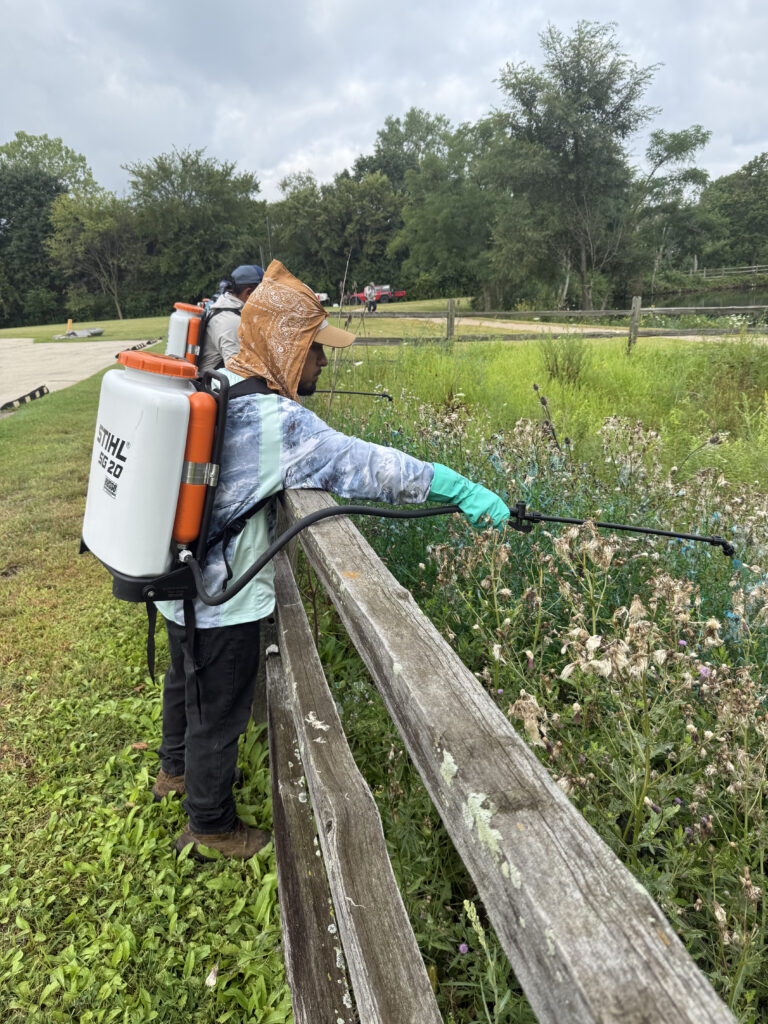
Invasive species like buckthorn, honeysuckle, and garlic mustard choke out everything native if you let them go. We’ve been battling these plants around Lake County since the early ’90s, and buckthorn is by far the worst—it grows fast, creates dense shade, and spreads aggressively. A lot of property owners try cutting it down themselves, but it just regrows from the roots even thicker than before. The only way that actually works is cutting and treating the stumps immediately so they can’t resprout, then coming back to catch anything we missed. We also replant with native species that can hold their ground once the invasives are gone. It’s not a one-time fix—invasives are persistent—but done right, you get your land back.
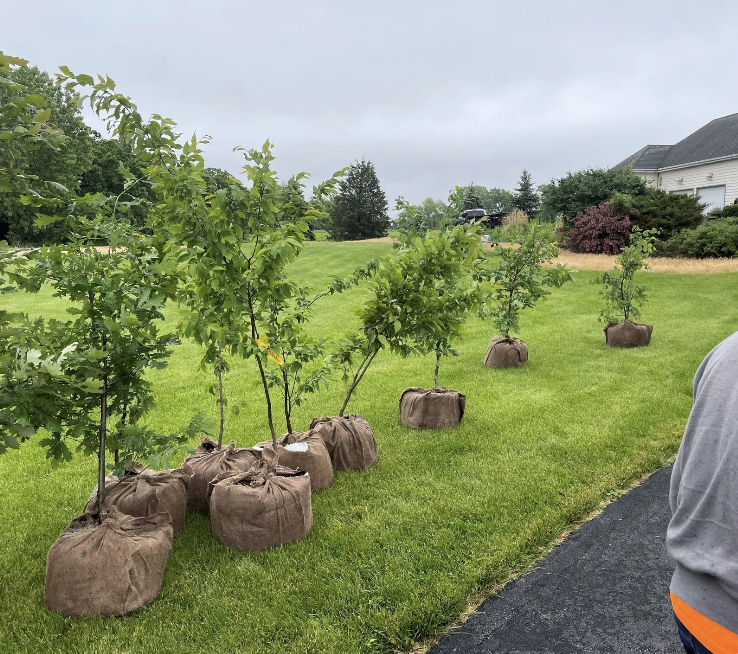
We plant native trees and shrubs—oaks, maples, serviceberry, ninebark, dogwood—species that are adapted to Illinois and support local wildlife. Planting isn’t complicated, but it matters how deep you plant, whether you remove burlap and wire baskets correctly, and if you stake trees that actually need it versus ones that don’t. We’ve seen plenty of trees planted too deep or left wrapped in burlap that should’ve been removed, and they struggle for years or just die. We also remove trees and shrubs when needed, grind stumps, and clear out dead or damaged growth. The goal is getting the right plant in the right spot, installed properly so it actually thrives instead of just surviving.
Why Choose Eubanks Environmental For Landscape Installation
We've Been Installing Native Plants For Three Decades
We started doing this in the early 1990s when most landscapers were still planting burning bush and Norway maples. After 30 years, we’ve figured out which native species actually establish well, which ones need specific conditions, and how to plant them so they survive instead of limping along for a season or two before dying. Experience matters when you’re working with plants that most installers have never touched.
We Understand How Sites Actually Work
A lot of installation crews just follow the plan without thinking about what’s happening on the ground. Water pooling where it shouldn’t. Soil that’s different than expected. Grades that don’t match the design. We’ve been doing this long enough to adjust on-site when reality doesn’t match the drawings, and to catch problems before they become expensive fixes later.
We Install For The Long Term
Quick installation looks the same as quality installation—for about six months. Then you see which plants were installed at the wrong depth, which hardscape wasn’t built on proper base material, which drainage solutions don’t actually move water. We install thinking about how everything will perform five and ten years out, not just how it photographs when we’re done.
Contact Us Today!
Contact UsReady To Start Your Landscape Installation Project?
We’ve been installing native plant landscapes and building hardscape projects in Round Lake and throughout Lake County for over 30 years. Schedule a consultation to discuss your property and what you’re looking to accomplish.
Call (847) 456-5604 or email eubanksinc@gmail.com.