What Does Hardscaping Cost in Grayslake and Lake County?
What does hardscaping cost in Grayslake and Lake County? It depends on more than material selection and square footage. National cost guides give you averages that don’t account for the conditions that actually drive price here — clay soil that requires deeper base preparation than most other parts of the country, freeze-thaw cycles that determine which materials hold up and which ones fail, drainage planning that has to happen before installation, and permit requirements that vary by municipality across Lake County.
Most Grayslake homeowners who get their first hardscape quote are surprised by the number. Not because contractors are overcharging, but because doing it right in this soil costs more than the national average suggests. Understanding what drives that number before you get quotes puts you in a much better position to evaluate what you’re being told.
This page breaks down what hardscaping actually costs in Grayslake and Lake County — by project type, by material, and by the local conditions that affect every number on your estimate.
TLDR:
- Hardscaping in Grayslake runs $8-$30 per square foot depending on materials and complexity
- Most residential patio projects land between $8,000 and $20,000
- Lake County clay soil requires deeper base preparation than national averages — this adds cost but prevents failure
- Material choice matters more in freeze-thaw conditions than in milder climates
- Permit costs vary by municipality and project scope across Lake County
- Drainage planning before installation is the most important cost decision on any Grayslake hardscape project
What Does Hardscaping Cost in Grayslake and Lake County?
What Hardscaping Costs in Grayslake and Lake County
National cost guides put hardscaping at $5 to $25 per square foot. That range is real — it just doesn’t tell the whole story for Grayslake and Lake County. Up here the number runs higher. Typically $8 to $30 per square foot depending on materials, site conditions, and what the project actually involves. The difference isn’t contractors padding their margins. It’s what this soil requires to do the job correctly.
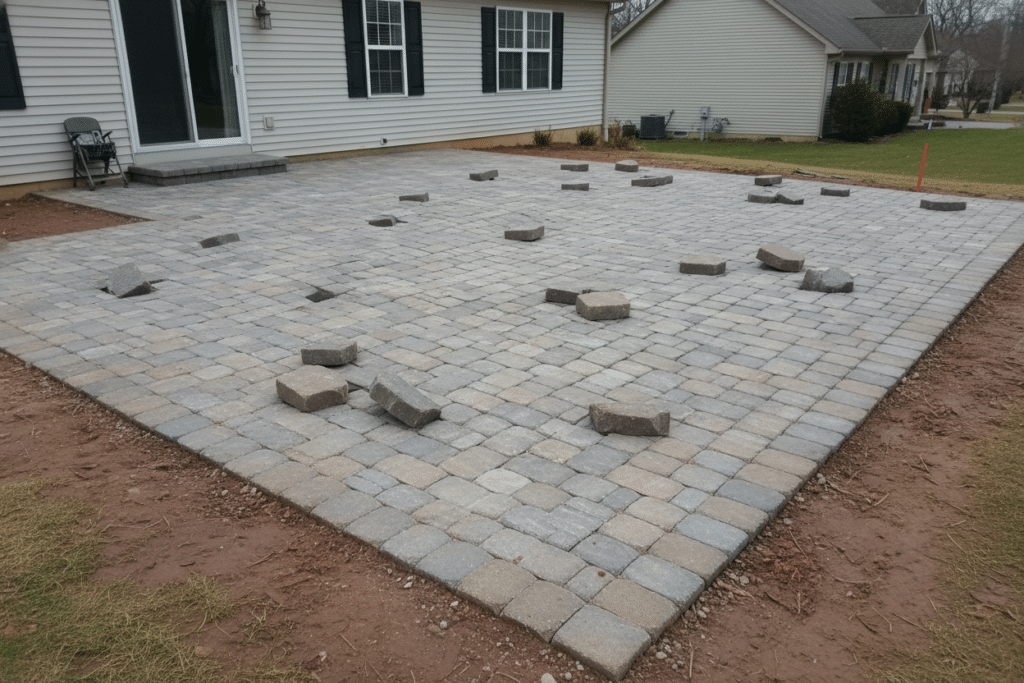
Clay soil doesn’t behave the way gravel or loam does under hardscape. It holds water longer than it should, expands when it freezes, and shifts under load in ways that crack patios and push retaining walls out of alignment within a few seasons. Getting ahead of that means digging deeper, installing more compacted gravel base, and planning drainage before a single paver goes down. That adds cost. But a patio that fails in year three because the base was cut short costs a lot more than doing it right the first time.
Labor rates in the northern Illinois suburban market run above the national average too. Crews that know how to prep a base for Lake County conditions, coordinate permits across municipalities, and sequence drainage with installation charge accordingly. A low bid that skips base prep isn’t saving you money — it’s deferring a larger expense.
Most residential hardscape projects in Grayslake land somewhere in these ranges. A mid-size paver patio with proper base prep runs $8,000 to $15,000. A project that adds a retaining wall, steps, drainage, and outdoor living elements can run $20,000 to $40,000 depending on scope. The only way to get an accurate number is a site visit — because the conditions on your specific lot determine more of the final cost than the project type does.
Cost by Project Type in Northern Illinois
Here’s something most hardscape cost guides don’t tell you — the project type is actually the least important number in your estimate. What matters more is what the site requires before the project type even comes into play. That said, you need a starting point. Here’s what common projects typically cost in Grayslake and Lake County once proper base prep and drainage are factored in.
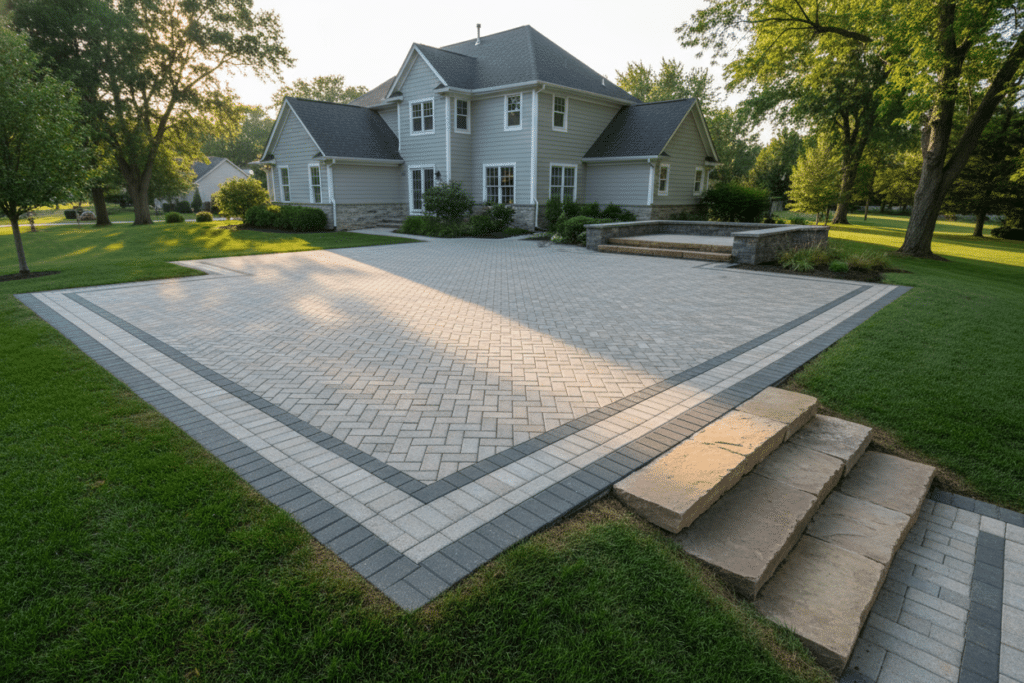
A paver patio runs $10 to $20 per square foot installed. A 200 square foot patio — enough for a table, chairs, and room to move around — lands between $8,000 and $15,000. That range assumes proper base prep for Lake County clay. A quote that comes in significantly under that number is almost always cutting something, and in this soil, what gets cut usually shows up within two or three seasons.
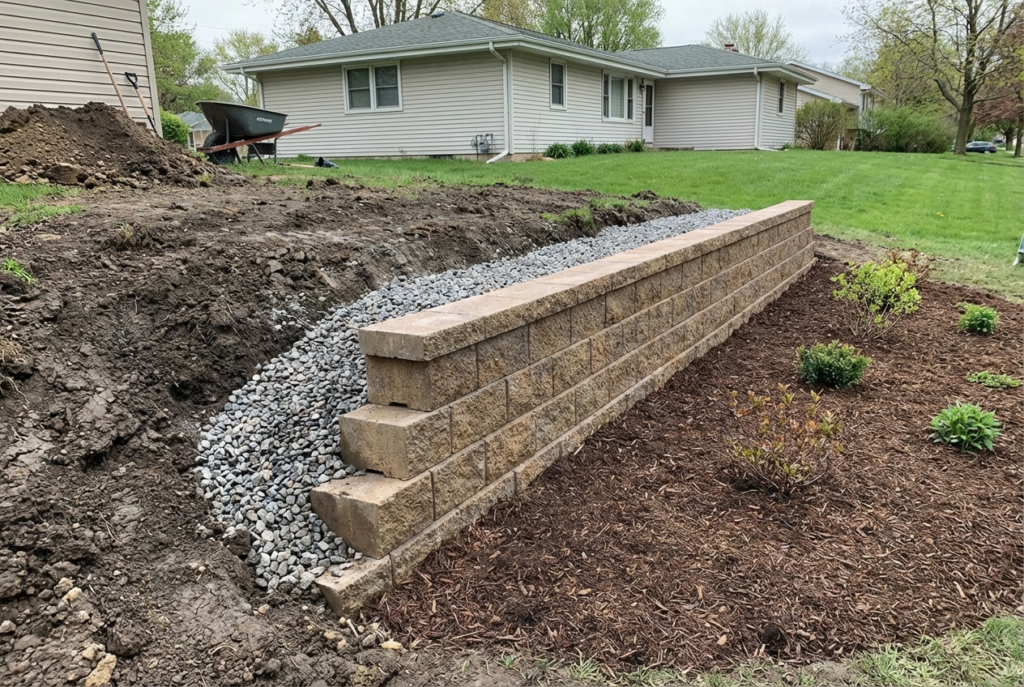
Retaining walls are priced by linear foot and height. In Lake County clay, where walls are fighting both soil pressure and freeze-thaw movement, a basic retaining wall runs $50 to $125 per linear foot. A 20-foot wall lands between $6,000 and $12,000. Taller walls, walls near wetland buffers, or walls that require drainage behind them push that number higher — and skipping the drainage behind a retaining wall in this soil is one of the most expensive mistakes a Grayslake homeowner can make.
Walkways run $8 to $15 per square foot for a standard paver installation. A typical front walk from the driveway to the door runs $2,000 to $5,000. Simple on paper — but walkways in clay soil that weren’t properly graded are the ones that heave in spring and become trip hazards within a few years.
Steps run $1,000 to $5,000 depending on material and number of risers. Fire pit foundations and outdoor kitchen pads run $3,000 to $15,000 depending on complexity. A simple paver fire pit area is at the low end. A full outdoor kitchen with gas line coordination, drainage, and structural support is at the high end.
According to Angi’s 2026 hardscaping cost data, the national average for hardscape projects sits around $9,000. Grayslake projects with clay soil preparation requirements consistently run above that baseline — not because the work is more expensive, but because there’s more of it required to get a result that holds up.
Materials and What They Cost in Lake County
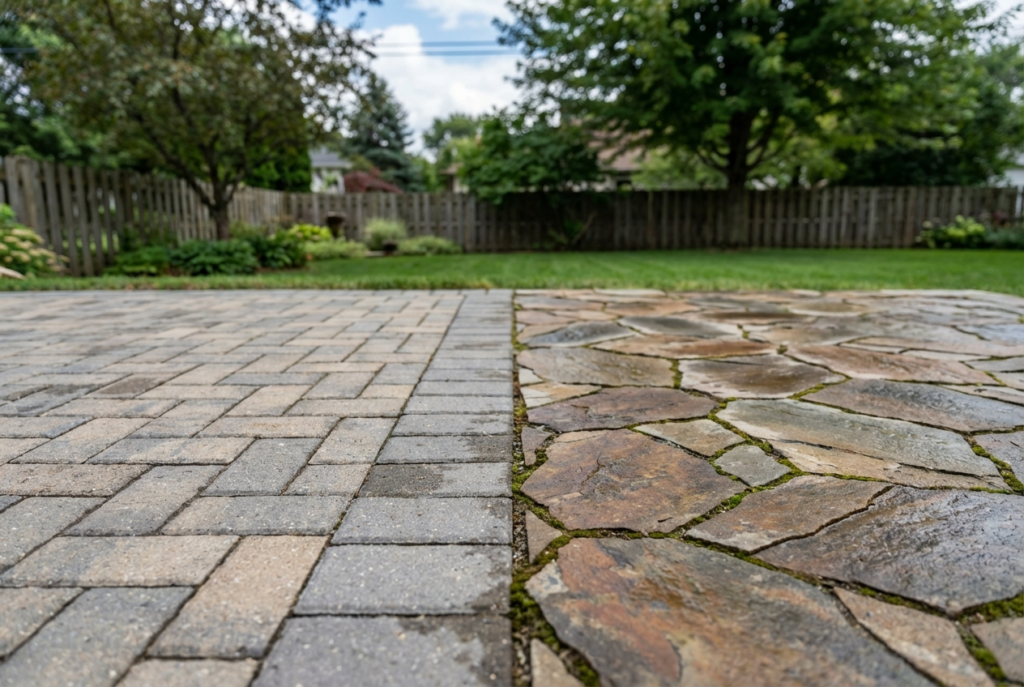
Material selection affects price — but in Lake County it also affects how long the project holds up. A material that performs fine in a milder climate can fail here within a few seasons if it wasn’t chosen with the freeze-thaw cycle in mind. The cheapest option upfront isn’t always the cheapest option over ten years.
Concrete pavers are the most common choice for Grayslake patios and walkways. They run $10 to $20 per square foot installed and perform well in freeze-thaw conditions because individual pavers can flex slightly with ground movement without cracking. If a paver shifts or breaks it can be replaced individually without disturbing the rest of the installation. That repairability matters in a climate where the ground moves every winter.
Natural stone runs $20 to $35 per square foot installed and is the highest-end option aesthetically. Limestone, bluestone, and granite all hold up in Lake County winters when they’re installed on a proper base. The risk with natural stone isn’t the material — it’s the installation. Natural stone on an inadequate base in clay soil heaves, shifts, and creates uneven surfaces faster than pavers do because the pieces are larger and less forgiving of movement.
Stamped concrete runs $12 to $18 per square foot and looks great on day one. The long-term reality in this climate is more complicated. Stamped concrete is a single slab — when the ground moves underneath it, the whole slab cracks rather than individual pieces shifting. Sealing requirements add ongoing maintenance cost. It’s not a bad option, but it needs to be chosen with eyes open about what freeze-thaw cycles do to concrete slabs in Lake County over time.
Poured concrete runs $8 to $12 per square foot and is the most affordable option. The same freeze-thaw cracking risk applies. A poured concrete patio on a properly prepared base with control joints in the right places can perform well here. One installed without adequate base prep or drainage will show cracks within a few seasons.
The honest answer is that concrete pavers on a properly prepared base are the best long-term value for most Grayslake hardscape projects. They cost more than poured concrete upfront and less than natural stone, and they handle the freeze-thaw cycle better than either. Getting the material recommendation right for your specific site is part of what a proper site assessment covers before any work begins.
Why Lake County Clay Soil Affects Your Base Prep Cost
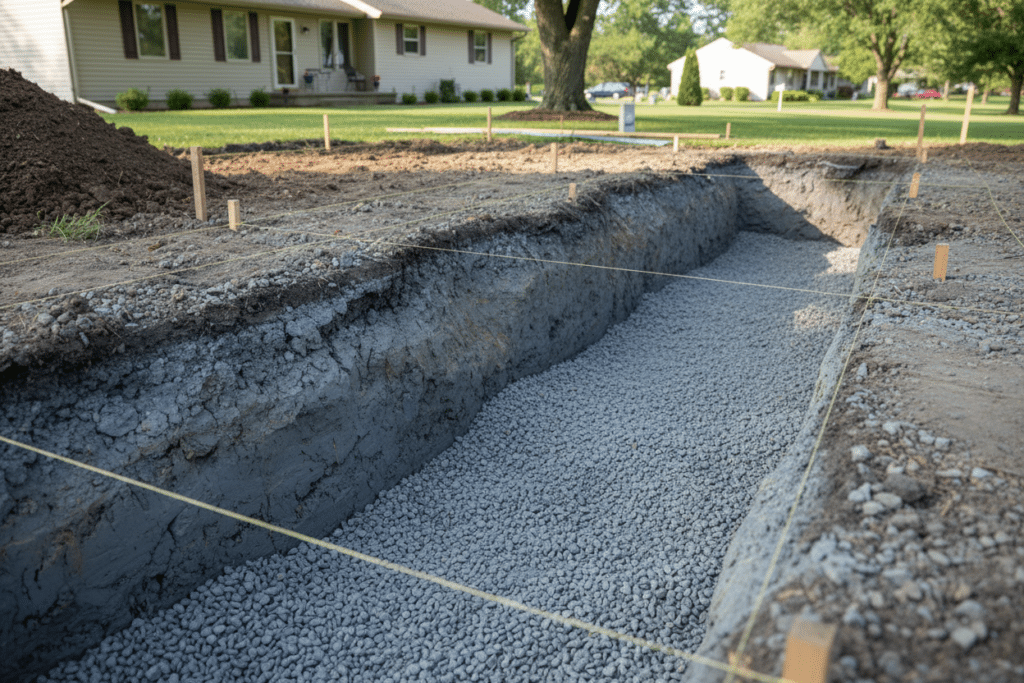
This is the section most hardscape cost guides skip entirely — and it’s the one that matters most for Grayslake homeowners trying to understand why their estimates run higher than what they read online.
Every hardscape installation requires a base layer of compacted gravel underneath the surface material. That base is what absorbs ground movement, manages drainage, and prevents the freeze-thaw cycle from pushing the hardscape out of alignment. The depth of that base determines how well the installation holds up over time — and in Lake County clay, the required depth is significantly greater than the national standard.
Most hardscape installations in other parts of the country require 4 to 6 inches of compacted gravel base. In Lake County clay, the standard is 8 to 12 inches. The reason is simple. Clay soil holds water. Water in clay soil freezes in winter, expands, and pushes up against whatever is sitting on top of it. A patio on a 4-inch base in Grayslake clay will heave, shift, and fail within a few seasons. The same patio on a properly prepared 10-inch base handles the freeze-thaw cycle without moving.
That additional base depth adds cost in two ways. More excavation — digging 10 to 12 inches down instead of 4 to 6 inches requires more time and equipment. More material — the compacted gravel that fills that depth costs money and has to be delivered, spread, and compacted in lifts to achieve the density the base requires.
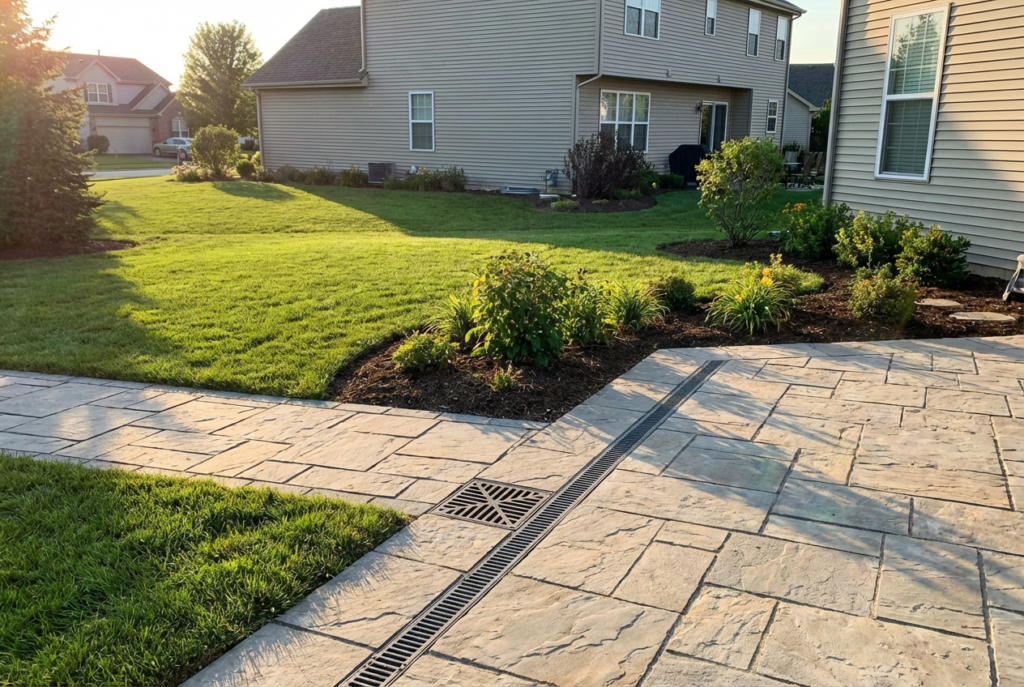
Drainage planning adds another layer. Grayslake’s low-lying terrain means water has to go somewhere after a hard rain. A hardscape installation that doesn’t account for drainage direction before the base goes down ends up trapping water under the surface — which accelerates the exact freeze-thaw failure the base was designed to prevent. Getting drainage right before installation starts is the single most important decision on any Grayslake hardscape project, and it’s one that has to happen before the first shovel hits the ground.
A quote that doesn’t account for proper base depth and drainage planning isn’t a competitive bid — it’s a shortcut that shows up as a problem in year two or three. Understanding what proper installation looks like in this soil is the best way to evaluate what you’re being told before you sign anything.
Permits and What They Cost in Grayslake Area Municipalities
Permit requirements for hardscape work in Lake County aren’t uniform. They vary by municipality, by project type, and by where the work is happening on the property. A retaining wall that requires a permit in Highland Park might not require one in Grayslake — and a grading change that’s straightforward in one municipality triggers a wetland buffer review in another. Knowing what applies to your specific project before work begins prevents the kind of surprise that stops a project mid-installation.
Retaining walls over a certain height require permits in most Lake County municipalities. That threshold varies — some municipalities draw the line at two feet, others at four. A wall that’s designed to stay just under the permit threshold in one town might require full permit coordination in the next. A hardscape contractor who knows these thresholds by municipality is worth more than one who doesn’t — because finding out after the wall is built that it needed a permit is an expensive problem to solve.
Grading changes that redirect water flow require permits regardless of project size in most Lake County municipalities. This catches a lot of homeowners off guard because regrading a small area to fix drainage doesn’t feel like a permit-worthy project. But redirecting surface water — even on a residential lot — affects neighboring properties and municipal stormwater systems, and Lake County municipalities take that seriously.
Work within wetland buffer zones requires additional approvals beyond standard building permits. Lake County has significant wetland coverage and buffer requirements that vary by the type of wetland and the distance from the work. A hardscape project that encroaches on a buffer zone without the right approvals can require full removal and remediation — which costs significantly more than the permit would have.
Permit costs in Lake County typically run $200 to $1,500 depending on project scope and municipality. That’s a small line item relative to the total project cost and a much smaller number than the cost of unpermitted work that gets flagged during a property sale or by a municipal inspector after installation.
What Drives the Final Number on a Grayslake Hardscape Project
Every cost factor covered on this page feeds into a single question — what is it actually going to cost on your specific property? The honest answer is that no hardscape contractor can give you an accurate number without seeing the site. A phone quote for hardscaping in Grayslake is a guess. A site visit is an estimate. Those are different things.
Site conditions drive more of the final cost than most homeowners expect. A flat lot with good drainage and easy access costs less to prep than a sloped lot with clay soil drainage problems, existing hardscape that needs removal, or limited equipment access. Two identical patio projects on two different Grayslake lots can come in at very different numbers for reasons that have nothing to do with the patio itself.
Project complexity moves the number up fast. A simple rectangular patio on a flat lot is the most straightforward project a hardscape crew can do. Add a retaining wall, multiple levels, curves, steps, integrated drainage, lighting, or an outdoor kitchen and every element adds labor time, material cost, and coordination complexity.
Material selection is the most controllable cost lever. Choosing concrete pavers over natural stone on a 300 square foot patio saves $3,000 to $6,000 on material alone. Choosing poured concrete over pavers saves money upfront but adds long-term maintenance and replacement risk in Lake County freeze-thaw conditions. The right material choice depends on budget, aesthetic preference, and honest assessment of what holds up in this specific climate.
Drainage planning is the cost decision that most affects long-term value. A project that includes proper drainage sequencing upfront costs more than one that skips it. It also costs significantly less over ten years than a project that needs drainage retrofitted around existing hardscape after the first flooding season.
Permits are a known cost once the scope is defined. Budget $200 to $1,500 depending on municipality and project type and factor it in from the start rather than treating it as a surprise.
The best way to get a number that actually reflects your project is a site visit from someone who knows Grayslake conditions, knows the permit requirements in your municipality, and has installed hardscape in Lake County clay long enough to know what the base prep actually requires. That conversation starts here — before any decisions get made.