Is Fall a Good Time to Install Hardscape in Grayslake?
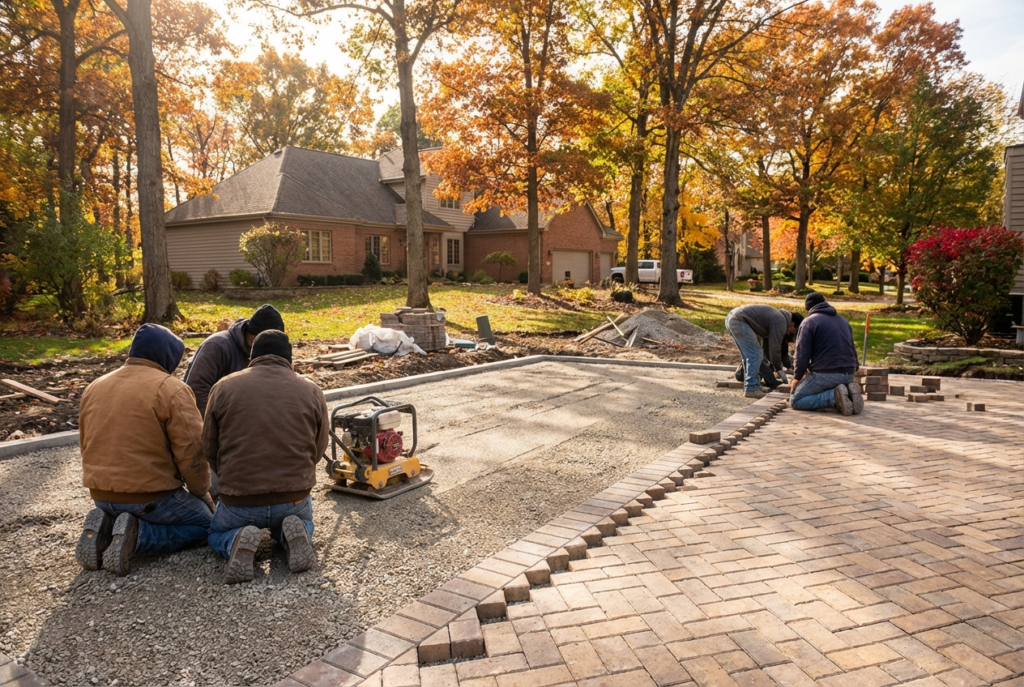
Is fall a good time to install hardscape in Grayslake? Yes — and not just viable but genuinely advantageous for several reasons specific to Lake County conditions. Contractor availability is better than spring. Pricing is often lower. Lake County’s clay soil in September and October is firm enough to excavate cleanly and compact correctly, which produces a better base than the saturated spring clay most homeowners assume is the right time to build.
There is one honest caveat. The window is shorter here than in milder climates. Once the ground freezes hard, typically in late November, excavation and base preparation become impossible. That makes the effective fall installation window roughly September through mid-November — real but not unlimited.
This page covers why fall works so well for hardscape in this area, what the timing constraints actually look like, and what a fall project timeline looks like on a typical Grayslake property.
TLDR:
- Fall is one of the best hardscape installation seasons in Grayslake — not just acceptable but genuinely advantageous
- Contractor availability is higher and pricing is often lower than spring peak season
- Lake County clay soil in September and October favors base preparation over saturated spring conditions
- Materials cure better in fall temperatures than in summer heat
- The window closes when the ground freezes — typically late November in this area
- Hiring in August or September gives the most flexibility within the fall window
Is Fall a Good Time to Install Hardscape in Grayslake?
Yes — Fall Is One of the Best Times to Install Hardscape in Grayslake
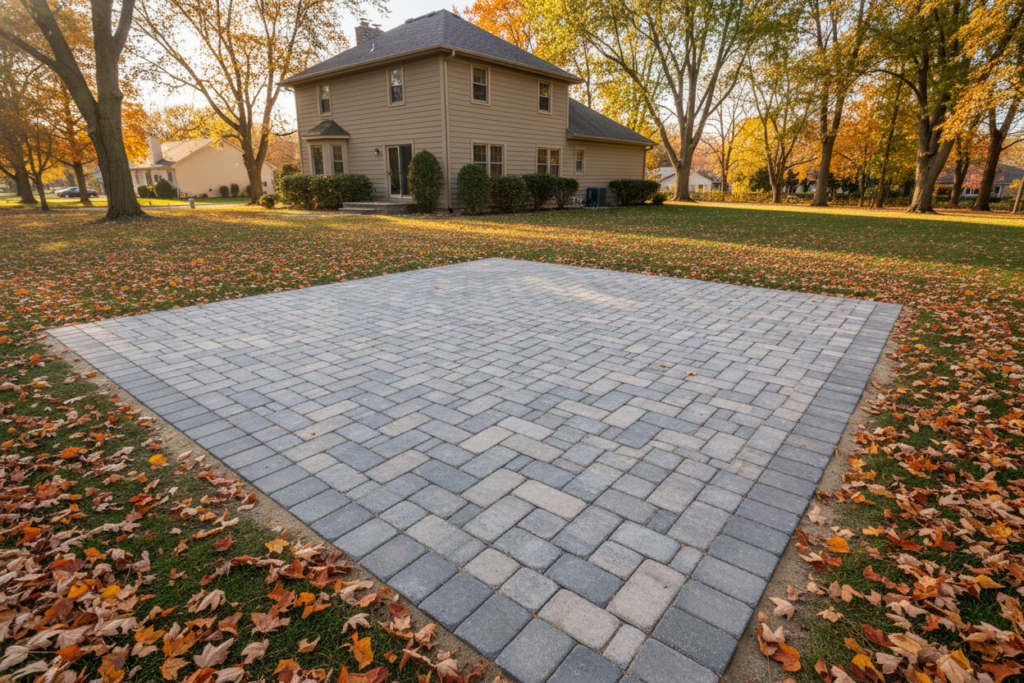
Most Grayslake homeowners assume spring is the right time to start a hardscape project. It feels logical — the weather is warming up, the yard is coming back to life, and the motivation to get outside is high. The problem is that everyone else has the same thought at the same time, which creates the scheduling and pricing pressure that makes spring the most frustrating season to actually get a project done.
Fall doesn’t have that problem. Demand drops, availability opens up, and the conditions that actually matter for a quality hardscape installation — soil stability, material curing temperatures, and base compaction — align better in September and October than they do in April and May in Lake County.
The clay soil argument is the one most homeowners haven’t heard before. Spring clay in Grayslake is saturated from snowmelt and rain. Excavating into wet clay is messy, harder to compact consistently, and produces a less stable base than excavating into the firm, dry soil that fall conditions deliver. A base compacted on firm fall soil performs better long term than the same base compacted on wet spring clay — because the compaction is more consistent and the material settles more predictably before freeze-thaw cycles test it.
Fall also gives a newly installed patio time to settle before the first hard winter. A patio installed in October has six to eight weeks to establish before the ground freezes. That settling period matters in Lake County clay where freeze-thaw movement is significant — a project that has had time to settle handles that first winter better than one installed in late spring that goes straight into summer heat and then into a hard freeze.
Contractor Availability and Pricing Are Better in Fall

Spring is the busiest season for hardscape contractors in Lake County. By mid-March the phones are ringing and schedules are filling. By April most quality contractors are booked four to six weeks out. A homeowner who calls in May hoping to have a patio installed before summer is often looking at a July start date at best — which means missing most of the outdoor season they were trying to create the patio for in the first place.
Fall reverses that dynamic entirely. As residential demand drops after Labor Day, contractor schedules open up. The same crew that was booked solid in April has availability in September and October. That availability translates into faster project starts, more scheduling flexibility, and in many cases lower pricing — because contractors are competing for fewer projects during the off-season rather than turning work away during peak season.
Material availability follows the same pattern. Popular paver colors and styles that get depleted during spring and summer rush are back in stock by fall. Lead times on special orders that stretch into weeks during peak season are shorter. A homeowner who selects materials in September gets better selection and faster delivery than one who picks the same materials in April.
The pricing advantage isn’t dramatic — quality contractors don’t slash rates in fall — but it’s real. Better availability, more negotiating flexibility, and the ability to schedule on your timeline rather than theirs are all worth something. A fall project that starts on your schedule and runs without the delays that spring backlogs create is a better experience from start to finish than a spring project that waits in line behind everyone else who called in April.
Getting on a fall schedule before September fills up is the move that captures all of these advantages before they disappear.
Fall Soil Conditions in Lake County Favor Hardscape Installation
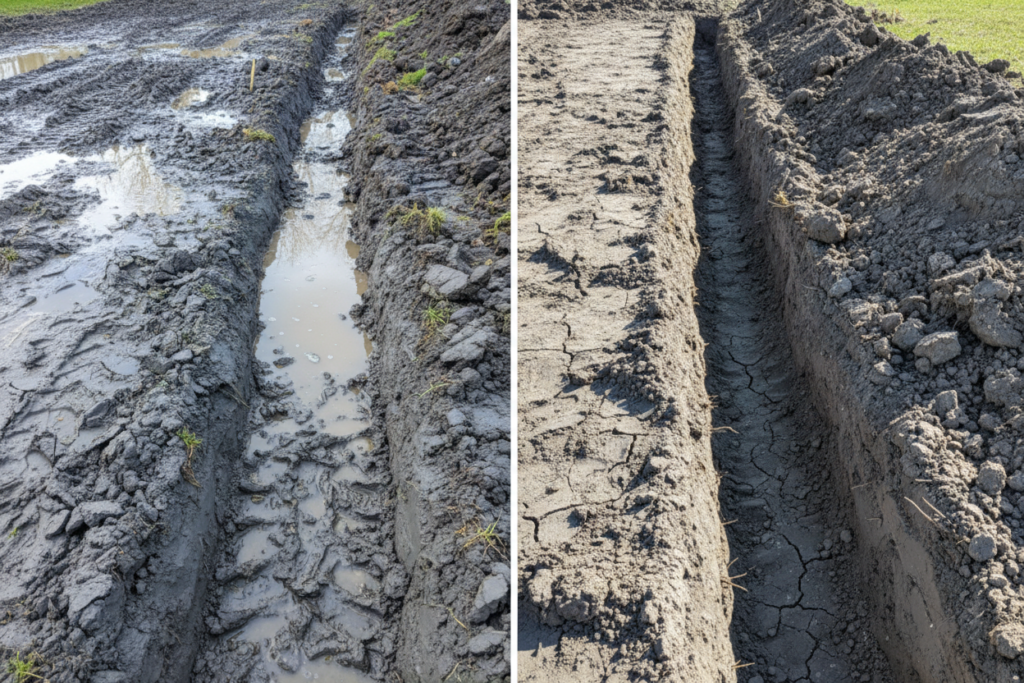
This is the angle most homeowners haven’t considered — and it’s the one that matters most for long-term project performance. The condition of the soil during base preparation determines how well a hardscape holds up over time. In Lake County clay, fall soil conditions are significantly better for base prep than spring conditions.
Spring clay in Grayslake is wet. Snowmelt combined with April rain saturates the clay layer and keeps it saturated for weeks. Excavating into wet clay is messy — the material sticks to equipment, doesn’t move cleanly, and is harder to grade accurately. More importantly, wet clay compacts inconsistently. Base gravel compacted on top of wet clay settles unevenly as the clay dries out underneath it through summer. That uneven settlement is what causes pavers to shift and retaining walls to move out of alignment within a few seasons.
Fall clay in Grayslake is firm. The summer heat has dried the upper soil layers, and September and October conditions deliver ground that is stable enough to excavate cleanly and compact consistently. Gravel base installed on firm clay compacts evenly and settles predictably before the freeze-thaw cycle tests it. That’s a better foundation for the surface material going on top — and it’s one of the reasons fall installations in this area consistently outperform spring installations when the conditions are compared honestly.
Dormant plants are another advantage specific to fall. Installing hardscape in spring and summer means working around actively growing lawn, garden beds, and perennials that get damaged by equipment and foot traffic during construction. In fall, plants are entering dormancy — less to damage, less to protect, and a cleaner job site overall. The lawn that gets disrupted during a fall installation has all winter to recover before the growing season starts again.
Materials Cure Better in Fall Than Summer in Northern Illinois
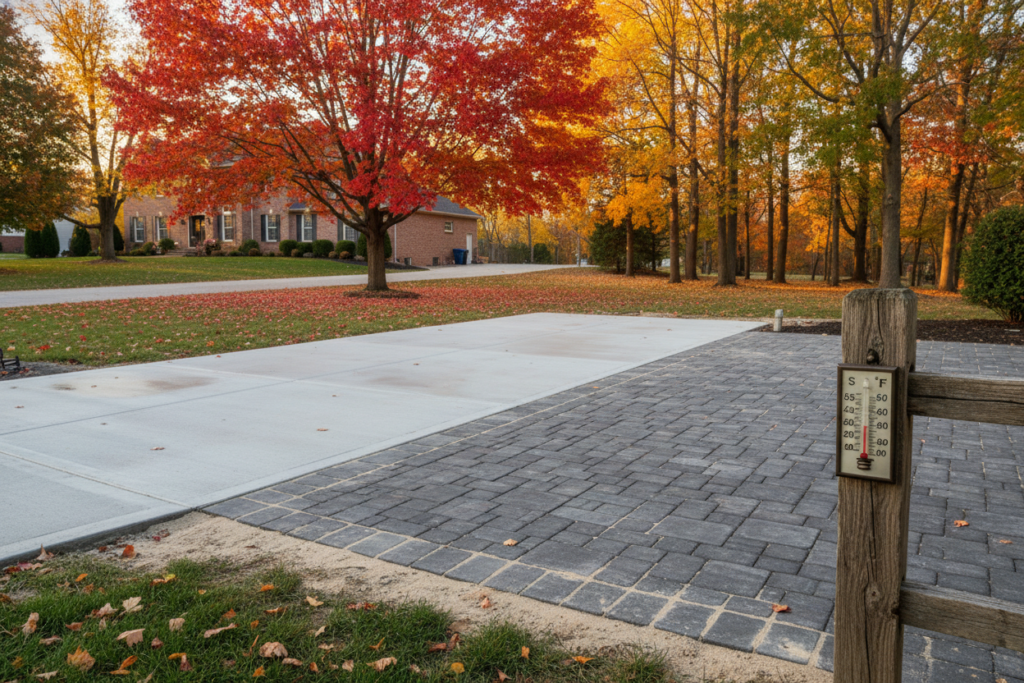
Here’s something most homeowners don’t know — the season you install hardscape in affects how long it lasts. Not because of what happens during the outdoor season, but because of what happens during the first winter after installation. And in Lake County, that first winter is the hardest test a new hardscape will ever face.
Summer feels like the obvious installation window. Warm weather, long days, contractors working outdoors. What’s actually happening to concrete and mortar in 90-degree July heat is less intuitive. Concrete cures through a chemical reaction that needs moderate temperatures to work correctly — roughly 50 to 75 degrees Fahrenheit. Too hot and it cures too fast, creating internal stress that shows up as hairline cracks before the first winter even arrives. In a freeze-thaw climate those hairline cracks are an invitation for water to get in, freeze, expand, and turn a cosmetic issue into a structural one within a few seasons.
Fall in Lake County delivers almost exactly the right conditions. September and October temperatures in Grayslake typically run 45 to 65 degrees — right in the middle of the ideal curing range. Concrete poured in those conditions develops full strength without thermal stress. It goes into its first freeze-thaw cycle in better structural condition than concrete poured in summer heat, which means it handles that first winter better and every winter after it.
Pavers work differently but the same principle applies to the materials around them. Polymeric sand that stabilizes the joints between pavers needs time to set before freeze-thaw movement tests it. A fall installation gives those joints six to eight weeks of stable conditions before the first hard freeze — enough time to reach the settled state that makes the whole installation perform correctly through winter and beyond.
According to the Interlocking Concrete Pavement Institute, proper base preparation and joint stabilization are the most critical factors in long-term paver performance. Fall temperatures in northern Illinois deliver the conditions that make both of those things happen correctly.
The Installation Window in Grayslake Is Shorter Than You Think
Fall is a strong installation season in Grayslake — but it has a hard stop that milder climates don’t deal with. When the ground freezes, excavation and base preparation become impossible. Everything that requires digging — patio installation, retaining wall footings, drainage work, grading — has to be complete before that happens. In Lake County that window closes faster than most homeowners expect.
The ground in Grayslake typically freezes hard between late November and mid-December depending on the year. That sounds like plenty of runway from September. It isn’t once you factor in the project timeline. A homeowner who calls in October still needs a site visit, a design plan, material ordering, permit applications where required, and scheduling before installation can begin. A project that starts those conversations in October is realistically looking at a November installation — which leaves very little margin before the freeze.
The contractors who do the best work in Lake County are also the ones who fill their fall schedules first. By mid-September the quality crews have their October calendars filling up. A homeowner who waits until October to call is often getting whoever has availability left — not necessarily the crew they would have chosen if they’d started the conversation in August.
The practical window for a fall hardscape project in Grayslake that captures all the advantages — better pricing, better availability, optimal soil conditions, ideal curing temperatures — is August through September for the hiring conversation and September through October for installation. That’s the window where everything lines up. November is possible for simpler projects but the margin gets thin fast as the freeze-thaw cycle starts earlier some years than others.
The homeowners who get the best fall installations are the ones who treat August like the start of fall planning season — not September or October when the window is already narrowing.
What a Fall Hardscape Project Looks Like in Grayslake
Here’s what the timeline actually looks like for a fall hardscape project done correctly in Grayslake. It moves faster than most homeowners expect — which is exactly why starting the conversation in August matters more than it might seem.
August is when the conversation starts. A site visit happens, drainage and design decisions get made, materials get selected and ordered, and permit applications get submitted for projects that require them. This is the planning month — the one where decisions that affect everything downstream get made without the pressure of an approaching freeze deadline.
September is when installation typically begins for a project that started conversations in August. Soil conditions in September are close to ideal — firm, dry, and ready for the excavation and base preparation that determines long-term performance. A crew working in September has good weather, good soil, and enough runway to do the work correctly without rushing.
October is the sweet spot for installation completion. A project that wraps up in October has the full curing and settling window before the first hard freeze — typically six to eight weeks of stable conditions that let the base compact, the joints stabilize, and the whole installation reach the settled state that handles a Lake County winter correctly. A patio completed in October is also usable immediately — fall evenings around a fire pit, crisp October mornings with coffee outside, the last few weeks of outdoor season before winter shuts things down.
November is the margin. Simple projects on favorable sites can complete in early November. Complex projects involving retaining walls, drainage, grading, and multiple elements need to be well underway by October to finish before the freeze. Pushing a complex project into November in Lake County is a gamble that experienced contractors won’t take.
If you’re looking at a fall hardscape project in Grayslake, the conversation worth having is now — before August turns into September and the best scheduling windows start to close.