Erosion Control and Bioengineering in Round Lake, IL
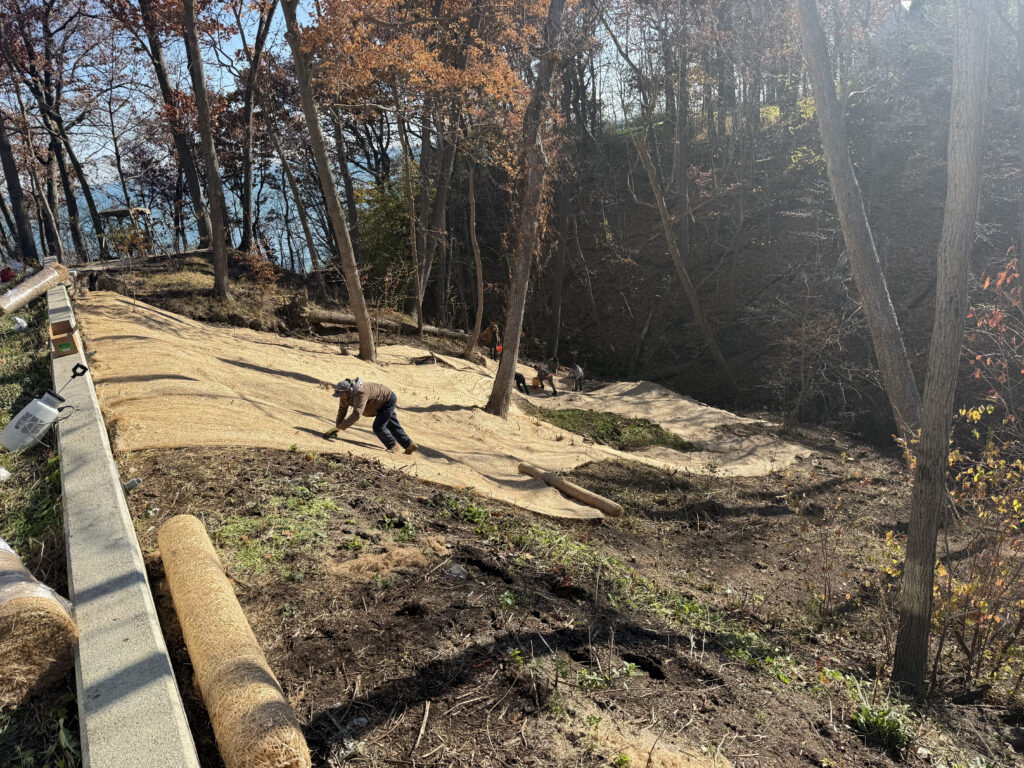
Erosion control and bioengineering in Round Lake stops soil loss using living plant systems that strengthen over time. Slopes, banks, and disturbed areas wash away without proper stabilization destroying property and creating expensive problems. Bioengineering combines native plants with structural support creating erosion control that improves annually rather than deteriorating like concrete or steel. We install erosion control systems handling Lake County’s clay soil, steep slopes, and heavy rainfall using techniques proven effective long-term. Properly installed bioengineering prevents erosion while looking natural.
Professional Erosion Control Solutions
Identifying Erosion Before It Gets Worse
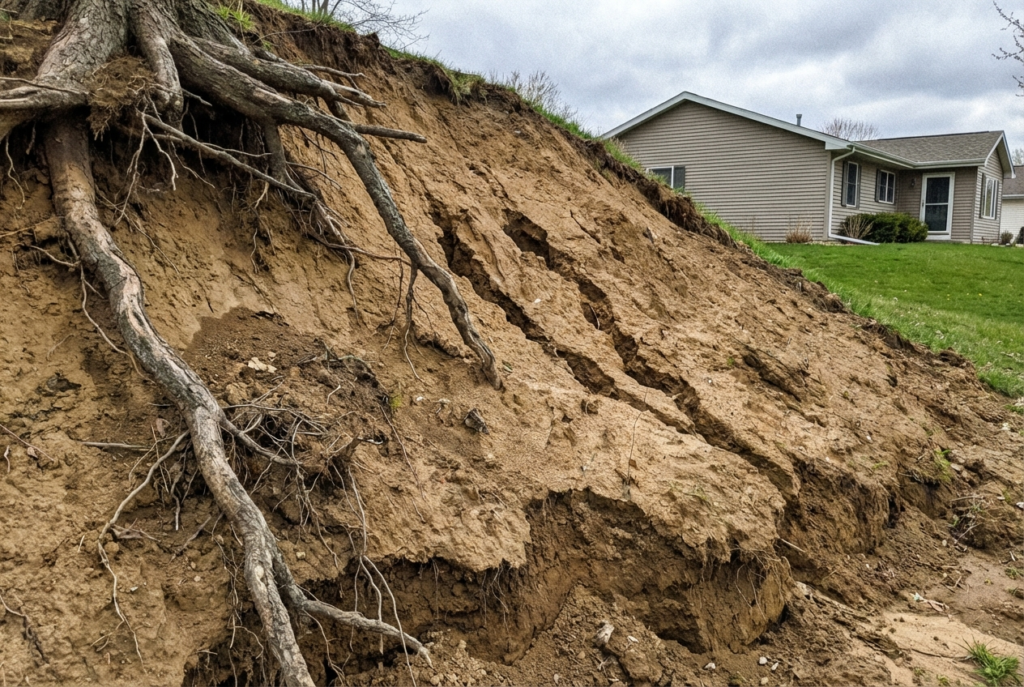
Providing erosion control and bioengineering in Round Lake means understanding that erosion starts small then accelerates fast. Water channels deepen with each storm. Exposed soil washes away faster than vegetated areas. Slopes undercut at the bottom creating unstable conditions above. Properties lose inches of topsoil annually once erosion patterns establish. We identify erosion in early stages before it becomes expensive disasters. Look for exposed roots, small channels forming after rain, bare soil patches expanding, or banks undercutting. Catching erosion early means simpler solutions cost less. Waiting until slopes fail or banks collapse means major reconstruction work. Early intervention through bioengineering prevents thousands in future repairs.
Why Living Systems Beat Hard Armoring
Concrete, steel, and riprap deteriorate over time requiring replacement or repair. Bioengineering using live plants strengthens annually as root systems develop and spread. First year bioengineering provides moderate erosion control. Year three provides strong protection. Year five creates nearly impenetrable root networks holding soil against severe conditions. Roots also improve soil structure and drainage reducing erosion forces. Hard armoring shows immediate results then slowly fails. Living systems start modest then improve continuously. Cost comparisons favor bioengineering long-term—initial installation costs similar but decades of strengthening versus deterioration changes the equation dramatically.
Bioengineering Techniques for Erosion Control
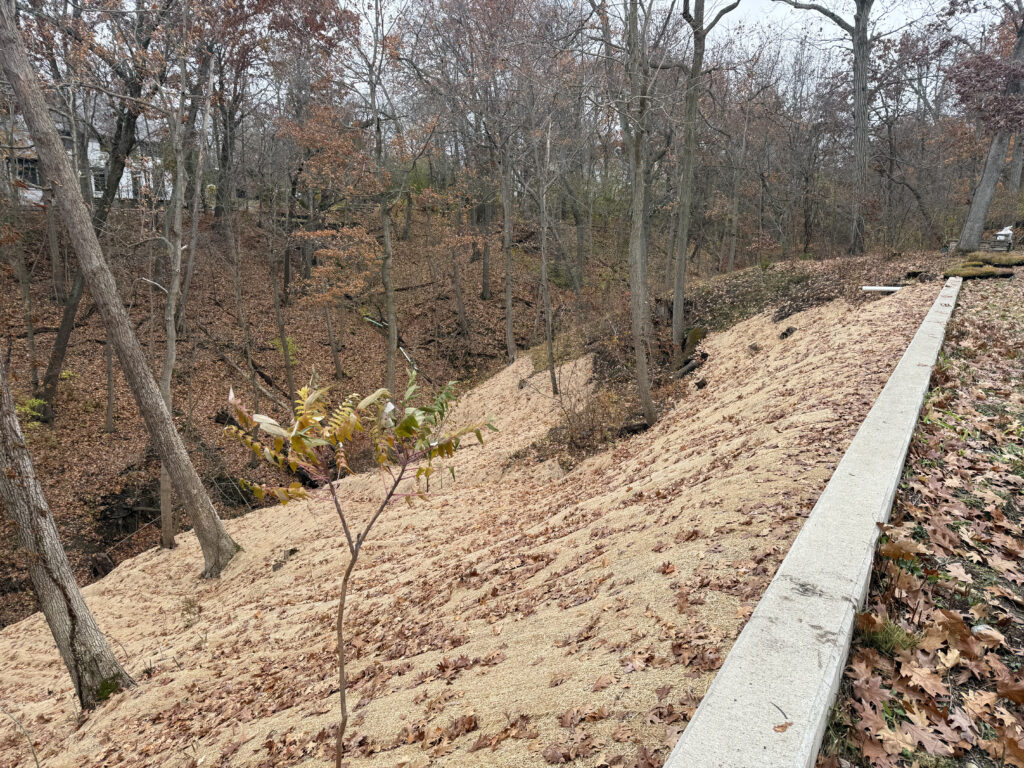
Multiple bioengineering techniques address different erosion situations. Our bioengineering methods follow erosion control standards proven effective for soil conservation and slope stabilization. Live staking drives dormant willow or dogwood cuttings into slopes where they root and grow creating living soil anchors. Brush layering installs live branches in trenched slopes that sprout holding soil while providing immediate protection. Coir logs made from coconut fiber hold soil at slope bases while plants establish through them. Fascines are bundles of live branches staked horizontally across slopes slowing water and trapping sediment. Each technique suits specific conditions. Steep slopes need different approaches than gentle ones. Wet areas versus dry areas require different species and methods. Our native plant installation expertise ensures proper species selection for bioengineering applications.
Native Plants for Erosion Control
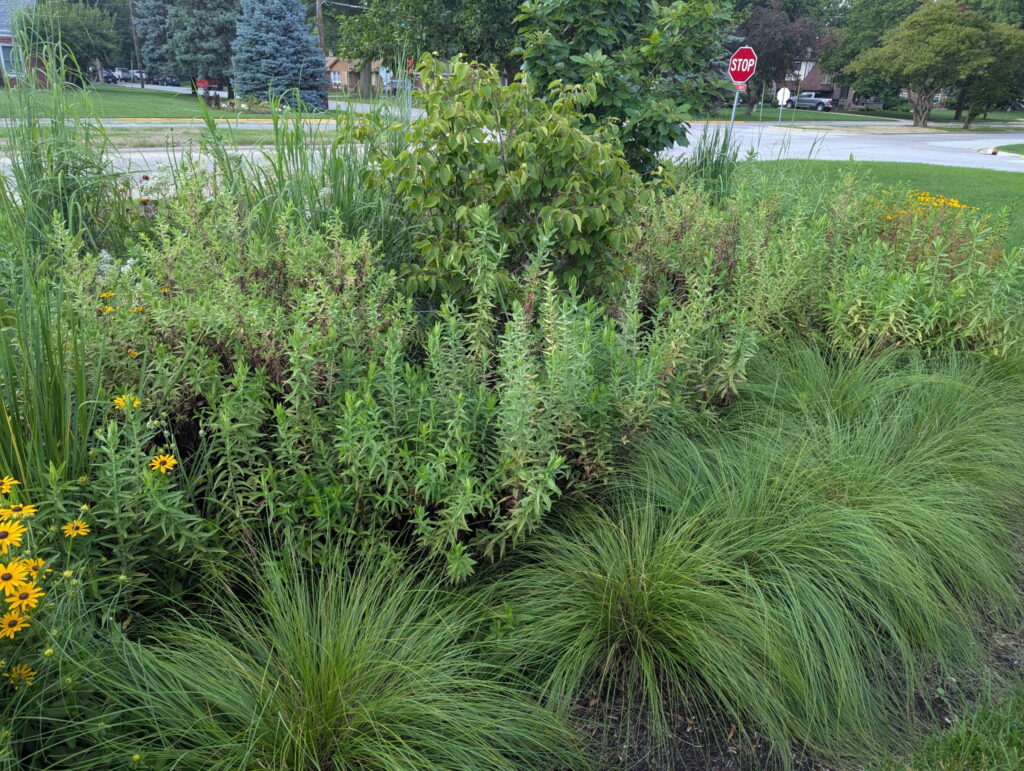
Native plants provide superior erosion control compared to ornamentals or turf grass. Deep root systems hold soil that shallow roots can’t. Species adapted to local conditions establish quickly and survive without irrigation. Grasses like switch grass and big bluestem create dense fibrous root networks. Sedges and rushes work in wet conditions. Shrubs like dogwood and willow root aggressively stabilizing banks. Groundcovers like wild ginger spread rapidly covering bare soil. Species selection depends on sun exposure, moisture levels, and erosion severity. Wrong species fail or require constant maintenance. Proper selection creates self-sustaining erosion control needing minimal intervention after establishment.
Slope Stabilization Methods
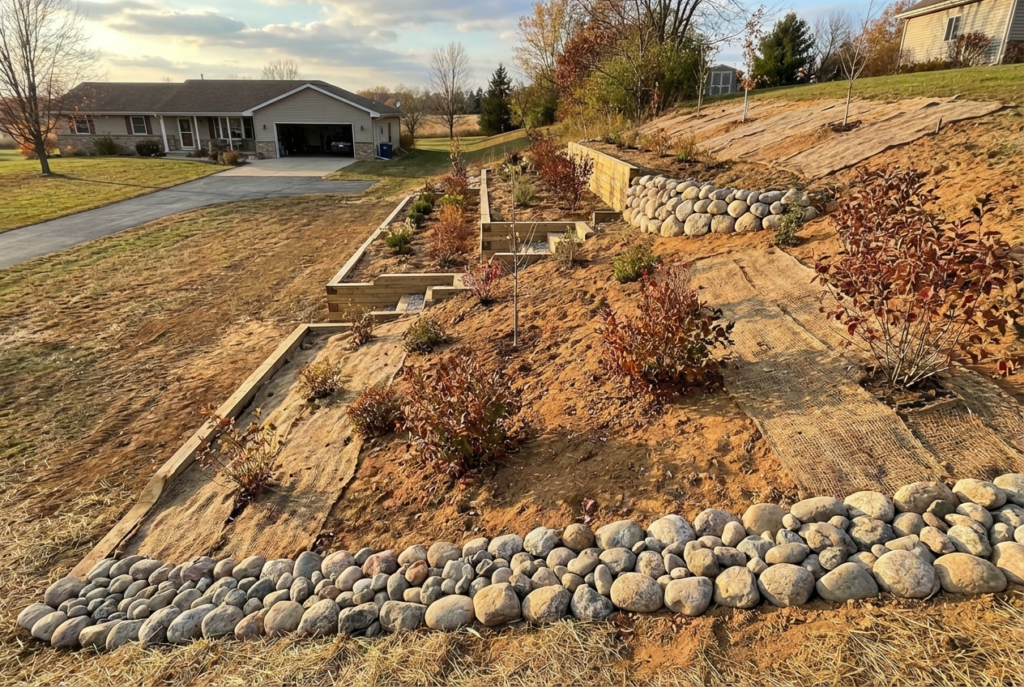
Slope stabilization combines bioengineering with structural support creating immediate protection while plants establish. Erosion control fabric holds soil temporarily while vegetation develops permanent control. Geotextiles provide structural reinforcement in severe situations. Terracing breaks up long slopes reducing water velocity and erosion force. Rock placement at vulnerable points prevents undercutting while plants mature. Sometimes slopes need grading adjustments before bioengineering installation. Slopes steeper than 3:1 create challenges requiring specialized techniques. Properties often need integrated approaches combining bioengineering with hardscape elements like retaining walls at critical locations. The goal is stable slopes that improve over time rather than requiring ongoing maintenance.
Construction Site Erosion Control
Disturbed soil from construction erodes rapidly without immediate protection. Silt fencing contains sediment preventing it from washing into waterways or neighboring properties. Temporary seeding provides quick cover on exposed areas. Erosion control blankets hold soil on steep slopes during construction. We install temporary measures protecting sites during work then permanent bioengineering solutions after construction completes. Construction erosion compliance requires meeting local regulations and preventing sediment discharge. Proper erosion control during construction prevents expensive violations and protects water quality. Sites transitioning from construction to permanent landscaping need bioengineering creating long-term stability instead of temporary fixes.
Waterfront and Streambank Stabilization
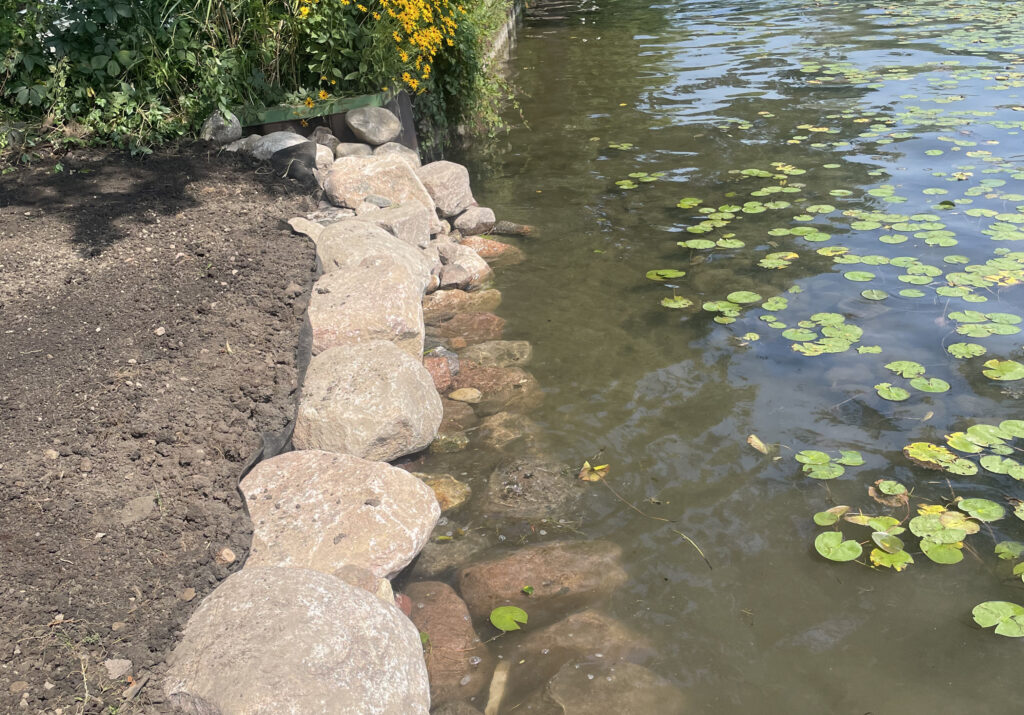
Waterfront erosion requires specialized bioengineering handling wave action, ice, and fluctuating water levels. Our shoreline restoration work throughout Lake County uses these bioengineering techniques proven effective in aquatic environments. Bank stabilization uses techniques proven effective in aquatic environments. Toe protection prevents undercutting at the waterline. Native wetland plants above the waterline provide permanent stabilization. Coir logs positioned along shorelines create immediate protection while vegetation establishes. Rock placement may be needed at high-energy locations experiencing severe wave action. We’ve installed waterfront erosion control throughout Lake County understanding how different water bodies create different erosion challenges. Methods working on calm ponds differ from techniques needed on windswept lakes. Proper waterfront stabilization considers site-specific conditions rather than generic approaches.
Erosion Gets Exponentially Worse
Small erosion channels become gullies. Minor bank undercutting leads to slope failures. What costs $3,000 to fix this year costs $15,000 next year after more damage occurs. Erosion accelerates geometrically not linearly. Each storm makes the problem worse creating conditions that erode faster during the next storm. We see this repeatedly—properties where owners waited hoping erosion would stabilize on its own. It never does. Erosion only stops when something physically prevents it. Vegetation, structures, or complete slope failure. Waiting means choosing the most expensive option. Early bioengineering intervention costs less and prevents catastrophic damage requiring major reconstruction.
Learning What Works by Fixing What Failed
Significant portion of our erosion control work involves repairing failed installations. Slopes that weren’t stabilized properly. Bioengineering using wrong species or techniques. Hard armoring that failed after a few years. These failures taught us what works long-term versus what looks good initially then fails. You learn more fixing problems than doing everything right the first time. That education shows up in installations that still function a decade later while original problem areas stay stable. Erosion control isn’t theoretical knowledge—it’s understanding what actually prevents soil loss over years of storms, freeze-thaw cycles, and extreme conditions.
Stop Your Erosion Problem Now
Erosion won’t fix itself. Let’s install bioengineering that stops soil loss permanently.
Call (847) 546-7353 for erosion control and bioengineering throughout Lake County.