
Does a Paver Patio Add Value to a Home in Grayslake?
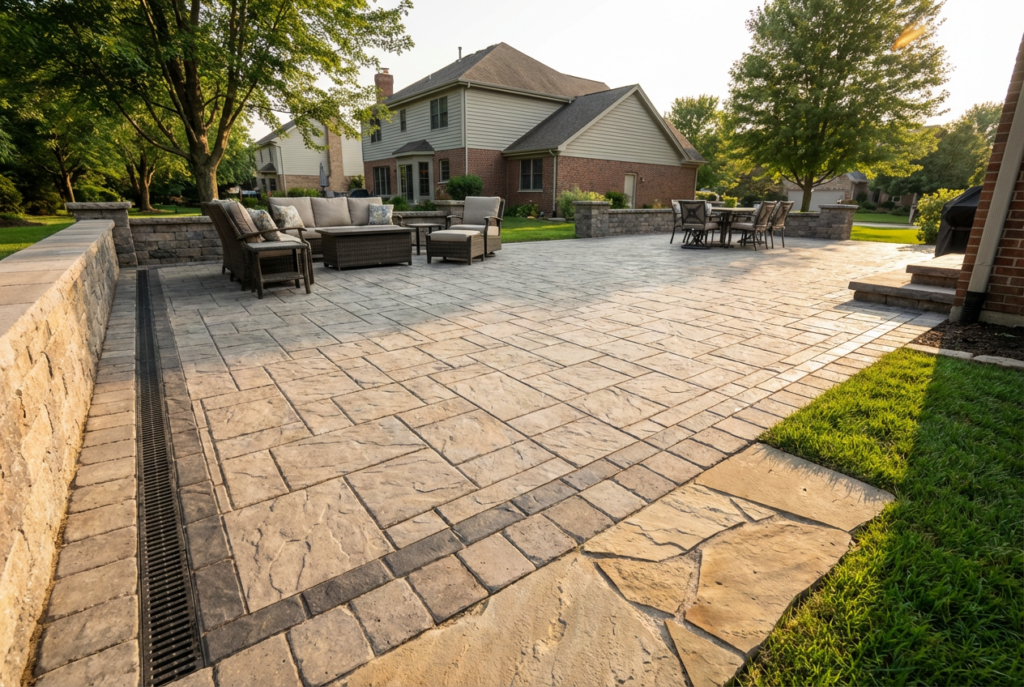
Does a Paver Patio Add Value to a Home in Grayslake? How much depends on material selection, installation quality, design proportion, and whether drainage was planned before the first paver went down. A patio that floods every spring or shifts out of alignment within a few seasons doesn’t add value. One installed correctly in Lake County clay, with proper base prep and drainage integration, holds up and holds its value for decades.
Most Grayslake homeowners asking this question are trying to decide whether the investment makes sense before they commit. The short answer is yes — with the right installation, a paver patio returns a meaningful portion of its cost at resale while adding years of outdoor living value in the meantime. The longer answer involves what makes a patio in this specific market different from the national averages most ROI guides are built on.
This page covers what the data says, why pavers specifically outperform other options in Lake County, what design decisions maximize your return, and why installation quality is the variable that determines everything.
TLDR:
- Yes — a paver patio adds value to a Grayslake home, with ROI ranging from 30% to over 100% depending on installation quality and design
- Pavers outperform poured concrete in Lake County because the freeze-thaw cycle destroys concrete slabs on inadequate bases
- Outdoor living space is a top buyer priority — Grayslake buyers in this price range expect it
- Right-sized, neutral, drainage-integrated patios return more than elaborate custom designs
- A patio that floods or shifts subtracts value — installation quality determines whether the ROI holds
Does a Paver Patio Add Value to a Home in Grayslake?
Yes — A Paver Patio Adds Value to a Grayslake Home
The short answer is yes — and the data backs it up. The National Association of Realtors 2023 Remodeling Impact Report ranked upgraded hardscape in the top four projects that Realtors agree adds resale value. A HomeLight survey found that a mid-scale patio costing around $3,269 returned $3,563 at resale — more than the original investment. Depending on design and installation quality, paver patios return anywhere from 30% to over 100% of their cost when the home sells.
Those are national numbers. In Grayslake they hold up — but with a caveat most ROI guides don’t mention. The return depends on whether the installation was done correctly for Lake County conditions. A patio that floods every spring because drainage wasn’t planned isn’t a selling point. A patio that’s heaved and shifted because the base wasn’t deep enough for clay soil is a problem a buyer will use against you in negotiations. The ROI numbers assume the patio was built to last — and in this soil, that requires more than the national standard.
Grayslake sits in a suburban Lake County market where buyers in the $400,000 to $700,000 range expect functional outdoor living as part of the package. A well-designed paver patio with drainage that works and materials that hold up through Lake County winters is something buyers notice and respond to. One that shows freeze-thaw damage or flooding signs is a liability. The difference between those two outcomes is almost entirely about what happened during installation — not what the patio looks like on day one.
Why Pavers Outperform Concrete in Lake County Specifically
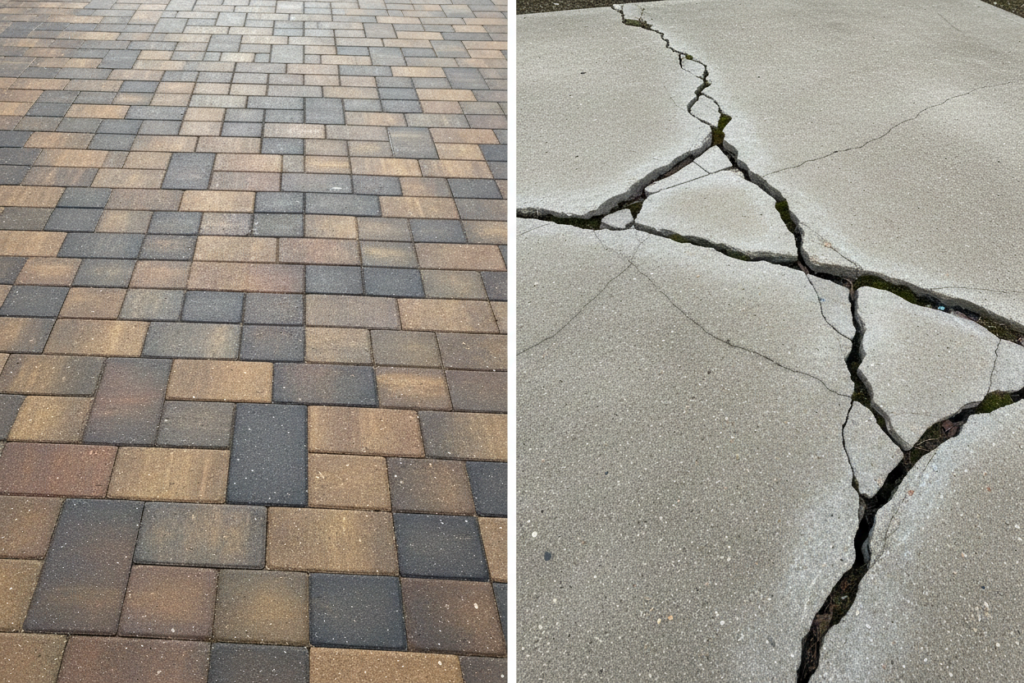
This is where the local context matters more than most patio guides acknowledge. Poured concrete is the most common alternative to pavers and the most common source of buyer complaints on Grayslake properties. Not because concrete is a bad material — because Lake County’s freeze-thaw cycle is brutal on concrete slabs that weren’t installed on an adequate base.
Here’s what happens. Poured concrete is a single continuous slab. When the ground beneath it freezes, expands, and thaws repeatedly through a Lake County winter, the slab moves. Water gets into hairline cracks, freezes, widens the cracks, and the cycle accelerates. Within a few seasons a concrete patio that looked clean at installation shows cracking, uneven surfaces, and edges that have lifted away from the house. Repairing it means grinding, patching, and resealing — and the repairs never look as good as the original.
Pavers work differently. Each paver is an individual unit that can shift slightly with ground movement without transferring that stress across the entire surface. When a paver shifts or cracks it gets replaced individually — one paver, not a full slab repair. A properly installed paver patio in Lake County clay, on the right base depth, handles the freeze-thaw cycle without the failure pattern concrete produces.
That durability is what drives the value difference at resale. A buyer walking a Grayslake property who sees a clean, level, well-drained paver patio sees something that’s going to last. A buyer who sees a cracked and uneven concrete slab sees a repair bill. Those two things are priced differently when the offers come in.
Outdoor Living Space Is a Top Buyer Priority in Lake County
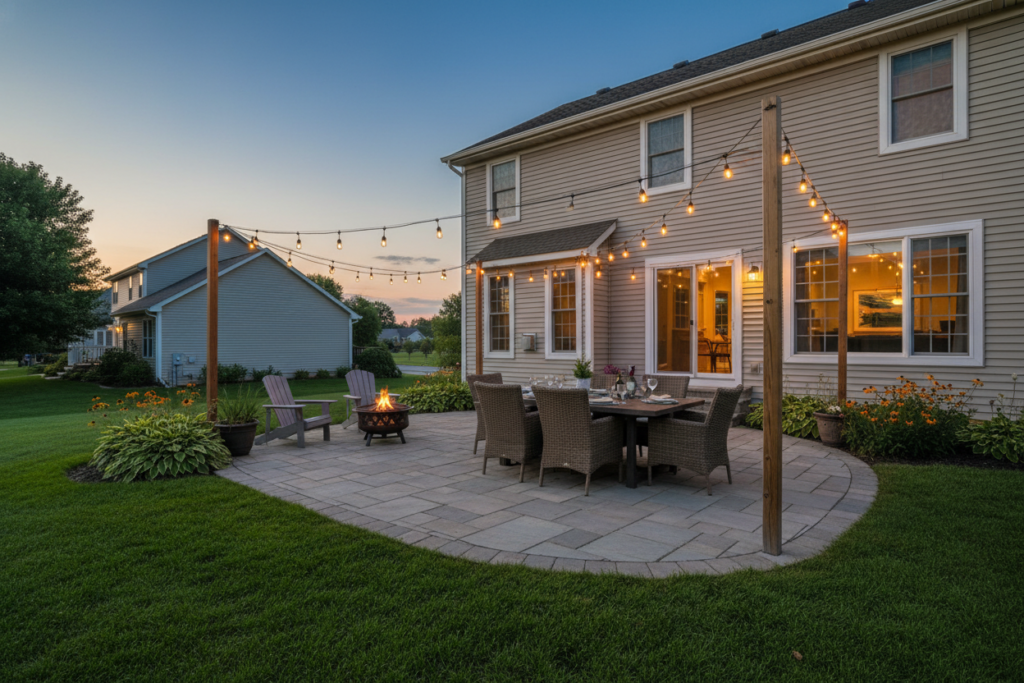
Outdoor living space has been one of the most consistent buyer priorities since 2020 and it hasn’t softened. A HomeLight survey of top real estate agents found that outdoor space ranked third among the most prioritized features for homebuyers nationally. In a suburban Lake County market like Grayslake, that priority shows up directly in how buyers evaluate properties and how quickly well-equipped outdoor spaces move.
The northern Illinois context adds a wrinkle that buyers in warmer climates don’t face. The outdoor living season in Grayslake runs roughly May through October — six months of genuinely usable outdoor space if the weather cooperates. That shorter window makes the quality of the outdoor space matter more, not less. Buyers aren’t looking for a massive patio they’ll use twice a year. They’re looking for a functional, well-designed space that makes those six months worth being outside.
A right-sized paver patio with a clean design, proper drainage, and materials that look good after a few Lake County winters fits exactly what that buyer is looking for. It extends the usable square footage of the home during the months when people actually want to be outside. It creates a space for the things Lake County homeowners actually do — grilling, entertaining, watching kids in the yard, sitting outside on a summer evening.
A patio that works for that lifestyle is a selling point. An oversized, elaborate outdoor kitchen setup that the next buyer has to maintain is a different conversation. Getting the design right for this market starts with understanding what Grayslake buyers actually want from an outdoor space — not what looks impressive in photos.
The Design Decisions That Maximize ROI on a Grayslake Patio
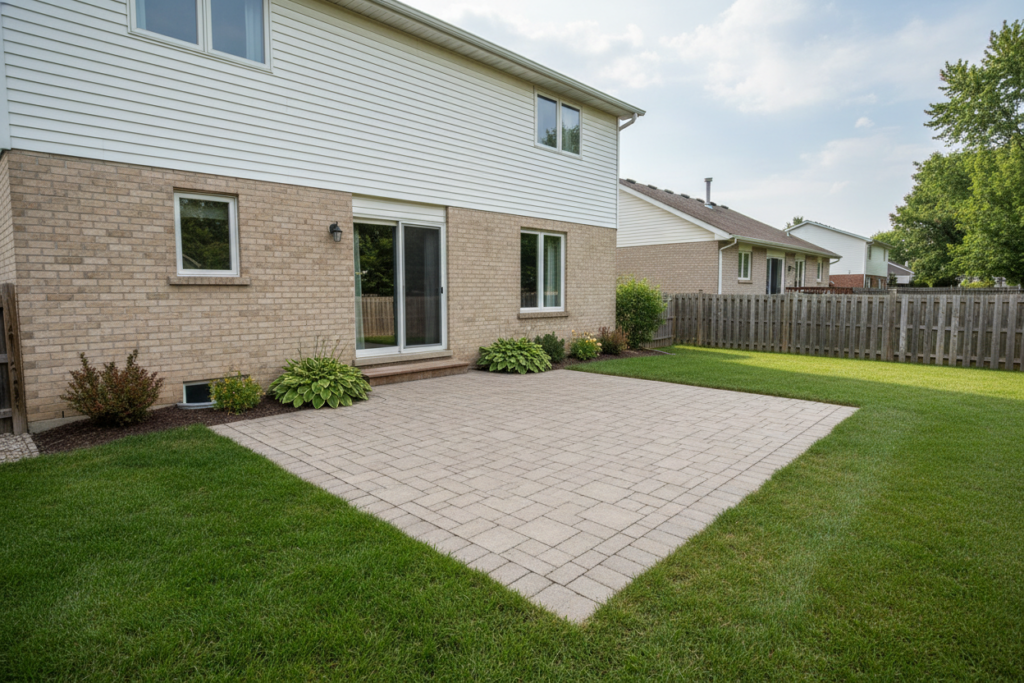
Not every patio adds value equally. The design decisions made before installation begins determine whether the project earns its investment or just costs money. A few of those decisions matter more than most homeowners expect.
Size is the most common mistake. A patio that takes over the yard and leaves no room for lawn, garden, or open space doesn’t appeal to most Grayslake buyers. Proportional is the word that matters here — a patio that looks like it belongs on the property rather than something that was dropped into it. Too big is actually harder to sell than no patio at all in some cases. The patio should complement the yard, not compete with it.
Material and color selection is the decision most homeowners underestimate for resale. A highly customized color palette or an unusual paver style that reflects very specific personal taste narrows the buyer pool. Neutral tones — grays, tans, earthy blends that work with a range of home exteriors — appeal to more buyers and age better visually. That doesn’t mean boring. It means choosing something a buyer five years from now can picture themselves using rather than immediately planning to change.
Drainage integration is probably the single most important design decision for Grayslake specifically. A patio that drains correctly — that moves water away from the house after a hard rain instead of pooling on the surface — is a feature buyers notice. A patio that floods is a negotiating tool for the buyer. In this soil, drainage doesn’t happen by accident. It has to be designed into the project before the base goes in.
How the patio connects to the house matters more than most people think. A patio that flows naturally from a back door or living space feels like an extension of the home. One that sits disconnected in the middle of the yard feels like an afterthought. That flow affects how buyers experience the property during a showing — and how they imagine living in it.
Why Proper Installation Determines Whether the Patio Adds or Subtracts Value
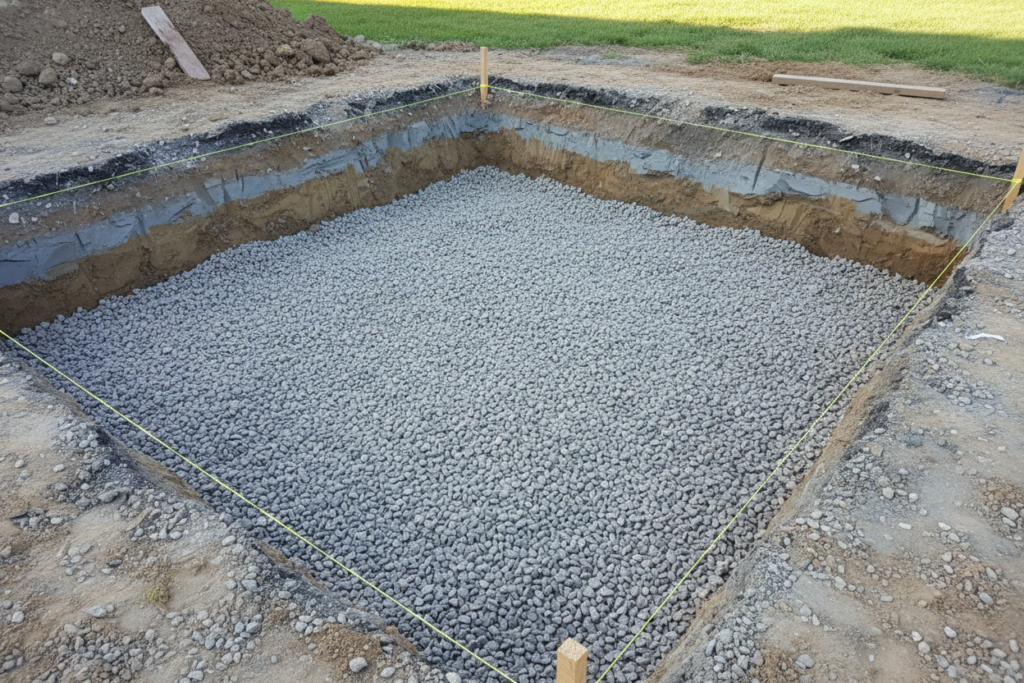
A patio that looks great on day one but fails within a few seasons doesn’t add value — it subtracts it. Buyers walking a Grayslake property who see shifted pavers, cracked edges, or a patio that clearly drains toward the house instead of away from it aren’t seeing a feature. They’re seeing a repair bill. That changes how they write an offer.
The installation decisions that determine long-term performance in Lake County clay are specific to this area. Most of the country installs hardscape on 4 to 6 inches of compacted gravel base. In Grayslake clay, 8 to 12 inches is the standard that holds up through freeze-thaw cycles. A patio installed on a 4-inch base in this soil will heave, shift, and show uneven surfaces within a few seasons. The same patio on a properly prepared 10-inch base handles the same freeze-thaw cycle without moving.
Drainage is the other installation decision that most directly affects long-term value. Grayslake’s low-lying terrain and clay soil mean water has nowhere to go fast after a hard rain. A patio installed without accounting for drainage direction will pool. That pooling doesn’t go away — it gets worse over time as the base settles and the grading pattern becomes more pronounced. A buyer who walks the property after a rain and sees standing water on or around the patio is making mental notes about what the remediation is going to cost.
The difference between a patio that adds value and one that doesn’t is almost entirely about what happened during installation — specifically whether base depth and drainage were handled correctly for these conditions. A properly installed paver patio in Grayslake clay lasts decades and holds its value. One that cut corners on base prep or skipped drainage planning starts showing problems before the first full winter is over.
Getting the installation right from the start is the most important decision in the entire patio value equation — more important than material selection, more important than size, more important than design.
What a Paver Patio Investment Looks Like on a Grayslake Property
Here’s what the numbers actually look like on a typical Grayslake patio project. A mid-size paver patio — 200 to 300 square feet, proper base prep, standard concrete pavers, integrated drainage — runs $10,000 to $18,000 installed in this market. That’s the realistic range for a project done correctly in Lake County clay. Not the low bid that cuts base prep. Not the elaborate custom stone installation with an outdoor kitchen. The functional, well-designed patio that most Grayslake homeowners are actually looking for.
At a 30% to 60% return at resale — which is the conservative end of what the data supports for a properly installed paver patio — a $12,000 project adds $3,600 to $7,200 in resale value. That’s not a full return on the investment at sale. But it’s also not the full picture of what the investment is worth.
A patio that works well for six seasons before a home sells delivered value every single one of those seasons. Summers spent outside, evenings around a fire pit, space for kids and guests — none of that shows up in a resale calculation but it’s real value that was extracted from the investment year after year before the home ever went on the market. The resale return is the tail end of the value story, not the whole thing.
The homeowners who get the best of both — real livability value during ownership and a meaningful return at resale — are the ones who got the installation right the first time. Proper base prep, drainage planned before anything went in the ground, proportional design, neutral materials that age well. Those decisions are made before the first paver goes down and they determine everything that comes after.
If you’re thinking about a patio project in Grayslake and want to understand what proper installation actually looks like on your specific property, that conversation is worth having before the first quote comes in.