Drainage and Stormwater Management Services in Grayslake
Most drainage problems get worse after someone tries to fix them. Property owner sees standing water and digs a ditch. Water drains faster but now the neighbor’s yard floods. Municipality installs bigger storm sewers. Downstream creek erodes twice as fast from increased flow. Drainage and stormwater management services in Grayslake start by understanding what changed to create flooding in the first place. Maybe new pavement upstream. Maybe altered grading. Maybe failed drainage tiles. You can’t design solutions without knowing why water behaves differently than it used to.
Solving Drainage Problems and Managing Stormwater
Understanding What Changed Upstream
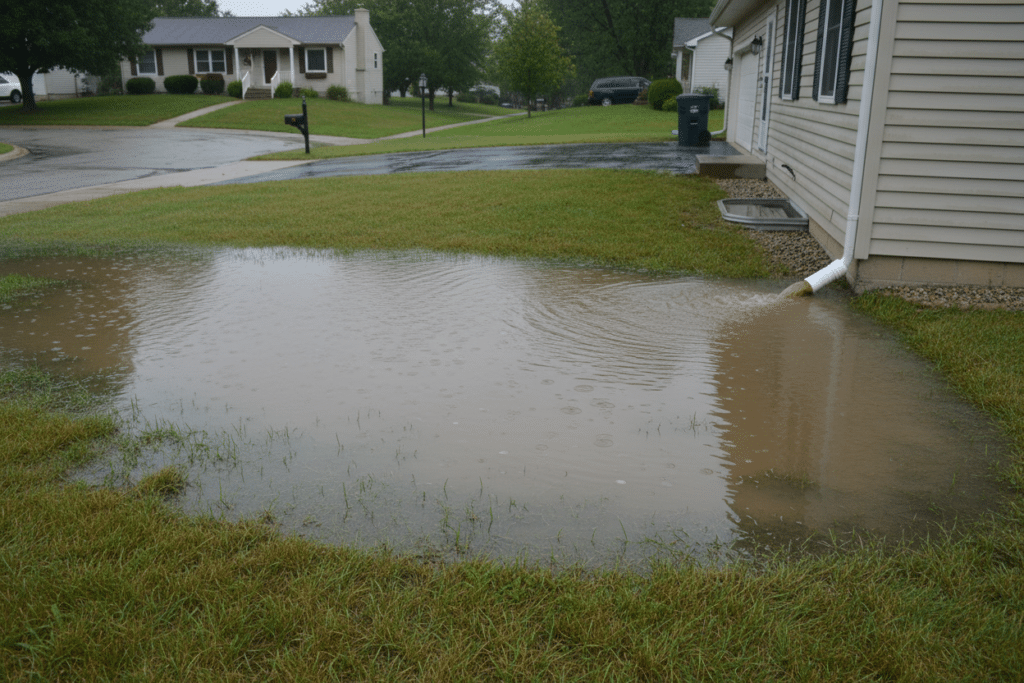
Your property didn’t suddenly decide to flood. Something changed. Neighbor paved their backyard and installed a patio. That’s 800 square feet of new impervious surface. Rain that used to soak into their ground now runs onto yours. Or the subdivision uphill added 30 houses five years ago. Each house has a roof, driveway, and sidewalks. Thousands of square feet of pavement concentrating runoff that used to spread across farm fields. Now it all flows downhill onto properties that never had drainage problems before. Sometimes the change is even simpler. Someone cleared trees. Roots that used to absorb water are gone. Ground gets saturated faster. Most drainage consultants ignore upstream changes and just address symptoms on your property. They install french drains or catch basins treating your flooding without considering what caused it. Solutions fail because the real problem is half a mile away generating more runoff than your property can handle. Our consulting for drainage systems starts by walking upstream to identify what changed.
Why Faster Drainage Creates Worse Problems
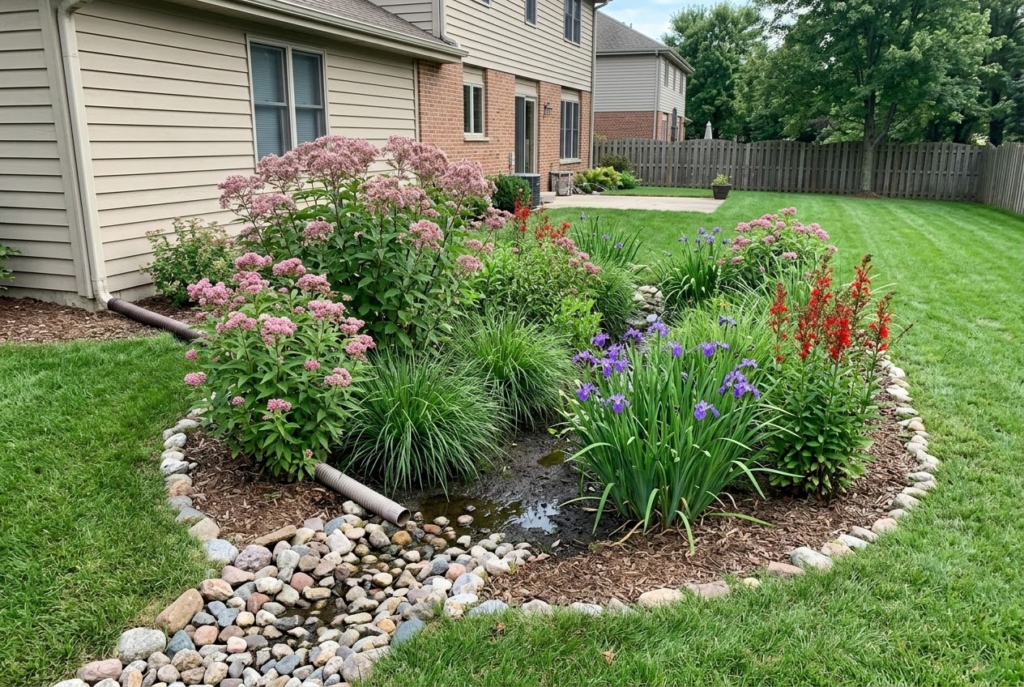
Everyone wants to drain water away as fast as possible. This creates disasters. You install drainage system moving water off your property quickly. Now downstream neighbor gets hit with concentrated flow instead of slow seepage. Their erosion accelerates. They install their own drainage moving water even faster. Next property downstream gets hammered worse. Within a few years the whole drainage system becomes speed channel delivering water so fast it carves gullies and undermines infrastructure. Stormwater management isn’t about moving water fast. It’s about slowing it down, spreading it out, and letting it soak in. Rain gardens, bioswales, and detention basins work by holding water temporarily and releasing it slowly. This reduces peak flows and prevents downstream damage. According to the EPA’s stormwater management guidelines, controlling flow velocity is more important than total volume for preventing erosion and flooding impacts.
Sizing Systems for Actual Storm Events
Standard engineering uses average rainfall for drainage design. This guarantees failure. Lake County doesn’t get average rainfall. It gets 0.3 inches one week then 3 inches in two hours the next week. Your drainage system needs to handle that 3-inch storm, not the average. Most residential drainage fails because it’s sized for normal rain. Big storms overwhelm the system immediately. We design for 2-year, 10-year, and 25-year storm events using actual Lake County rainfall data. Small frequent storms get handled by primary system. Large rare storms overflow to secondary system preventing damage. This costs more upfront but prevents the “drainage system worked fine until it didn’t” situation where one big storm destroys everything. Our restoration and water management planning includes rainfall analysis specific to Lake County conditions not generic engineering formulas.
Soil Conditions Determine What Works
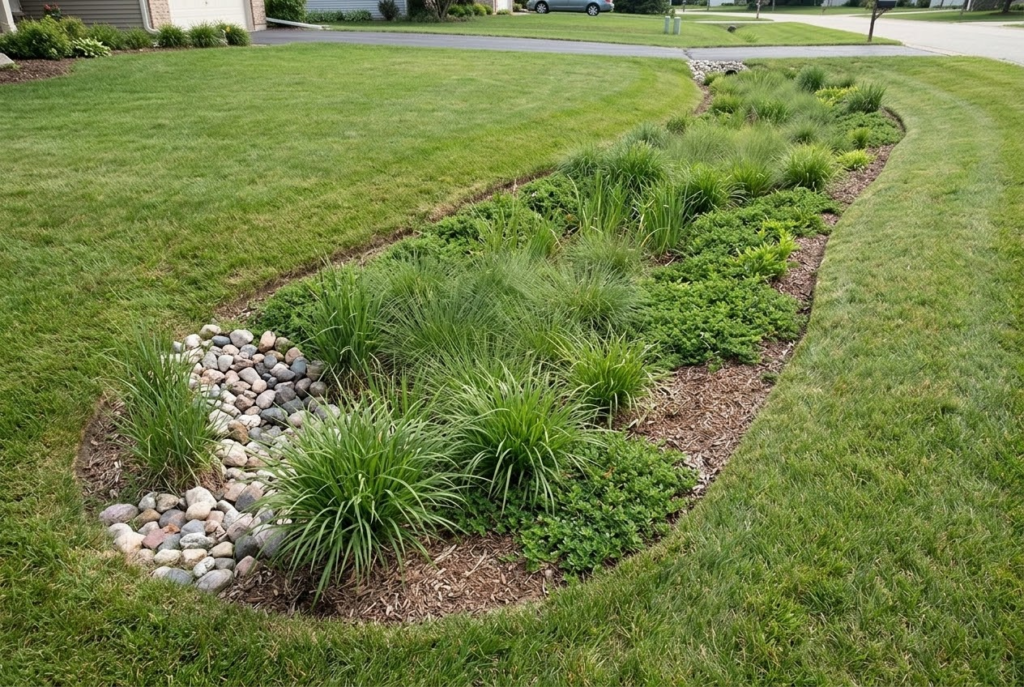
Drainage solutions depend entirely on soil. Clay soil doesn’t drain. Sand drains fast. Your property might have both in different areas. French drains work great in sandy soil. In clay they fill with water and sit there doing nothing. Dry wells work in permeable soil. In clay they’re just expensive holes that stay full. Rain gardens need specific soil depths and infiltration rates. Wrong soil and they become permanent puddles breeding mosquitoes. We test soil conditions before designing drainage. This determines which solutions work and which fail. Sometimes soil is so impermeable that infiltration approaches won’t work at all. Then you need surface drainage moving water to better discharge locations. Soil testing sounds boring but it’s the difference between drainage that functions and drainage that becomes expensive useless installation.
Managing Runoff From Roofs and Pavement
Most flooding comes from roofs and driveways concentrating runoff. A 2000 square foot roof generates 1250 gallons of runoff from a one-inch rain. All that water dumps in one spot – usually right at your foundation. Gutters and downspouts make this worse by collecting all roof runoff and discharging at single points. Your yard gets hit with concentrated flow it can’t handle. Good stormwater management disconnects these concentration points. Downspouts discharge to rain gardens or gravel infiltration areas. Driveway runoff flows through bioswales before reaching storm sewers. Spreading concentrated flows reduces flooding and erosion. Some properties need prescribed fire integrated with drainage work when managing areas with both stormwater issues and vegetation management needs.
Planning for Maintenance Nobody Wants To Do
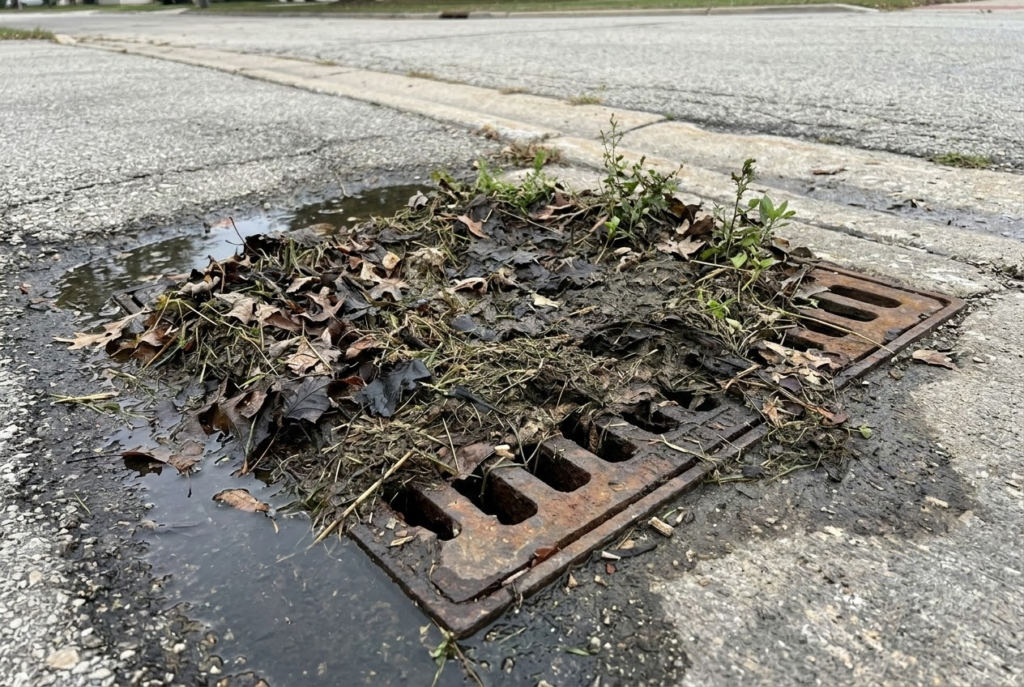
Every drainage system needs maintenance. Catch basins fill with sediment and leaves. French drains get clogged with soil particles. Rain gardens need weeding and mulch replacement. Bioswales need occasional regrading. Nobody wants to do this maintenance. Systems fail because property owners ignore them for 10 years then wonder why flooding returned. We design drainage requiring minimal maintenance and create maintenance plans specifying what needs to happen annually. Clean catch basins once per year. Check french drain cleanouts every two years. Remove sediment from detention basins after major storms. Providing drainage and stormwater management services in Grayslake includes realistic maintenance planning so systems keep working long-term instead of failing from neglect.
Downstream Owners Sue When Your Drainage Fails
Install drainage system on your property and you’ve accepted liability for where that water goes. Discharge onto neighbor’s property causing erosion or flooding and you’re legally responsible for damages. Municipalities face lawsuits constantly over stormwater systems that increase downstream flooding. Property owners think drainage is their problem to solve however they want. Wrong. The moment your solution impacts someone else’s property, it becomes legal liability. We’ve watched property owners spend $15,000 on drainage then spend $40,000 defending lawsuits from neighbors whose yards got destroyed by the redirected water. Good drainage plans include downstream impact analysis and documentation showing your solution doesn’t worsen conditions for others. This legal protection matters more than the drainage itself when lawsuits start flying.
Engineering Firms Overdesign Everything
Consulting engineers love expensive solutions. Your yard floods occasionally so they design system handling 100-year storm events with backup pumps and monitored controls. Project costs $80,000 when $12,000 rain garden would solve the problem. Engineers design to eliminate all liability, not provide cost-effective solutions. Every calculation gets safety factors. Every component gets redundancy. Final system is bulletproof and completely unaffordable. Most residential drainage problems don’t need engineering. They need someone who understands hydrology and can design simple systems that work. Save engineering for commercial projects with regulatory requirements. For residential flooding, practical solutions beat overengineered systems every time.
Plan Your Stormwater Solution
We can assess your property and design drainage solutions that actually work without creating downstream problems or costing a fortune.
Call (847) 456-5604 for drainage and stormwater management planning in Lake County.