Prescribed Burn Services in Grayslake, IL
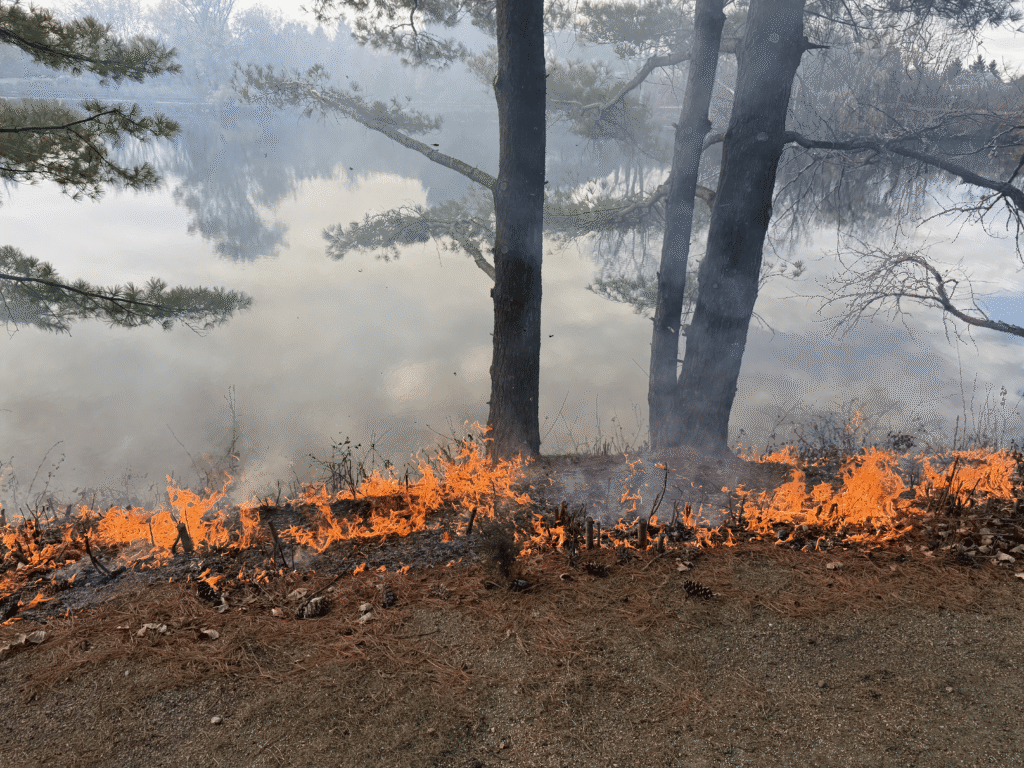
Prescribed burn services in Grayslake mean planning controlled fires that actually help your land instead of destroying it. Most property owners know their prairie or woodland needs burning but have no idea how to design a safe burn plan. Fire scares people, insurance companies hate it, and the permits feel impossible. We plan burns that meet regulations, protect what matters, and give your native areas the reset they desperately need.
Here is a live demonstration of us doing a controlled burn:
Designing Controlled Burns for Restoration
Why Your Land Actually Needs Fire
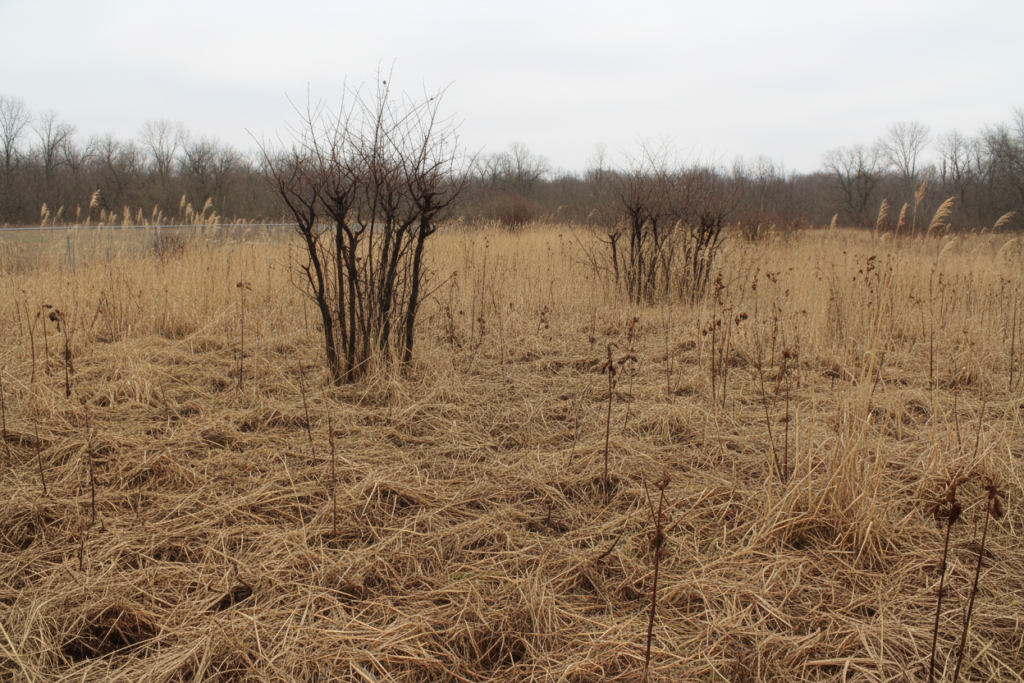
Most native prairies and oak savannas evolved with regular fires. Ecological preservation requires understanding that without burning, cool-season grasses take over, woody brush explodes, and native wildflowers disappear completely. You can pull invasives for years and still lose ground because the seed bank keeps erupting.
Fire resets everything. It kills woody seedlings, burns off accumulated thatch, releases nutrients back into soil, and gives native seeds the bare ground they need to germinate. But lighting a match isn’t a plan. Burns need careful design to work safely and achieve what your land actually needs.
Understanding Burn Regulations and Permits
Lake County has specific requirements for prescribed burns, and ignoring them creates legal problems. You need burn permits from the Illinois EPA, notification to local fire departments, and compliance with air quality standards. Some municipalities ban burns entirely within village limits. Insurance companies want detailed burn plans before they’ll maintain coverage.
Our environmental consulting services include mapping regulatory requirements for your specific property, identifying permit timelines, and designing burns that satisfy legal requirements while still accomplishing ecological goals. Providing prescribed burn services in Grayslake means knowing which agencies need notification and which ones need formal approval.
Creating Safe Firebreaks and Buffers
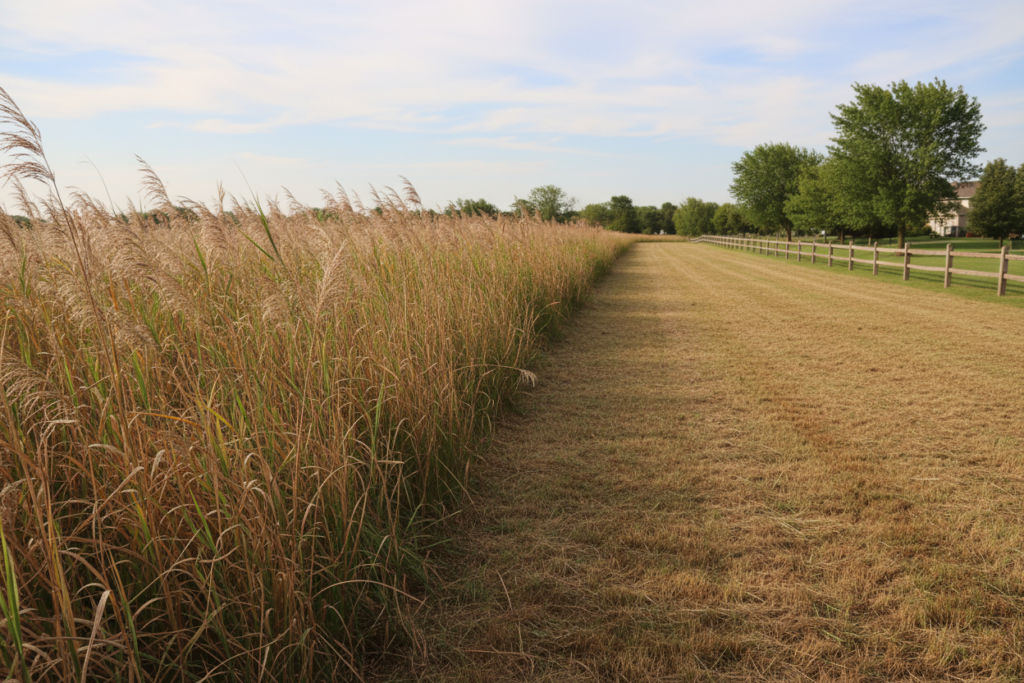
The scariest part of any burn is keeping fire where you want it. Firebreaks need to be wide enough to stop flames under actual burn-day conditions, not theoretical perfect weather. We calculate buffer widths based on fuel loads, topography, and proximity to structures.
Natural barriers like creeks and mowed areas become part of the design. Upwind breaks need different specifications than downwind edges. Properties near houses or roads require additional safety measures that still allow effective burns. A good burn plan identifies every potential escape route and closes it before ignition.
Picking the Right Weather Window
Prescribed burns only work within narrow weather parameters. You need wind speeds high enough to push fire through fuel but low enough to maintain control. Humidity has to be in the sweet spot where fire moves but doesn’t crown or spot. Temperature affects how aggressively fire burns and how much smoke rises versus settles.
Spring burns target different species than fall burns. We design burn prescriptions with specific weather parameters, backup dates for when conditions don’t cooperate, and flexibility for last-minute adjustments. According to the USDA Natural Resources Conservation Service prescribed fire guidelines, proper weather documentation is critical for safe, effective burns.
Mapping What Burns and What Doesn’t
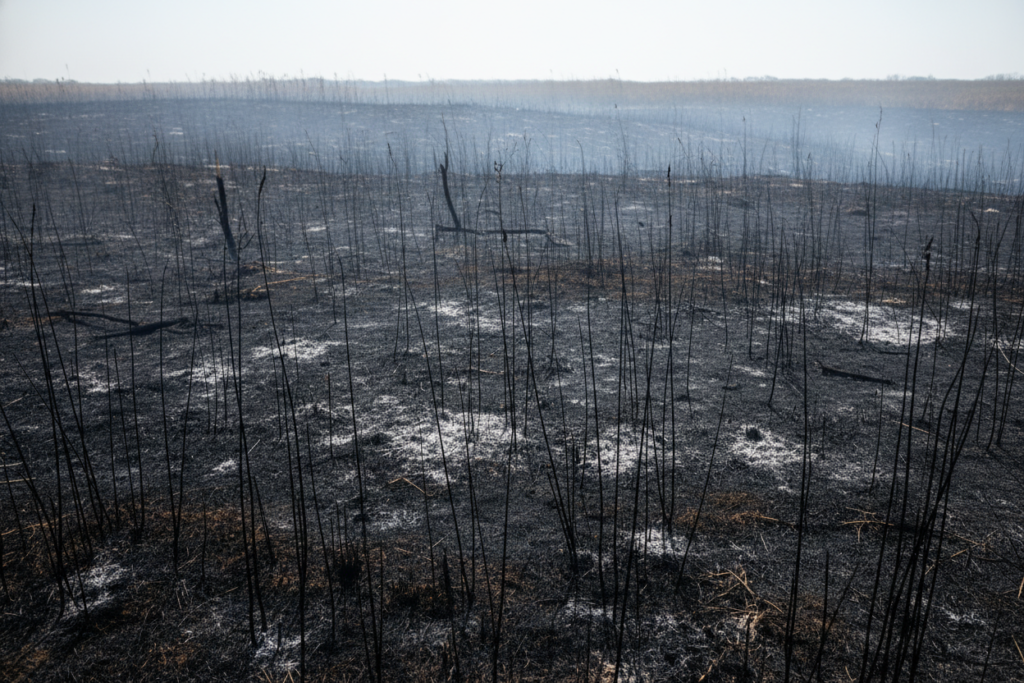
Not everything on your property should burn. Some areas need protection, others need partial burns, and some need complete incineration. We map burn units based on restoration goals, existing vegetation, and risk factors.
High-quality remnant areas might get conservative burns that protect sensitive species. Invaded zones might get hot burns designed to kill everything and start over. Edges near structures get firebreaks and reduced intensity. A good burn plan shows exactly which areas burn, how intensely, and in what sequence.
Planning for What Happens After
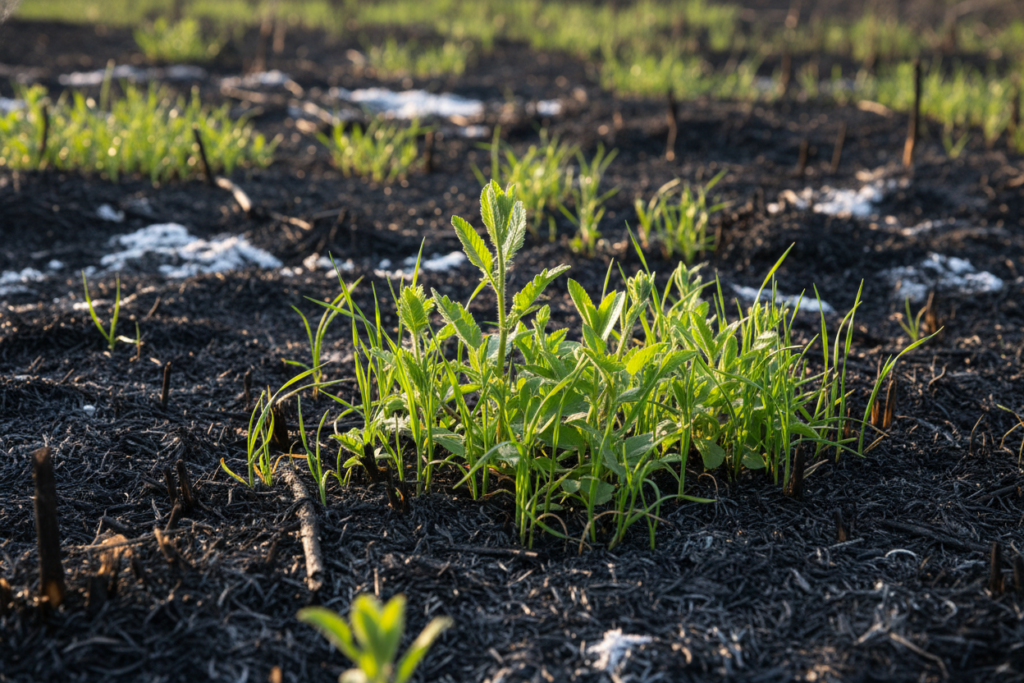
Burns look terrible immediately afterward. Everything turns black, smoke damage coats nearby surfaces, and your property looks destroyed.
Then recovery starts. Native seeds germinate in the bare soil. Invasive woody plants that got killed don’t resprout. Wildflowers that haven’t bloomed in years suddenly erupt.
But recovery isn’t automatic. Post-burn plans identify follow-up treatments, monitoring schedules, and whether additional burns are needed. Properties with shorelines or water features may also need shoreline restoration planning to address erosion or vegetation management alongside fire management.
Some properties need annual burns for several years. Others need burns every three to five years once restored. We design long-term fire management schedules that match your property’s actual needs, not generic recommendations.
Burn Coordination Is Why Things Stay Calm
Every prescribed burn we run starts with direct coordination with emergency dispatch, before ignition and after completion. Local fire departments have David’s cell number. If their switchboard gets flooded with calls from concerned neighbors or passing motorists, dispatch calls David first. He confirms the burn is running to plan and they stand down. That’s the norm, not the exception.
In over 30 years of burns across Lake County, fire trucks have shown up twice. Both times were unusual circumstances. One involved a cattail burn producing heavy black smoke that drew attention from a distance. A local officer unfamiliar with the burn notification occasionally stops by, sees the crew working, asks a question, and leaves. That’s about as eventful as it gets.
This is a highly coordinated professional activity with David as burn boss. Regulatory compliance, community notification, dispatch coordination, and on-site crew management happen before the first match is struck. That is exactly why burns run calmly and professionally every time.
Appointed to Run Every Burn at Prairie Crossing
In March 2026, the Prairie Crossing Homeowners Association appointed David as Environmental Manager for the whole community. Prairie Crossing, in Grayslake, is a nationally recognized conservation community. It covers about 675 acres, with roughly 160 acres of restored prairie plus wetlands that need regular fire to stay healthy.
The neighbors who founded it in 1987 set most of the land aside as open space, and the association has managed that land ever since. That land only stays prairie if somebody burns it. That somebody is now David.
Every prescribed burn in the community goes through him. The big common-area burns across the prairies and wetlands, and the small burns on individual homeowners’ lots. All of it is planned, permitted, and led by him, and he also directs the fight against invasive species across the community.
What Community-Scale Fire Takes
A burn program for hundreds of homes is not one burn. It is a rotation of burn units spread across seasons and years, so no habitat gets burned all at once and no resident wakes up to smoke two years in a row. Homeowner lots add another layer: small units, close to structures, with neighbors on every side who need to know what is happening before they see flames.
Getting all of that scheduled, permitted, and communicated is most of the job. Lighting the fire is the short part.
Thirty Years of Leading Volunteer Crews
The other half of the appointment is people. David personally leads the volunteer crews who help carry out the burns, and he has been leading volunteer land crews for over thirty years. It started in 1993 as a steward for the Cook County Forest Preserve District at Indian Road Woods.
For the past seven years he has been the hired volunteer workday leader for the Libertyville Township Open Space District, running a workday every month. Crews cut European buckthorn, collect prairie seed for other Township sites, and plant native trees and shrubs. He also trains volunteers to handle herbicide safely enough to earn state permit certification.
Teaching a crew of volunteers to work safely around fire is not a skill you pick up in a season. An HOA does not hand its land and its liability to just anyone. You can see the burns and the crews behind them on our featured projects page.
Fire Expertise Doesn’t Transfer
You can be excellent at prairie restoration and still create disasters with fire. Lighting burns requires completely different judgment than planting or managing invasives. Wind shifts that wouldn’t matter for herbicide application require completely different decision-making during burns. Equipment that works fine for mowing becomes critical safety infrastructure.
Most ecologists we know can design perfect restoration plans but won’t light their own burns because liability is too high. We’ve spent 30 years watching what actually happens when fire meets Lake County properties.
Let’s Plan Your Burn
We can walk your property and map a burn plan that satisfies regulations without killing the project.
Call (847) 456-5604 for prescribed fire planning in Lake County.