Expert Wetland Restoration Services in Round Lake, IL
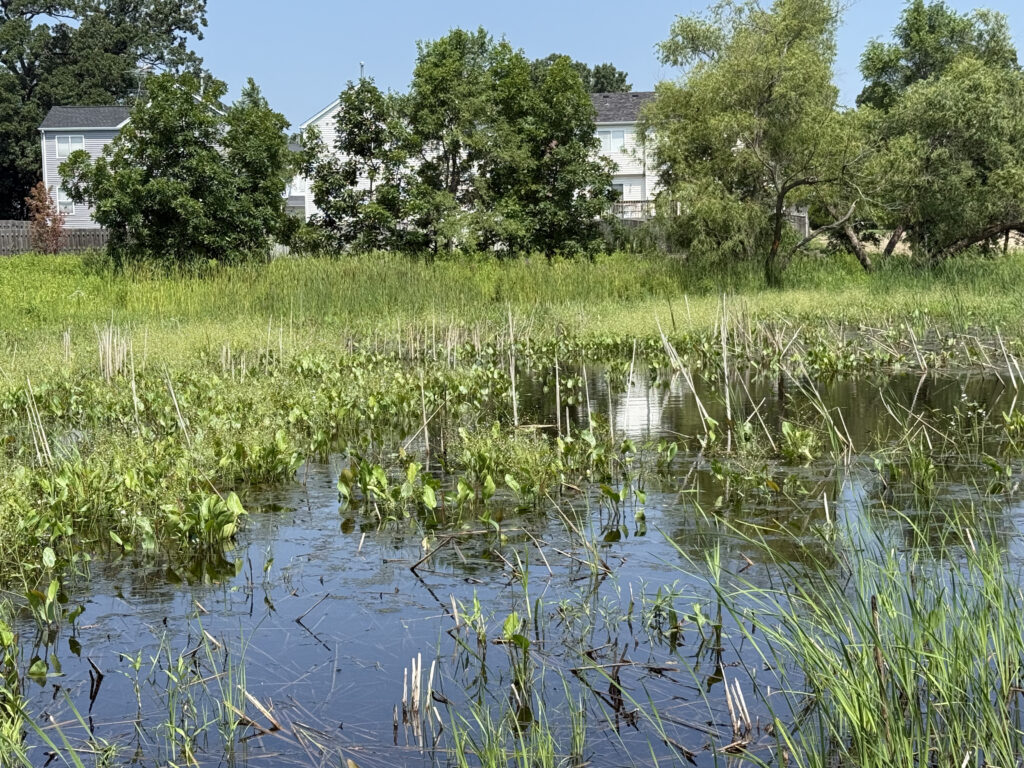
Wetland restoration services in Round Lake mean fixing wetlands that actually hold water and support plants instead of turning into weed patches. Most wetland projects fail within three years. The water dries up. Cattails take over everything. Invasive plants choke out the good stuff. Nobody planned for what happens when rain doesn’t come for six weeks or when a storm dumps four inches in one day. Real wetland restoration accounts for droughts, floods, and everything between. We design systems that handle Lake County’s unpredictable weather without turning into dry fields or permanent swamps.
Designing Functional Wetland Systems
Understanding What Wetlands Actually Need
Wetlands aren’t just low spots that flood sometimes. They’re complex systems where water, soil, and plants work together in specific ways. The water table needs to sit within 12 inches of the surface for most of the growing season. Soils need to be hydric – meaning they developed under saturated conditions and can handle being waterlogged. Plants need to be hydrophytic species that thrive in wet conditions. When any of these three pieces fails, you don’t have a wetland. You have a wet spot that dries out or a permanent pond that doesn’t support wetland plants. Most failed restoration projects miss one of these basic requirements. The water doesn’t stay at the right depth long enough. The soil can’t support wetland vegetation. Or someone planted upland species that die when their roots flood.
Why Water Levels Make or Break Projects
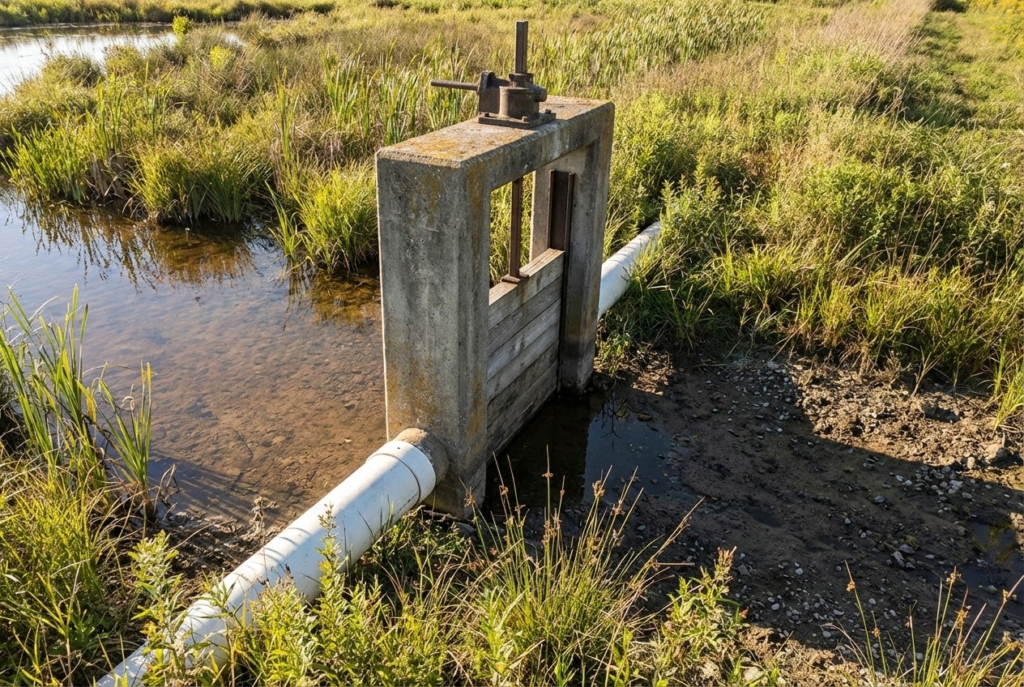
Wetland hydrology is complicated because Lake County weather is unpredictable. You design for average rainfall and get either drought or deluge. A wetland that works perfectly in normal years turns into cracked mud during dry summers or a permanent lake after heavy spring rains. Good restoration plans account for this variability. Water control structures need adjustable gates so you can manage levels manually during extreme weather. Berms and swales need to handle overflow without eroding. Inlet and outlet elevations matter down to the inch. Our environmental consulting services include detailed hydrology analysis showing how water will move through your site under different rainfall scenarios. Get the water wrong and nothing else matters.
Recognizing Hydric Soils Versus Regular Dirt
You can’t create hydric soils quickly. They develop over decades or centuries of saturation. Digging a hole in upland soil and filling it with water doesn’t create wetland soil. The chemistry is wrong. The organic matter content is wrong. The microbial community is wrong. Some restoration sites have existing hydric soils that were drained and farmed but retain their wetland characteristics. These sites restore much easier because the soil foundation exists. Other sites have mineral soils that were never wetland. These need complete soil reconstruction or decades of sustained hydrology before they develop true hydric characteristics. We assess soil conditions through boring samples and analysis. If you don’t have hydric soils and can’t create the right hydrology to develop them, you’re not restoring a wetland. You’re building a pond with a dirt bottom.
Dealing with Cattail and Reed Canary Grass Invasion
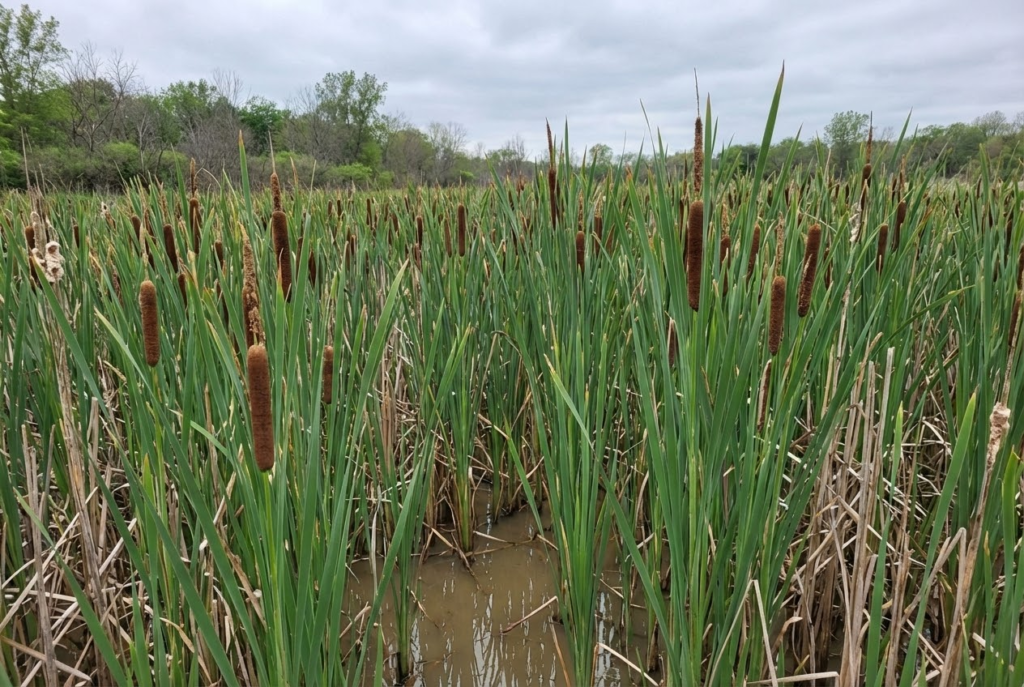
Every degraded wetland in Lake County has the same problem – invasive plants dominating everything. Cattails form dense monocultures that crowd out diverse native vegetation. Reed canary grass creates impenetrable stands that nothing else can grow through. Purple loosestrife spreads rapidly and produces millions of seeds. These invasives exploit disturbed hydrology and nutrient-rich conditions. They tolerate water level fluctuations better than most natives. Restoration plans need aggressive invasive control strategies that continue for years. According to the EPA’s wetland restoration guidelines, managing invasive species is critical for long-term restoration success. Initial clearing isn’t enough. The seed bank persists for 5 to 10 years. You need repeated herbicide treatments, burning when possible, and competitive planting with aggressive natives that can outcompete invasive seedlings. Our prescribed burn services can be integrated into invasive management strategies where appropriate.
Establishing Native Plant Communities That Survive
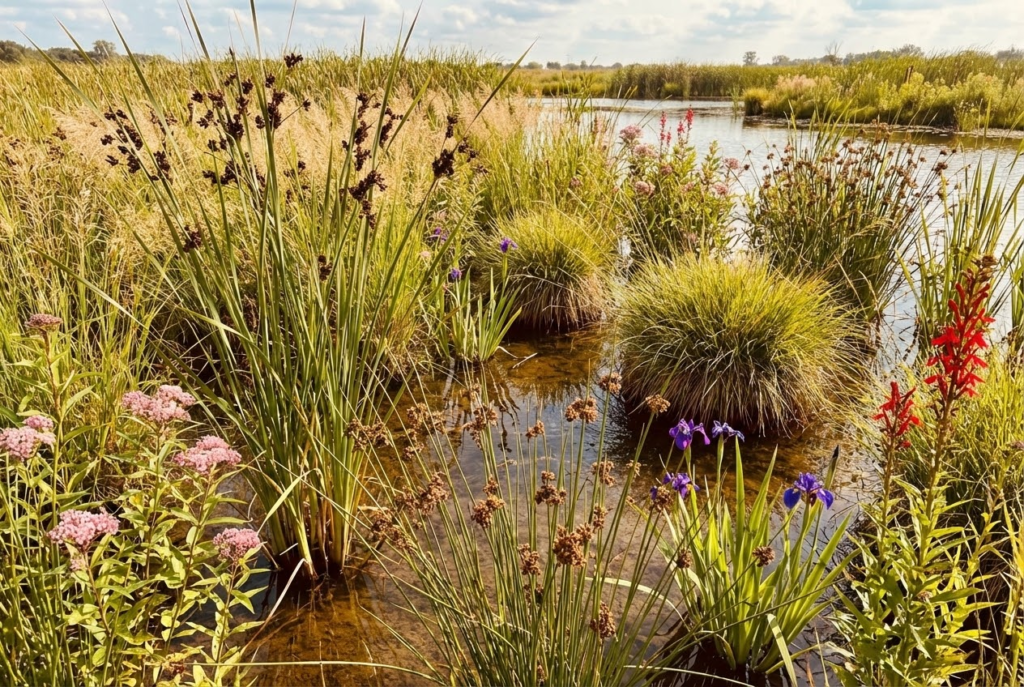
Planting native wetland species sounds straightforward but fails constantly. Most people plant the wrong species for their water depth. Deep marsh plants die in shallow water. Wet meadow species drown in deep water. Then there’s timing – plant too early and frost kills everything, plant too late and drought stresses new plants before they establish. Seed versus plugs matters. Some species need to be planted as plugs to compete with invasives. Others establish better from seed. We design planting plans that match species to specific water depth zones. Emergent marsh zone gets one mix. Wet meadow zone gets different species. Upland buffer gets another. Our ecological preservation work specifies exact species, installation methods, and timing for each zone. Planting plans also need to account for year one versus year five. What you plant initially might not be what dominates long-term.
Understanding Regulatory Requirements and Permits
Wetland restoration requires permits even though you’re improving conditions. Army Corps of Engineers wants notification for any work affecting wetlands. Illinois EPA has wetland protection rules. Some municipalities have additional wetland ordinances. If you’re creating wetlands where none existed, you might need mitigation banking credits. If you’re restoring drained wetlands, you need documentation showing historical wetland conditions. The regulatory process takes months even for straightforward projects. We navigate permit requirements, prepare necessary documentation, and coordinate with regulatory agencies. Providing wetland restoration services in Round Lake means knowing which permits apply to your specific project and which agencies need involvement. Skipping permits creates legal problems that stop projects completely.
Planning for Long-Term Maintenance Needs
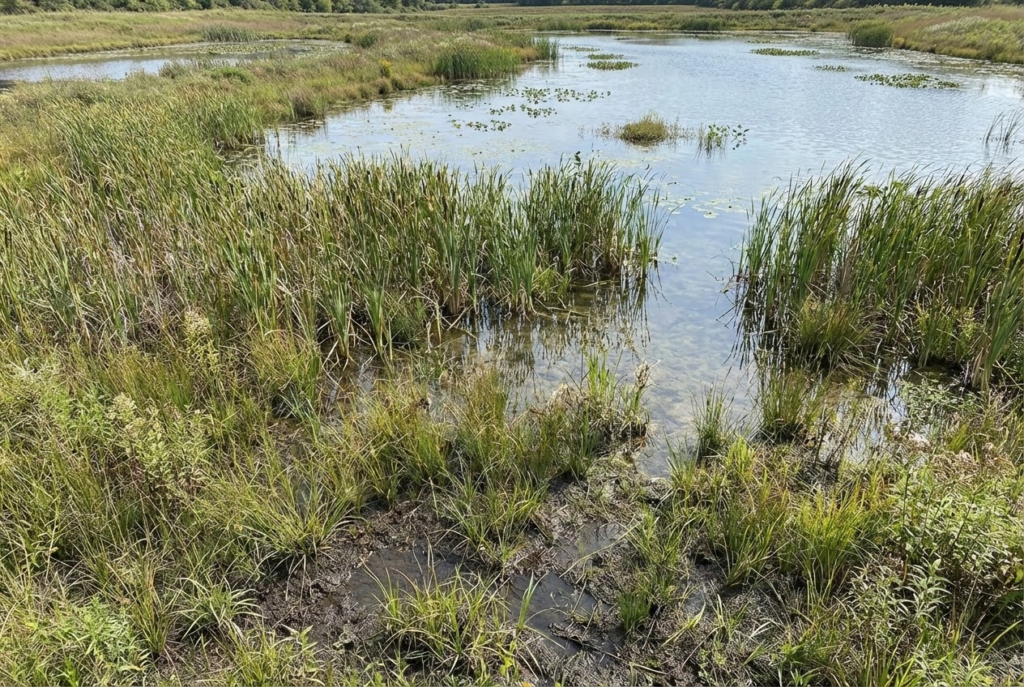
Wetland restoration doesn’t end when planting finishes. The first five years require intensive management. Invasives try to reestablish. Water levels need adjustment as systems settle. Native plant coverage gets monitored to ensure establishment. Some projects need supplemental planting where initial efforts failed. After year five, maintenance needs decrease but don’t disappear. Most restored wetlands need periodic invasive control for 10 to 20 years. Water control structures need inspection and adjustment. Monitoring continues to document success and identify problems early. We create long-term management plans showing what maintenance each year requires, estimated costs, and performance benchmarks. This prevents municipalities from completing restoration work but abandoning maintenance when grant funding ends.
Success Criteria Don’t Match Reality
Wetland restoration projects get declared successful based on regulatory checklists that don’t measure actual function. Did you achieve 50% native plant coverage in year three? Success. Did water stay within 6 inches of surface for 14 consecutive days during growing season? Success. Check the boxes, close the grant, move on. Nobody measures whether the wetland actually filters nutrients, recharges groundwater, or supports breeding amphibians. We’ve seen projects that met every regulatory success criterion but function terribly as actual wetlands. The plant coverage is all invasive cattails. The hydrology is wrong so nothing breeds there. But on paper it’s a successful restoration because it hit the benchmarks. Good restoration plans include real ecological monitoring beyond regulatory minimums – water quality testing, amphibian surveys, soil development tracking. This costs more and takes longer but tells you if the wetland actually works.
Three Agencies Will Contradict Each Other
Wetland projects involve Army Corps of Engineers, Illinois EPA, and usually county or municipal stormwater departments. Each agency has different definitions, different requirements, and different approval timelines. Corps says your project doesn’t need a permit. EPA says it does. County says you need additional stormwater permits. You can spend six months navigating contradictory requirements from agencies that don’t coordinate with each other. The jurisdictional boundaries aren’t even clear – is this a wetland, a water of the US, a state-regulated water body, or just a wet area? Different answers trigger different agencies. We’ve managed enough wetland permits to know which agencies actually have jurisdiction and how to satisfy everyone without getting stuck in bureaucratic loops that delay projects for years.
Plan Your Wetland Restoration
We can assess your site and create restoration plans that satisfy regulatory requirements while building wetlands that actually function.
Call (847) 546-7353 for wetland restoration planning in Lake County and beyond.