Oak Savanna and Woodland Restoration Services in Round Lake
Oak savanna and woodland restoration services in Round Lake mean planning ecosystems that actually look like the oak communities that used to cover Lake County. Most people see scattered old oaks surrounded by buckthorn and honeysuckle and assume that’s normal. It’s not. Real oak savannas had open understories where sunlight reached the ground and native plants thrived. Real oak woodlands had diverse layers of vegetation, not invasive monocultures. We design restoration plans that bring back the structure and function these systems lost over the past century.
Planning Oak Savanna and Woodland Restoration
What Oak Savannas Actually Look Like
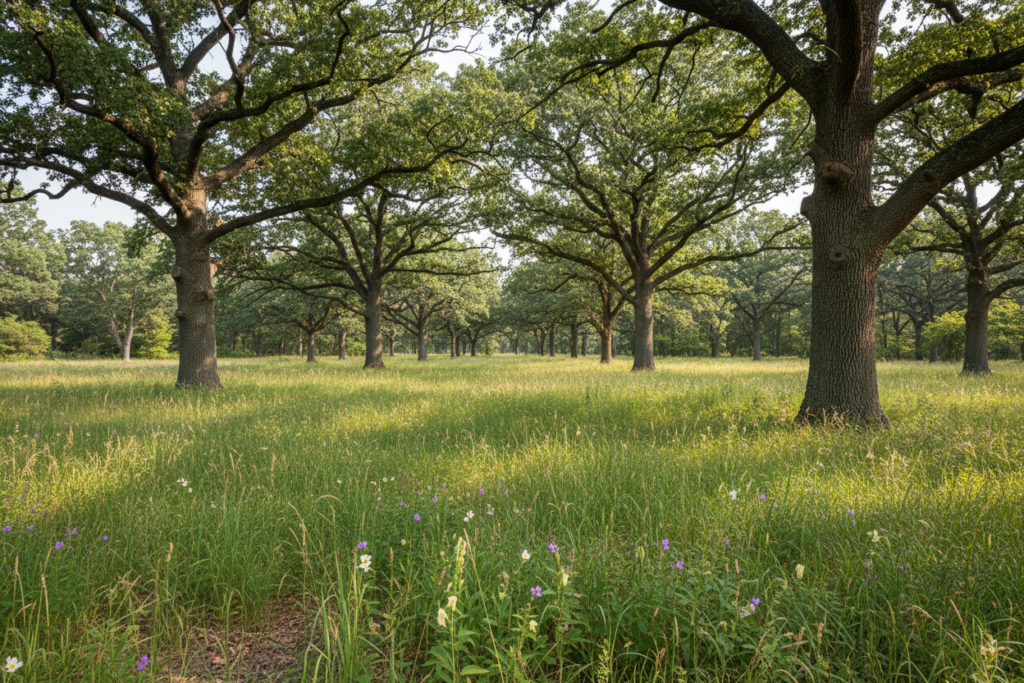
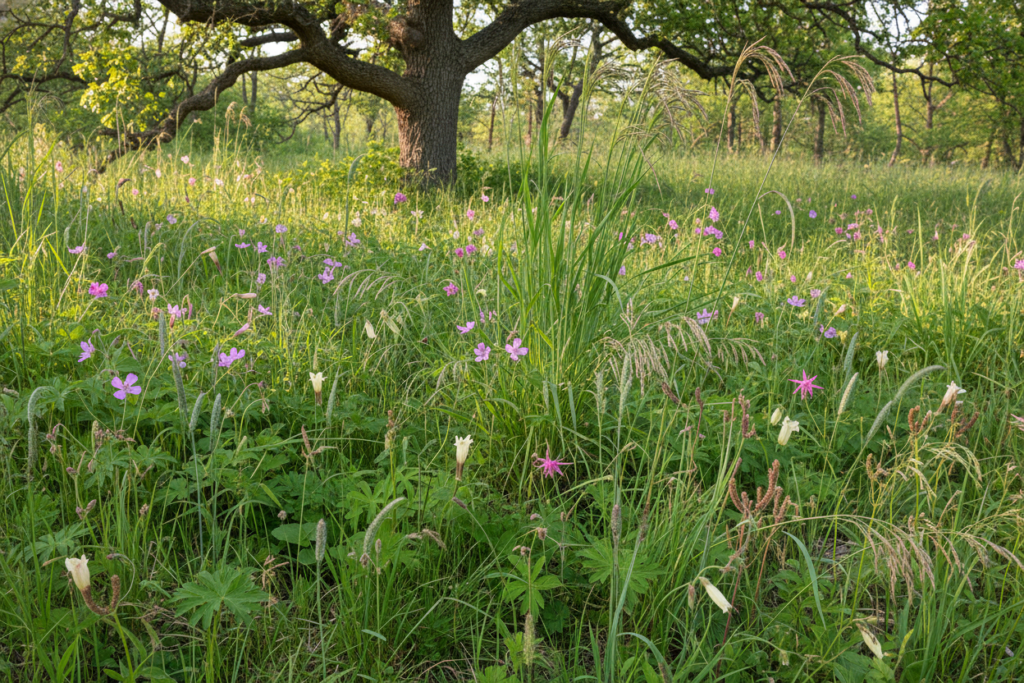
Nobody alive today has seen a real oak savanna. The last good ones disappeared before your grandparents were born. Most people see old oak trees standing in woods full of buckthorn and assume that’s what savannas look like. It’s not. Real oak savannas were open landscapes where mature oak trees stood 30 to 80 feet apart with full spreading canopies. Sunlight reached the ground beneath them. Native grasses and wildflowers grew in thick layers across the forest floor. You could walk through a healthy savanna and see 50 feet or more in any direction. When European settlers first documented Illinois, oak savannas covered millions of acres across the state. Fire swept through every few years and burned away woody brush before it could fill in the understory. Grazing by bison and elk removed seedlings before they could establish. Without fire and grazing, these open savannas closed in with trees within decades, and invasive plants eventually took over completely.
Recognizing What You Actually Have
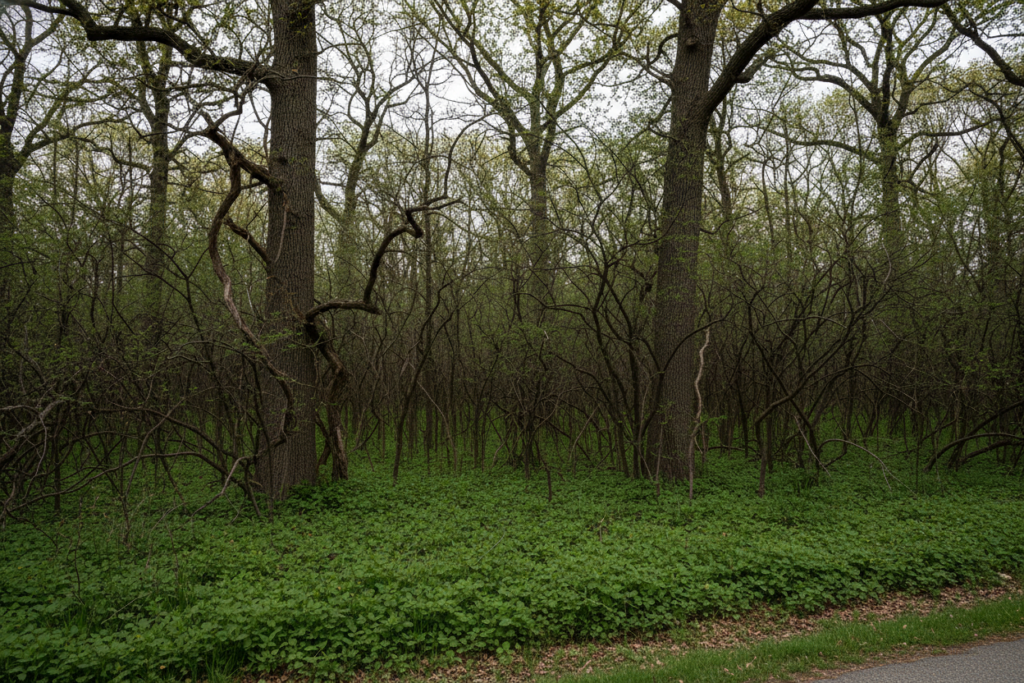
Most Lake County properties have degraded oak systems rather than functional savannas or woodlands. You might have 80-year-old bur oaks or white oaks scattered across your land, but everything beneath them is buckthorn, honeysuckle, and garlic mustard. The native understory disappeared 50 to 70 years ago. Some properties still have remnant native plants hiding under the invasive layer. Those are worth saving. Other properties lost their native seed bank completely and need total reconstruction. We assess what’s actually growing on your property, identify which oaks are worth keeping, and determine whether you’re working with remnant quality or starting from scratch. Our environmental consulting include vegetation surveys that map existing conditions and identify restoration potential before designing any management plans. Our ecological restoration work identifies which remnant plant communities are salvageable and which areas need complete reconstruction.
Why Buckthorn Destroys Oak Regeneration
Buckthorn doesn’t just crowd out native plants. It prevents oak regeneration completely. Oak seedlings need sunlight to establish and grow. Buckthorn creates dense shade that kills oak seedlings within their first year. Even if you clear buckthorn once, the seed bank in the soil erupts and you’re back to square one within two years unless you have a comprehensive plan. Buckthorn also changes soil chemistry in ways that make it harder for native plants to compete even after the buckthorn is removed. Honeysuckle causes similar damage but spreads differently. It creates thick walls 6 to 12 feet tall that smother everything beneath. Young oaks that might have survived buckthorn shade get strangled by honeysuckle vines wrapping around their trunks. Restoration plans need to address not just initial clearing but years of follow-up management to prevent reinvasion while native communities reestablish.
Managing Canopy for Sunlight Penetration
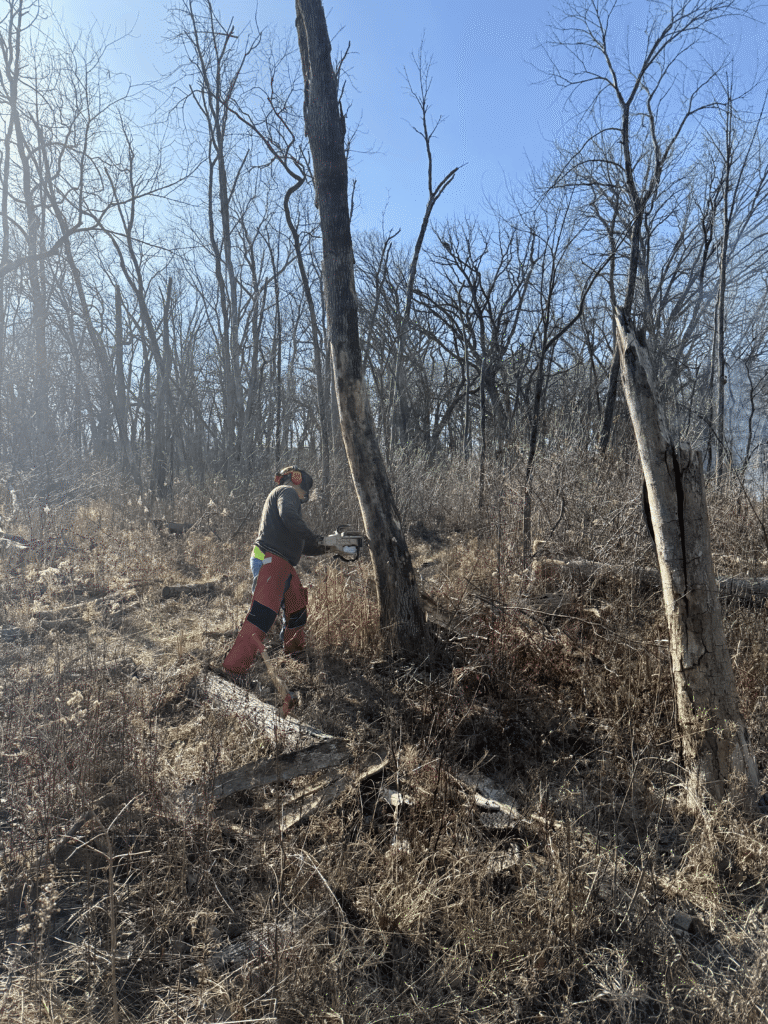
Savanna restoration often requires removing some trees, which feels wrong to people who care about trees. But having too many trees means you can’t have a savanna. If your tree canopy covers 80% or 90% of the sky above you, you have a closed woodland rather than a savanna. Restoration might mean removing less desirable trees like box elder, black cherry, or younger oaks with poor form to give your best oaks room to spread. Some properties need selective thinning to open the canopy from 80% coverage down to 30% or 40%. This allows enough sunlight to reach the ground so native plants can establish. According to the Society for Ecological Restoration guidelines for oak ecosystem restoration, canopy management is essential for proper savanna structure. We identify which trees to keep based on species, age, form, and spacing. Good restoration plans specify exactly which trees get removed, which ones stay, and how the canopy should look in 10 to 20 years.
Establishing Native Understory Communities
Clearing invasives creates bare ground, but bare ground doesn’t automatically become native savanna. You need to establish the right plant communities or you’ll just get different invasives growing back. Oak savannas require specific native grasses, sedges, and wildflowers that tolerate partial shade and compete effectively with invasives. Big bluestem, little bluestem, side-oats grama, Pennsylvania sedge, and wild rye. Wildflowers like wild geranium, shooting star, cream gentian, and yellow pimbina that bloom well in savanna conditions. These plants don’t establish themselves naturally. They need to be seeded or planted as part of a restoration plan. Seed mixes need to match your canopy density and soil conditions. Dense woodland understories require different species than open savannas. We design planting plans that specify seed mixes, installation methods, and proper timing for establishment.
Integrating Fire into Management Plans
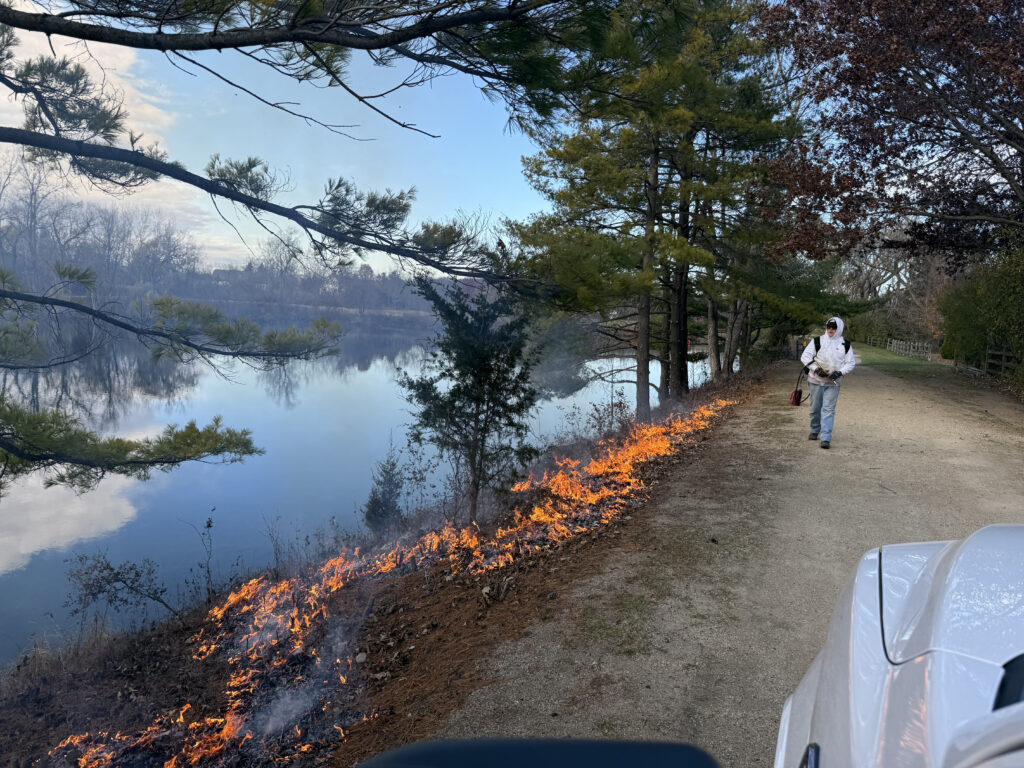
Oak savannas evolved with fire and they deteriorate without it. Fire kills woody seedlings before they become problems. It burns off leaf litter that smothers native seedlings. It releases nutrients back into the soil and stimulates native plant growth. Without regular burning, your restored savanna turns back into buckthorn thicket within 5 to 10 years regardless of how much money you spent on initial clearing. Most savanna restoration plans need burns every 2 to 4 years once the system is established. Some properties need annual burns for the first few years to suppress invasive seed banks. Fire prescriptions need to account for oak health, native plant establishment, and invasive species pressure. We integrate prescribed burn services into long-term restoration plans so you understand what burning schedule your property requires.
Creating Realistic Timeline Expectations
Oak savanna restoration takes years rather than months. You might see significant improvement after initial invasive clearing, but genuine restoration takes 5 to 10 years minimum. The first year focuses on assessment and invasive removal. Years two and three involve follow-up invasive management and native plantings. Years four through six require maintenance burns and monitoring as native communities establish themselves. By years seven to ten, you might have a functional savanna that largely maintains itself with periodic burning. Some properties need 15 to 20 years to reach mature savanna structure. We create phased restoration plans that show what happens each year, what it costs, and when you can expect to see results. Realistic timelines prevent frustration and abandoned projects.
Grant Timelines Don’t Match Ecological Timelines
Most restoration grants fund 3 to 5 years of work. Oak savanna restoration takes 10 to 20 years to reach maturity. You secure funding, complete the scope of work, submit your final report showing successful invasive removal and native plantings established. Grant closes. Then what? Year six through ten require continued management or everything reverts. We’ve watched municipalities and forest preserves complete excellent initial restoration work only to see it fail because no funding existed for years six through fifteen. The invasives come back. The natives get shaded out. Five years later the site looks worse than before the grant started. Good restoration plans separate grant-fundable phases from long-term maintenance requirements and identify sustainable funding sources for decades of continued management.
Every Staff Change Resets Institutional Memory
The ecologist who designed your savanna restoration plan leaves for another position. The new hire inherits project files but doesn’t understand why specific management decisions were made. Burn schedules get delayed or abandoned because the rationale wasn’t documented clearly. Tree removal plans get questioned by new board members who don’t remember the original canopy analysis. We’ve seen 30-year restoration plans collapse within five years because staff turnover erased institutional knowledge. Municipalities and preserves need restoration documentation that survives personnel changes – plans that explain not just what to do but why each decision matters and what happens if you skip steps.
Plan Your Oak Savanna Restoration
We can assess your oak woodlands and create restoration plans with long-term implementation strategies that survive budget cycles and staff changes.
Call (847) 546-7353 for oak savanna restoration planning in Lake County, Illinois, and Wisconsin.