
Rain Garden Installation in Round Lake, IL
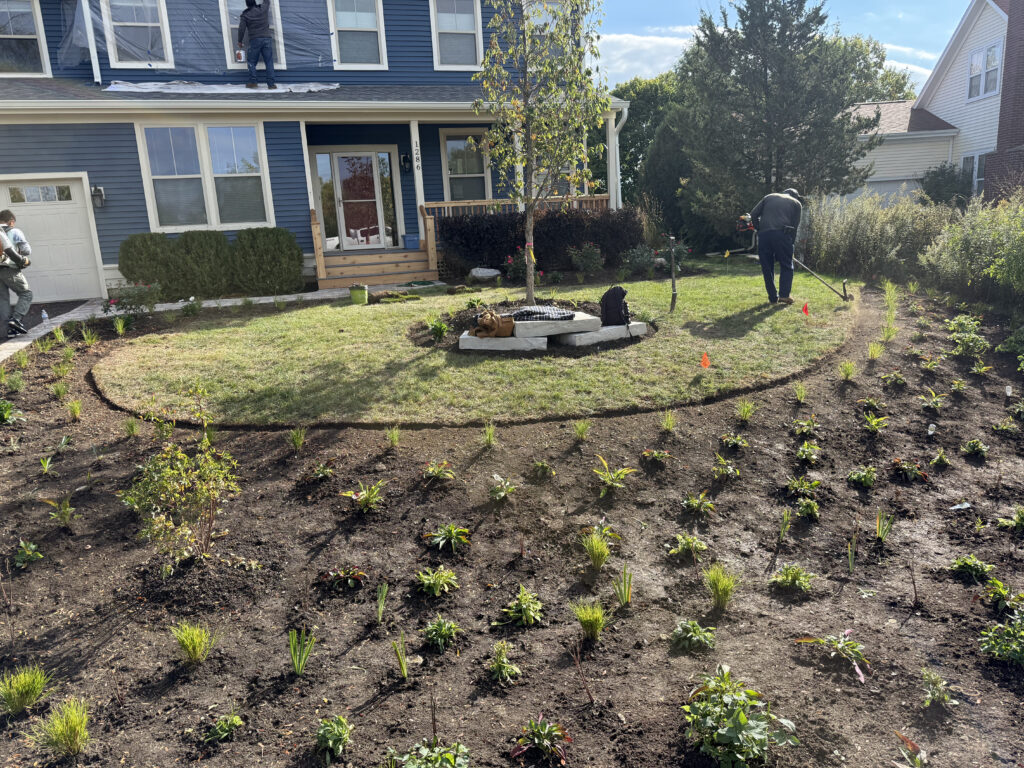
Rain garden installation in Round Lake solves drainage problems while creating attractive landscape features. Rain gardens capture stormwater runoff preventing flooding, erosion, and foundation damage. Native plants handle wet conditions lawn grass can’t tolerate, filtering pollutants while supporting local wildlife. We install rain gardens sized correctly for your property’s drainage needs with native species thriving in Lake County’s clay soil. Properly installed rain gardens eliminate standing water problems within 24-48 hours after storms while looking like intentional gardens.
What is Professional Rain Garden Installation?
Rain garden installation transforms drainage problems into functional landscape features through physical construction. The process involves excavating a depression to proper depth, shaping the basin for water flow, preparing soil for infiltration, and installing native plants in zones matching water exposure. Professional installation differs from throwing plants in a low spot hoping it works. We calculate excavation depth based on your property’s drainage volume, create correctly shaped basins with proper side slopes, improve soil infiltration in Lake County’s clay, and position plants where they’ll handle actual water conditions. Installation takes 3-5 days for typical residential rain gardens. The result is a constructed feature that captures stormwater, filters pollutants, and eliminates drainage problems within one storm cycle.
Stormwater Management Benefits
Preventing Foundation Damage and Flooding
Rain gardens intercept water before it reaches foundations or floods basements. Runoff from roofs, driveways, and lawn areas gets redirected into rain gardens instead of pooling near houses or overwhelming storm sewers. One properly sized rain garden handles runoff from 1,000-2,000 square feet of impervious surface. Properties with foundation water problems often need rain gardens positioned between the water source and the house. They catch water mid-flow preventing it from ever reaching vulnerable areas. This eliminates sump pump cycling, reduces basement moisture, and prevents the erosion that comes from concentrated water flow across yards.
Improving Water Quality Through Filtration
Rain gardens filter pollutants before water reaches lakes, streams, and groundwater. Stormwater picks up fertilizers, pesticides, oil, and sediment washing across lawns and pavement. Rain garden plants and soil trap these contaminants removing them from water before infiltration. Native plant roots create porous soil structure improving filtration capacity over time. Lake County properties near waterways benefit enormously from rain gardens preventing polluted runoff from entering sensitive areas. Each rain garden filters hundreds of gallons during storm events reducing pollution loads that would otherwise flow directly into lakes and rivers.
Reducing Municipal Stormwater Infrastructure Load
Rain gardens reduce strain on overtaxed municipal stormwater systems. Many Lake County neighborhoods have drainage systems designed decades ago for less development. Adding rain gardens across properties reduces runoff volume reaching storm sewers and treatment facilities. This matters during heavy storms when systems overflow causing localized flooding. Properties installing rain gardens contribute to community-wide stormwater management reducing everyone’s flood risk. Some municipalities offer incentives or rebates for rain garden installation recognizing their value for managing stormwater at the source.
Our Rain Garden Installation Process
Excavation and Basin Creation
Excavation creates the depression that captures and holds stormwater. Providing rain garden installation services in Round Lake means understanding that depth varies based on drainage volume and soil infiltration rates—typically 6-12 inches deep for residential gardens. We excavate to stable subsoil removing topsoil and organic material that would float during flooding. Basin shape matters enormously. Sides need gentle slopes, usually 4:1 or 5:1, allowing safe mowing and preventing erosion. Flat bottoms distribute water evenly promoting infiltration across the entire surface. Sharp edges or steep sides cause problems—erosion, difficult maintenance, unsafe conditions. Proper excavation also accounts for the soil removal—several cubic yards of material that needs hauling away or repurposing elsewhere on the property.
Soil Preparation and Amendments
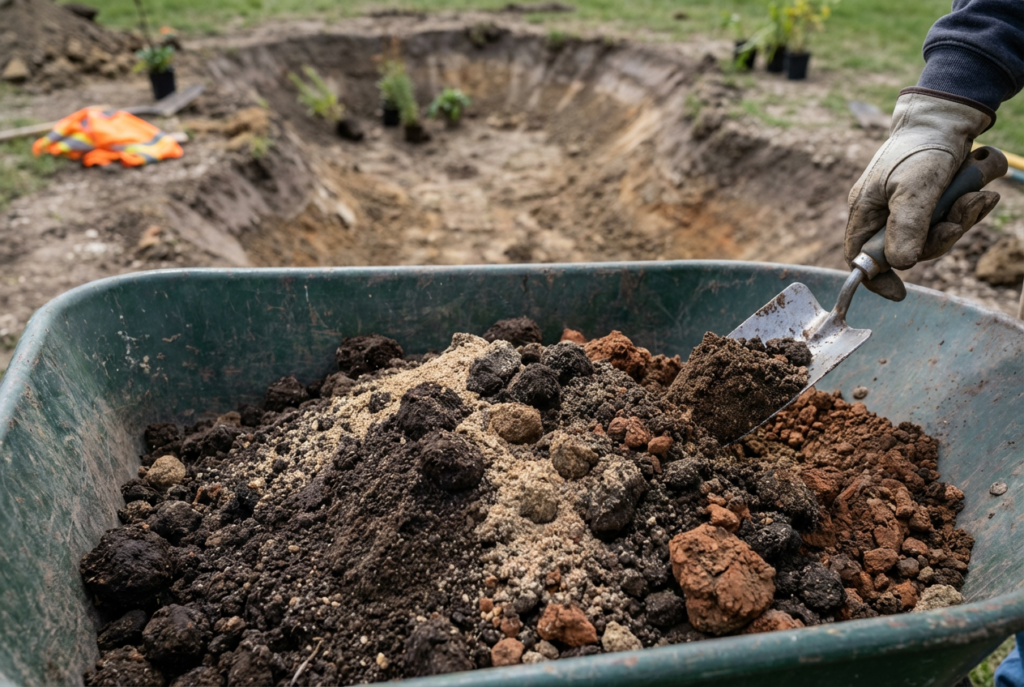
Lake County clay soil infiltrates slowly causing rain gardens to hold water too long. We improve infiltration by amending existing soil or creating specialized soil mixes. Typical amendments include compost, sand, and shredded hardwood improving drainage while supporting plant growth. The mix depends on existing soil conditions and target infiltration rates. Our soil preparation follows EPA rain garden standards for infiltration rates ensuring proper drainage function. Rain gardens should drain within 24-48 hours preventing mosquito breeding. We test infiltration before finalizing soil preparation to ensure adequate drainage. Some locations need more aggressive soil replacement entirely removing clay and installing engineered rain garden soil. This costs more but guarantees proper function in challenging soil conditions.
Native Plant Installation in Rain Gardens
Rain garden plants get installed in zones matching water exposure. Center stays wettest longest needing species like swamp milkweed, cardinal flower, and soft rush tolerating standing water. Middle zones use Joe Pye weed, blue flag iris, and marsh blazing star handling periodic flooding. Outer edges stay drier suiting switch grass, prairie dropseed, and black-eyed Susans requiring good drainage. Plant spacing accounts for mature size and growth rates. We use a combination of container plants for immediate impact and plugs for cost-effective coverage. Our native planting methods ensure proper depth and spacing for rain garden conditions. Installation happens after soil work completes but before first major storm—established plants hold soil better than bare ground.
Inlet and Overflow Construction
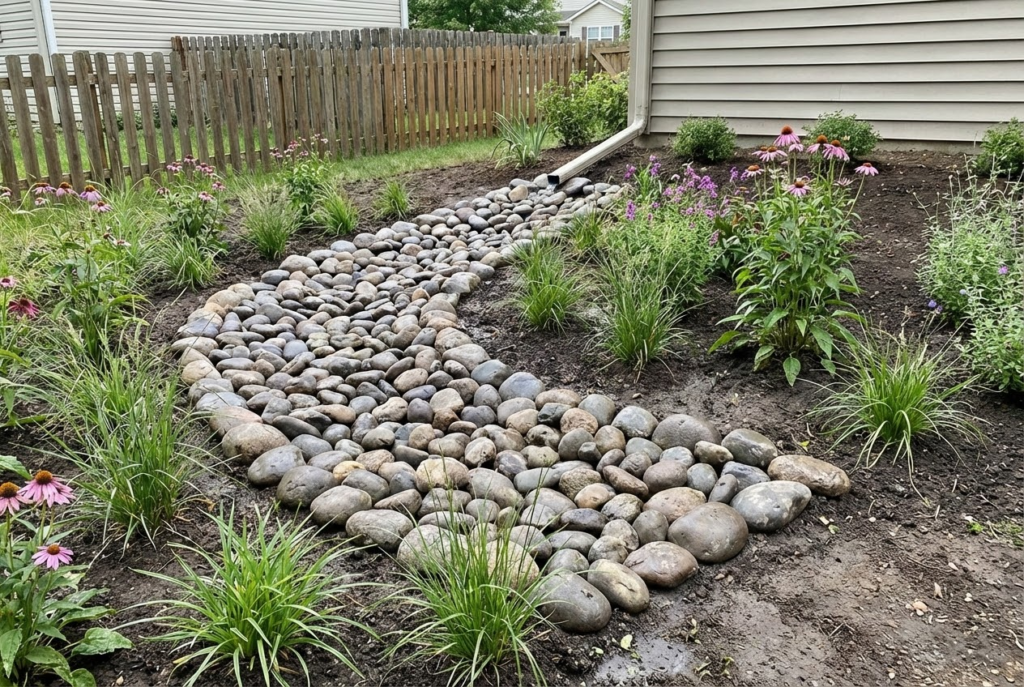
Water needs controlled entry and exit points. Inlets direct runoff from downspouts, swales, or drainage areas into the rain garden. We create rock-lined channels preventing erosion at entry points. Runoff hits rocks dispersing energy before spreading across the basin. Overflow routes handle extreme storms exceeding garden capacity. Without proper overflow, gardens flood surroundings or wash out during heavy rains. We install overflow swales or piped outlets directing excess water safely away from foundations and neighboring properties. Rock placement at both inlets and overflows prevents erosion while looking natural. Sometimes installations integrate with existing hardscape features like patios or walkways creating functional transitions between spaces.
First Year Establishment and Performance
What Happens During First Storms
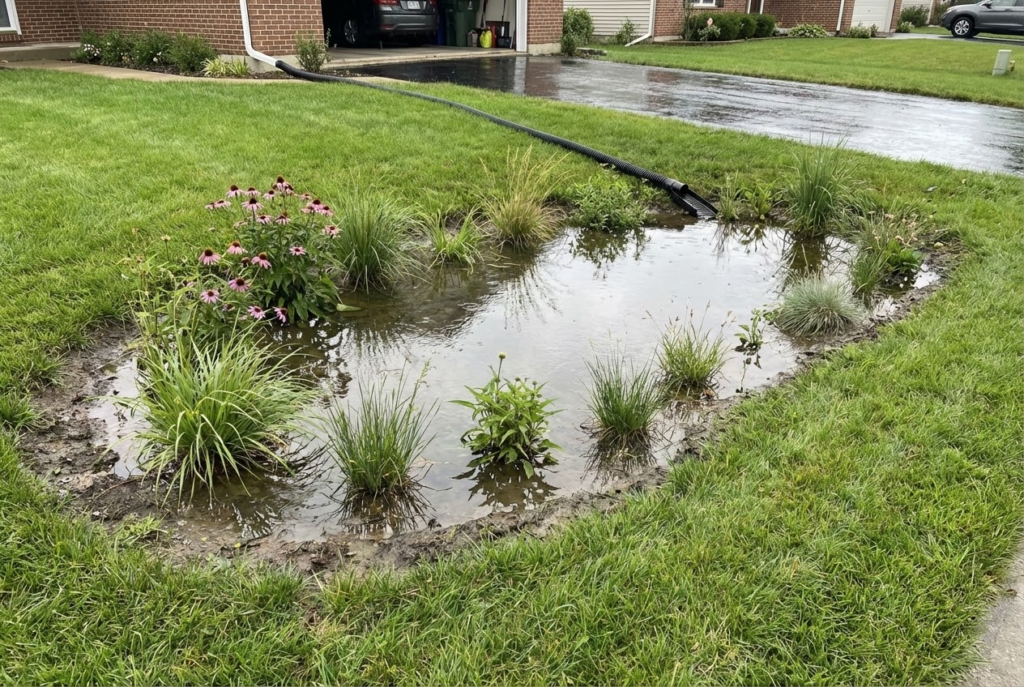
First storms test rain garden function immediately. Properly installed gardens fill during heavy rain then drain within 24-48 hours. Standing water longer than two days indicates poor infiltration needing adjustment. Initial storms also reveal if sizing was adequate—gardens that overflow every storm are too small for their drainage area. We monitor performance after first major rainfall making any needed adjustments to grading, soil, or overflow routes. First-year plants won’t prevent all erosion yet since roots haven’t developed. Some mulch displacement and minor soil movement is normal. Major erosion or persistent standing water indicates problems requiring correction.
Establishment Care and Maintenance
First growing season requires active management. Plants need watering during dry spells even though rain gardens handle wet conditions—establishment requires consistent moisture. Weeds compete aggressively in disturbed soil. Regular weeding prevents invasives from taking over before natives fill in. Mulch helps suppress weeds and retain moisture but needs replenishing as it washes or decomposes. Sediment accumulation from early storms may need removal if it’s excessive. We provide specific care instructions covering watering frequency, acceptable weed levels, and when to call for help. Year two requires less intervention as natives establish. By year three, rain gardens become largely self-maintaining needing only annual cutback and occasional weeding.
Long-Term Performance Expectations
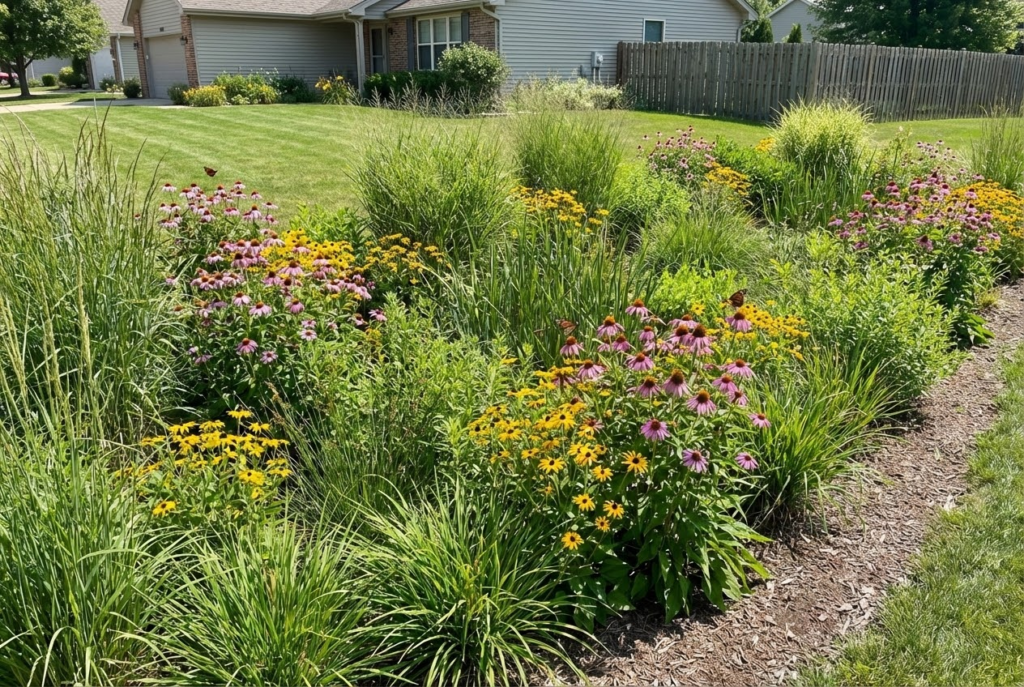
Established rain gardens improve over time rather than deteriorating. Native plant roots develop extensively creating natural infiltration channels. Vegetation fills in completely preventing erosion and filtering pollutants more effectively. Year five rain gardens function better than year one installations. Annual maintenance involves cutting back dead growth in late winter, removing accumulated debris, and occasional sediment removal if gardens catch significant runoff. Some plants may need dividing if they spread aggressively. Rain gardens typically function for decades with minimal upkeep once established. Properties we installed ten to fifteen years ago still perform perfectly with almost zero maintenance beyond annual cutback.
The First Big Storm Tells Everything
You can’t fake rain garden function. Either water drains within two days or it doesn’t. Either it handles a three-inch storm without overflowing or it doesn’t. Either plants survive wet-dry cycles or they rot. There’s no hiding poor installation because every storm proves whether construction was done right. That immediate accountability separates rain garden work from projects where problems show up years later. We’ve installed enough rain gardens to know which construction details get tested during that first major storm—excavation depth, soil infiltration rates, overflow routing, plant zone placement. Gardens that fail usually fail within the first three storms. Gardens built correctly keep working for decades.
Fixing Failed Rain Gardens Teaches More Than Installing New Ones
Half our rain garden work involves fixing installations done by others. We’ve seen every possible failure mode. Gardens too shallow that overflow constantly. Gardens too deep that hold water for weeks. Wrong soil amendments that actually reduce drainage. Plants that can’t handle flooding. Missing overflow routes that wash out surrounding areas. These failures taught us exactly what separates functional installations from expensive mistakes. That’s knowledge you can’t get from doing everything right the first time.
Install Your Rain Garden Right
Water problems need solutions that actually work. Let’s install a rain garden that drains.
Call (847) 546-7353 for rain garden installation throughout Illinois.