
Rain Garden Design Services in Round Lake IL
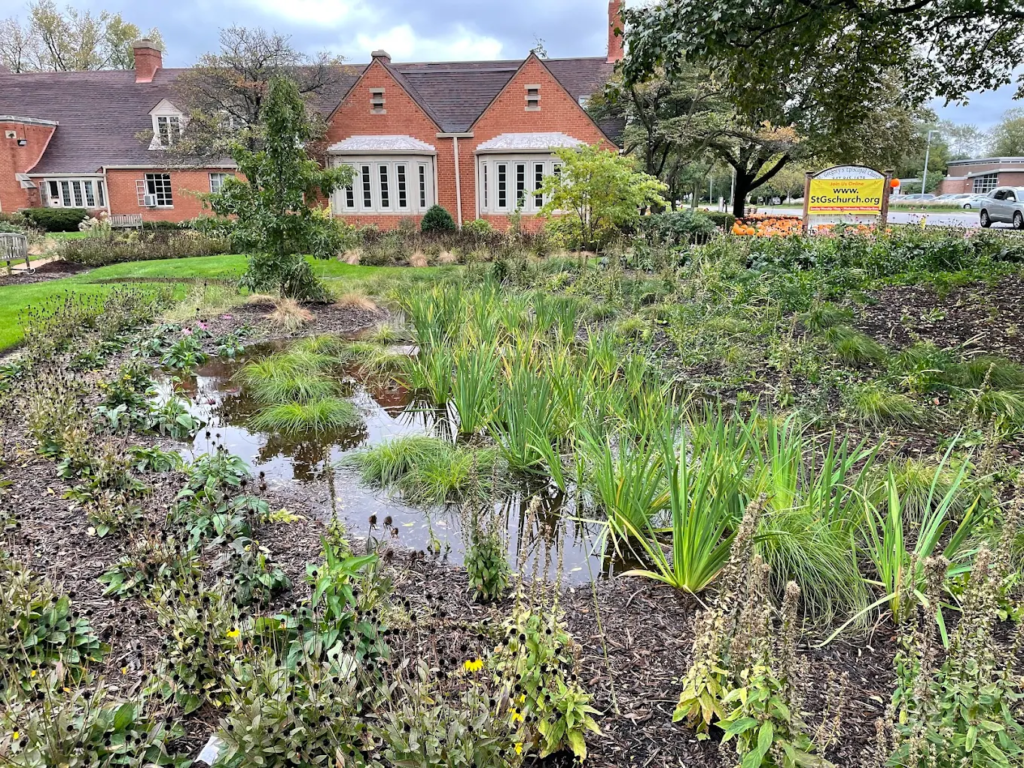
Rain garden design services in Round Lake solve drainage problems by capturing stormwater where it falls. If you’ve got water pooling in your yard after storms, running toward your foundation, or flooding low spots, a rain garden handles it before it becomes a bigger issue. We design rain gardens using native Illinois plants that can sit in water one week and be bone dry the next—they’re built for it.
We’ve been designing rain gardens around Lake County and the greater Chicago region since the late 1990s, back when most people had never heard of them. We work throughout northern Illinois and southern Wisconsin, but most of our projects are concentrated in Round Lake and surrounding communities. We figure out where water naturally drains on your property, size the garden correctly, and pick plants that’ll thrive in those conditions without constant attention.
What’s Included in Our Rain Garden Design Services in Round Lake
Site Assessment & Drainage Analysis
We start by walking your property to see where water goes during and after storms. Where does it pool? Where does it flow? What’s the slope? We’re looking at how water moves across your yard, where it comes from (roof downspouts, neighbor’s property, street runoff), and where it naturally wants to go. This tells us the best location for a rain garden—you want to catch water before it causes problems, not after.
Rain Garden Sizing & Placement
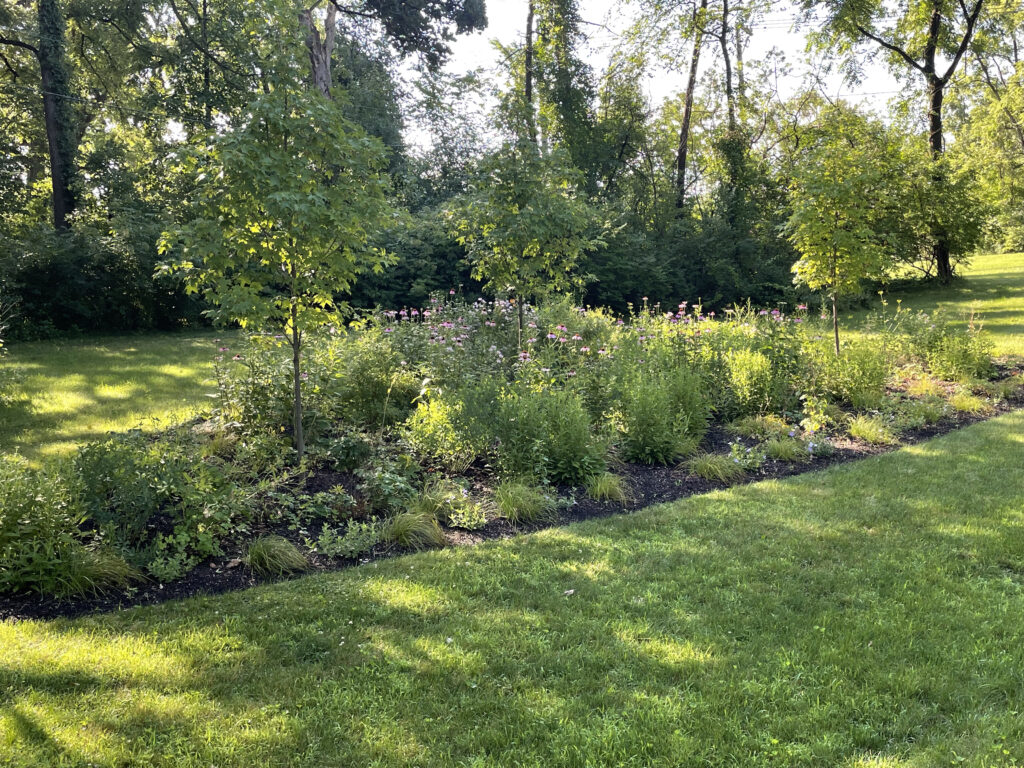
Rain gardens need to be sized correctly or they don’t work. Too small and they overflow during heavy rains. Too big and you’re wasting space. We calculate the right size based on your property’s drainage area, soil type, and how much water you’re trying to capture. Placement matters too—you want it at least 10 feet from your foundation, in a spot where water naturally flows, and where it won’t create new problems for neighbors.
Native Plant Selection for Wet/Dry Cycles
The plants in a rain garden need to handle extremes. Sitting in water after a heavy storm, then bone dry a week later. Not every plant can do that. We use native Illinois species adapted to these conditions—swamp milkweed, Joe Pye weed, cardinal flower for the wettest spots, then switch sedge and prairie dropseed for areas that drain faster. The plant selection depends on how wet your site stays and how much sun it gets. Our approach aligns with EPA guidelines for rain garden plant selection and stormwater management.
Soil & Infiltration Planning
Clay soil around Round Lake doesn’t drain fast, which is usually why you need a rain garden in the first place. We design with that in mind—sometimes amending soil to improve infiltration, sometimes creating overflow routes for when the garden fills up during extreme storms. The goal is water soaking in within 24-48 hours, not sitting there for days turning into a mosquito breeding ground.
Design Plans & Grading
You get a to-scale plan showing the rain garden’s location, size, shape, and plant layout. We include grading details so you know how deep to dig, where the inlet and overflow go, and how water enters and exits the garden. Plants are mapped by zone—wettest in the center, drier species on the edges—so everything’s positioned where it’ll actually thrive.
Maintenance Expectations
Rain gardens need more attention the first year while plants establish, then they’re pretty low-maintenance. We walk you through what to expect: watering during dry spells in year one, pulling weeds until natives fill in, occasional sediment removal if your garden catches a lot of runoff. After establishment, most rain gardens just need cutting back dead growth once a year and removing debris after storms.
We Design Rain Gardens That Actually Function
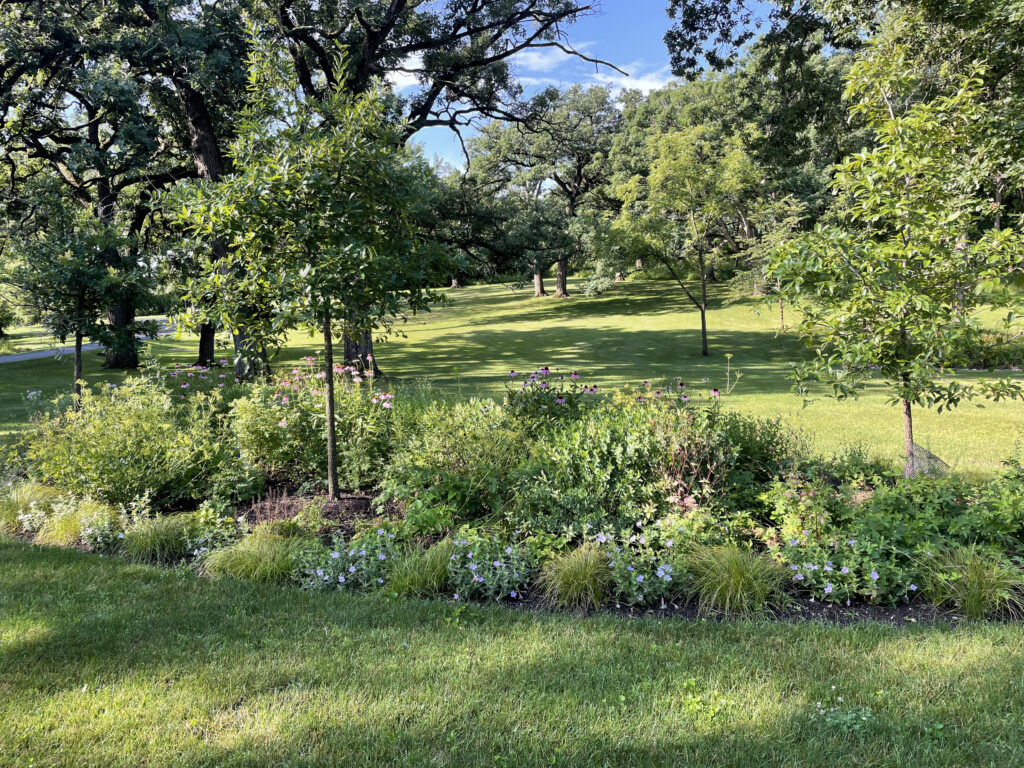
Rain gardens fail when they’re sized wrong, placed in the wrong spot, or planted with species that can’t handle the conditions. We’ve been designing them for decades throughout Lake County, Cook County, and southern Wisconsin, so we know the common mistakes. Too shallow and they overflow. Wrong plants and they die or look ratty. Poor placement and you’re just moving water problems around instead of solving them.
We Know What Actually Works In This Region
There’s a difference between reading about rain garden design and knowing how they perform in real conditions. We’ve seen which plant species establish quickly versus taking years to fill in, which handle standing water without rotting, and how different soil types affect drainage rates across northern Illinois. That experience matters when you’re designing something that needs to function during 3-inch rainstorms, not just look pretty.
We Design For Your Property’s Specific Conditions
Some designers use cookie-cutter rain garden plans. We don’t do that. Your site’s slope, soil type, drainage patterns, and sun exposure all affect how the rain garden should be sized and planted. We design based on what’s actually happening on your property—where water comes from, where it needs to go, and what’ll grow successfully in those conditions.
Ready To Solve Your Drainage Problems?
Contact Eubanks Environmental to schedule a site assessment. We serve Round Lake, Lake County, the greater Chicago area, and southern Wisconsin.
Call us or use the contact form to discuss your rain garden design project.