#1 Expert Prairie Restoration Services in Round Lake, IL
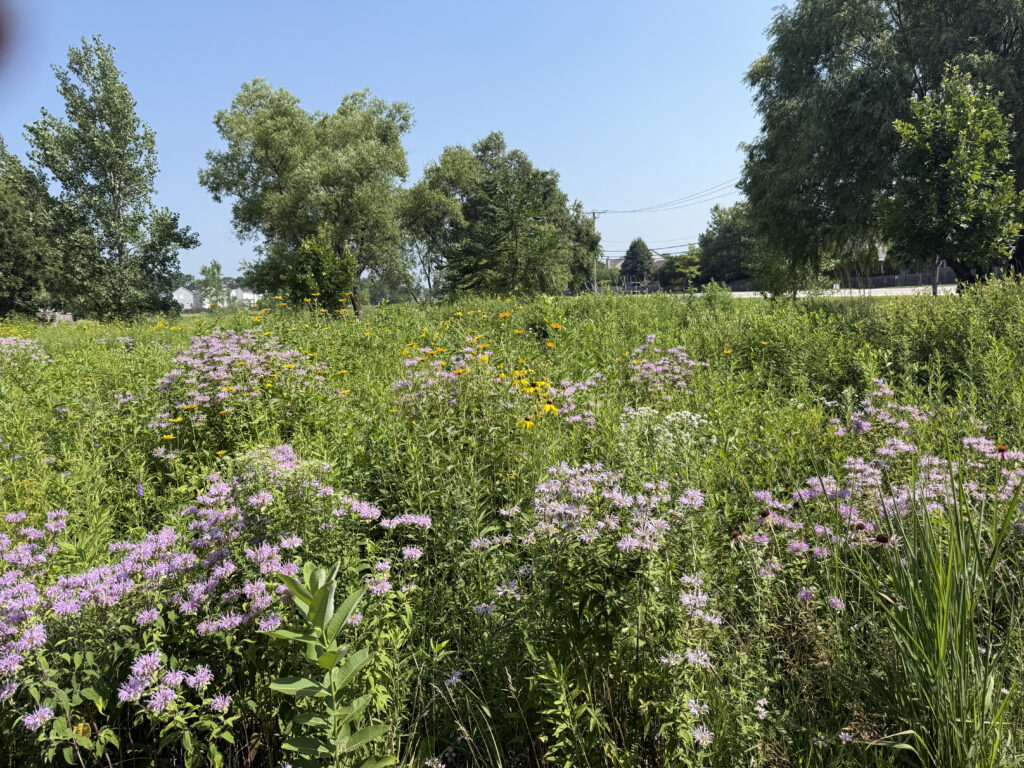
Prairie restoration services in Round Lake mean planning projects that actually look like prairies instead of weedy fields with a few wildflowers. Most prairie restorations fail because nobody accounts for the seed bank. You plant native seeds and invasive seeds that have been sitting in the soil for 50 years germinate faster. Foxtail and ragweed dominate everything. The natives get choked out before they establish. Real prairie restoration plans for this inevitable invasion with herbicide strategies, mowing schedules, and planting techniques that give natives a fighting chance against decades of accumulated weed seeds.
Designing Native Prairie Systems
Understanding What Real Prairies Look Like
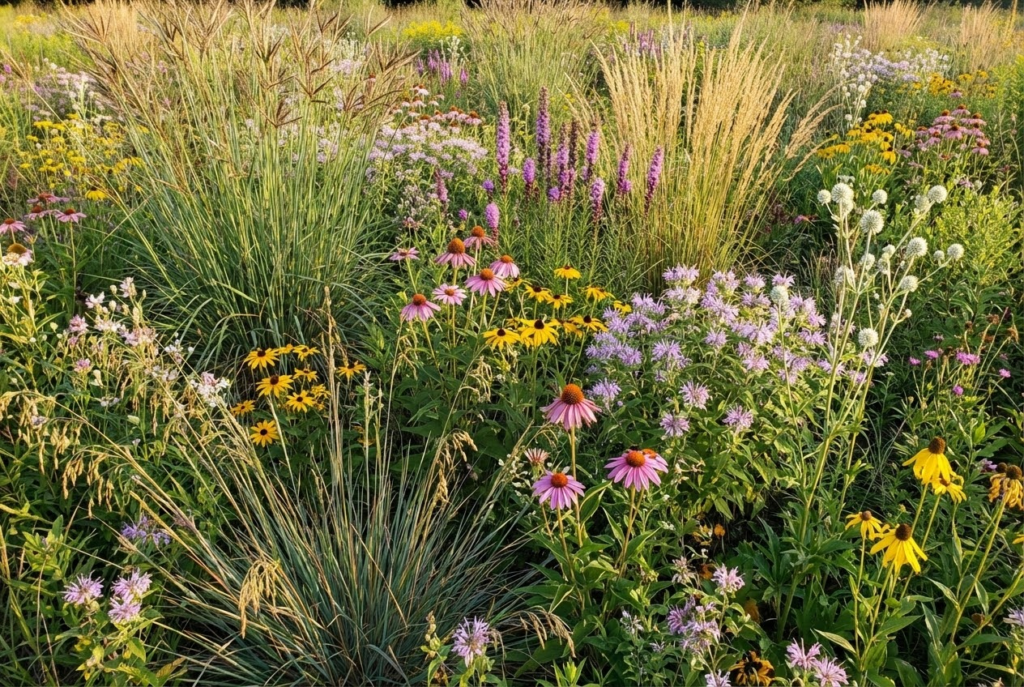
Nobody remembers what prairies actually looked like. The last good ones disappeared 150 years ago. People see big bluestem and coneflowers next to a parking lot and think that counts as prairie. Real prairies had 100 or more different plant species growing together in one acre. Tall grasses. Short grasses. Spring wildflowers. Summer bloomers. Fall asters. Everything mixed together in layers. Each plant did a specific job. Some pulled nitrogen from the air and put it in the soil. Others had roots going down six feet to find water and nutrients. Deep roots, shallow roots, flowers at different heights – it all worked together as a system. When you plant 12 species and call it prairie restoration, you’re not restoring anything. You’re making a garden that looks kind of like prairie. Our environmental planning starts by figuring out which plants your specific site needs based on soil type, how wet it gets, and what’s already growing there.
Why Weed Seeds Ruin Everything
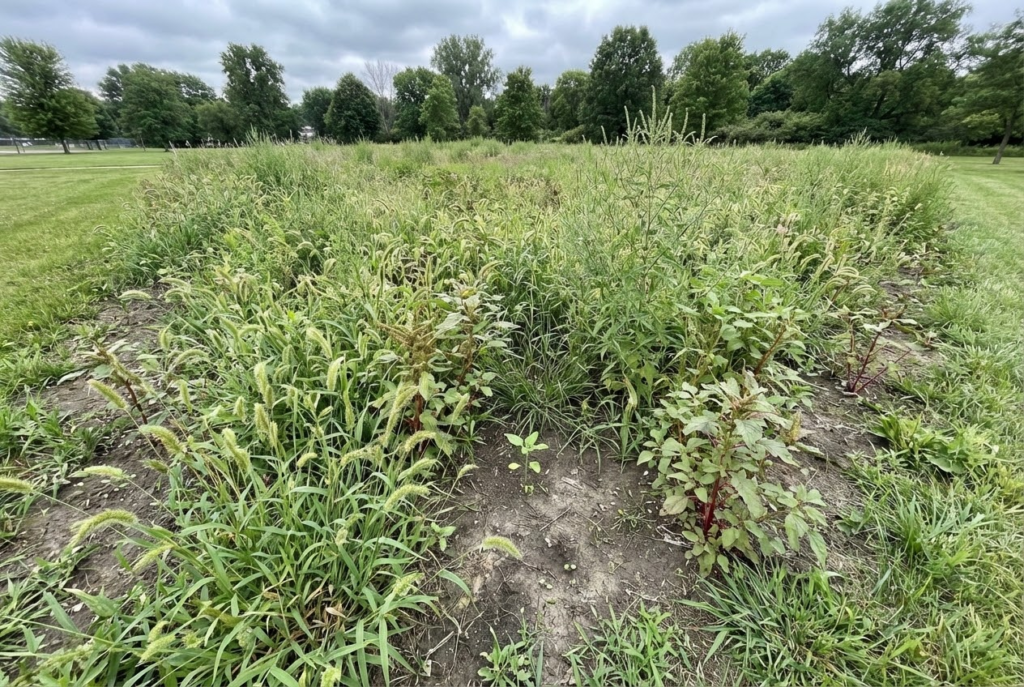
Your dirt contains thousands of weed seeds. They’ve been piling up for 50 years or more. Some weed seeds sit in soil for decades waiting for their chance. When you dig up the ground to plant prairie seeds, you wake up all these sleeping weed seeds. Foxtail germinates in three days. Ragweed in five days. Your native prairie seeds take three weeks or more. The weeds get a huge head start. By the time your native seeds sprout, they’re trying to grow in the shade of weeds that are already six inches tall. This is why most prairie projects fail in year one. The whole site turns into a weed patch with a few sad native plants scattered around trying to survive. Nobody planned for the weed explosion. Good restoration plans attack weeds aggressively in year one. Mow at exactly the right height to cut weeds without hurting natives. Spray herbicide when weeds are growing but natives are dormant. Sometimes you even let the first weed flush grow, spray it all dead, then plant natives in the clean dirt.
Wrong Plants in Wrong Places
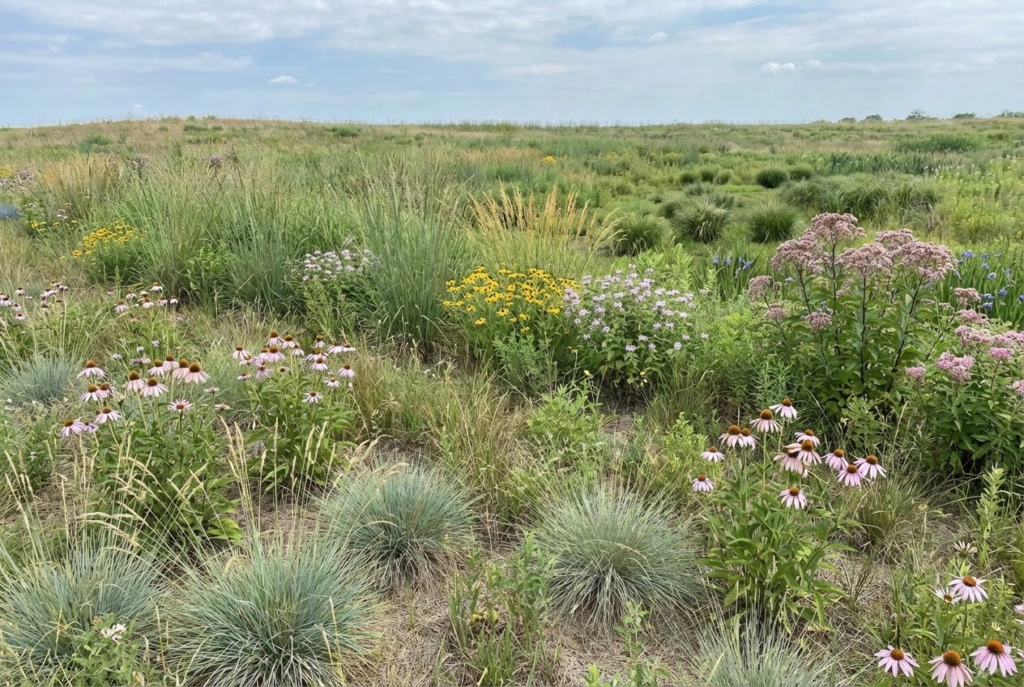
You can’t dump the same seed mix everywhere and expect it to work. Wet spots need wet prairie plants. Dry hilltops need dry prairie plants. Clay soil supports different species than sand. Shady woodland edges need different plants than full sun areas. Most failures happen because someone bought generic “prairie seed mix” and spread it everywhere without thinking. Wet prairie species drown on sandy knolls. Dry prairie plants rot in low wet spots. We walk your property and map the different conditions. High dry areas. Low wet areas. Different soil types. Sun versus shade. Then we design different seed mixes for each zone. According to the USDA Natural Resources Conservation Service prairie restoration guidelines, you have to match species to conditions or they die. Wet low spots might get sedges and Joe Pye weed. Dry hills get little bluestem and side-oats grama. Our ecological restoration work includes maps showing exactly which seed mix goes where and how much to plant.
Cool Season Grasses Take Over Silently
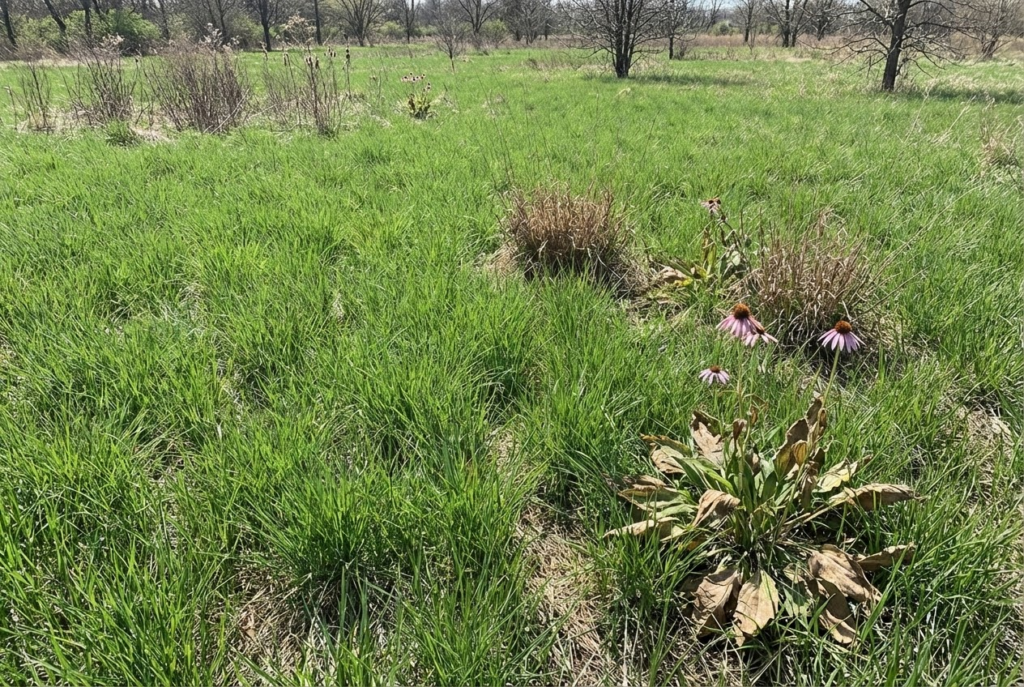
Cool season grasses don’t look dangerous. They’re just green grass. Smooth brome, Kentucky bluegrass, tall fescue – they spread so slowly you don’t notice until it’s too late. They wake up early in spring while native grasses are still dormant. March and April they’re already green and growing, stealing all the water and nutrients. Your native big bluestem doesn’t even start growing until late May or June. By then the cool season grasses have already won. Within five years your prairie turns into a field of non-native pasture grass. Nothing else survives. These grasses are hard to kill because selective herbicides that kill grass without killing other grass barely exist. You have to spray at exactly the right time – when cool season grasses are actively growing but native warm season grasses are still asleep. Miss that narrow window and you kill everything. Prescribed burning done at the right time helps suppress cool season invaders and favors native warm season species.
Year One Looks Terrible
Prairie restoration takes three to five years before it actually looks like a prairie. Year one is a disaster. Weeds everywhere. Native seedlings are there but they’re tiny. Most are single stems with three leaves barely visible among the weeds. You squint to find them. Year two still looks rough. More weeds, although natives are getting bigger. A few species might flower. Year three is when things start turning around. Native grasses finally fill in. More flowers bloom. Weeds decrease. By years four and five you have something that actually looks like a prairie. This timeline frustrates people who expect instant results. Park board members visit after year one, see a weed field, and want to abandon the project. We create management plans that explain what each year should look like. This stops people from giving up during the ugly phase when everything looks like it’s failing but actually isn’t.
Prairies Need Fire or They Die
You can’t plant a prairie and walk away. They need management or they fall apart. The most important thing is fire. Prairies evolved with fire. Without burning they slowly die. Woody plants invade. Cool season grasses spread. The native species decline. Most restored prairies need burning every two to four years once they’re established. Burns kill woody seedlings, burn off dead plant material, recycle nutrients, and help natives compete against invasives. Some sites also need occasional mowing or spot spraying for stubborn invasive species. We design long-term management plans showing when to burn, what to monitor, and how to adjust if things aren’t working. Providing prairie restoration services in Round Lake means planning for 20 years of management, not just the first planting. Without long-term planning, restored prairies turn back into weed fields or shrubby messes within 10 years.
The Public Calls Prairies Weeds
Prairie restorations look terrible for two years. Park visitors complain that the site looks unmowed and neglected. Adjacent property owners call village hall saying the park has gone to weeds and is lowering property values. Board members get angry emails from residents demanding someone mow the eyesore. Nobody told the public this is what prairie restoration looks like during establishment. The native plants are there but they’re small and mixed with annual weeds. It doesn’t look pretty. It doesn’t look maintained. It looks like the park district stopped caring. We’ve watched municipalities abandon perfectly successful restorations after year one because public complaints became overwhelming. Good restoration plans include public education components – signs explaining the process, newsletter articles showing what to expect, community meetings before work starts. Managing public perception is as important as managing the vegetation.
Installation Contracts Don’t Cover Reality
Most prairie restoration contracts specify installation only. Contractor spreads seed, collects payment, leaves. Contract says nothing about year two weed control or year three monitoring. The site fails because nobody’s responsible for the three years of intensive management that determines success or failure. Installation is maybe 30% of actual restoration work. The other 70% is managing establishment. But maintenance budgets don’t exist because nobody planned for ongoing costs. The contractor who installed it won’t come back without new contracts. Park district staff don’t have equipment or expertise for prairie management. Three years later the site is smooth brome and ragweed. We write restoration plans that specify both installation and multi-year maintenance requirements with realistic cost projections for each year. This prevents the funding gap that kills most projects after installation finishes.
Plan Your Prairie Restoration
We can assess your site and create restoration plans that include realistic timelines, public education strategies, and long-term maintenance budgets.
Call (847) 546-7353 for prairie restoration planning in Lake County, Illinois, and beyond.