
Professional Patio Installation Services in Round Lake, IL
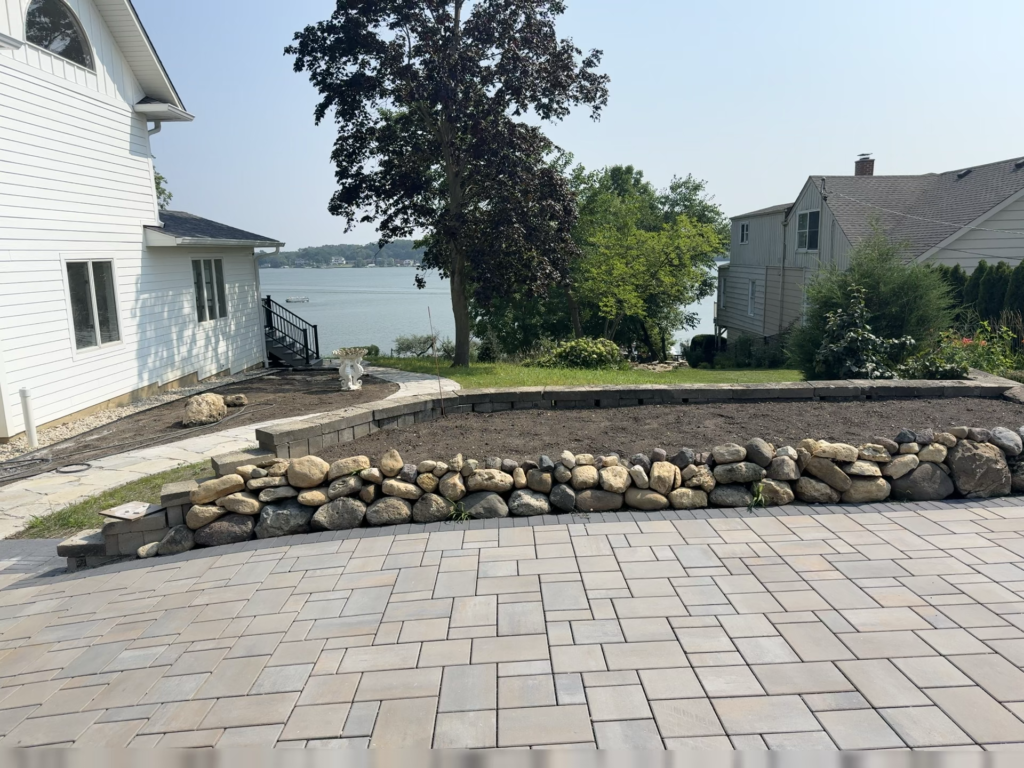
Patio installation services in Round Lake turn backyards into usable outdoor rooms where families gather without worrying about uneven surfaces or furniture sinking. We install paver and stone patios built to handle Lake County’s clay soil and harsh winters. The process includes digging to proper depth, installing crushed stone base in compacted layers, grading for water drainage, and setting pavers with correct spacing. Lake County’s freeze-thaw cycles destroy poorly installed patios within a few years—pavers sink, surfaces become uneven, water pools. Proper installation creates level outdoor spaces that stay solid through decades of use and weather.
What is Professional Patio Installation?
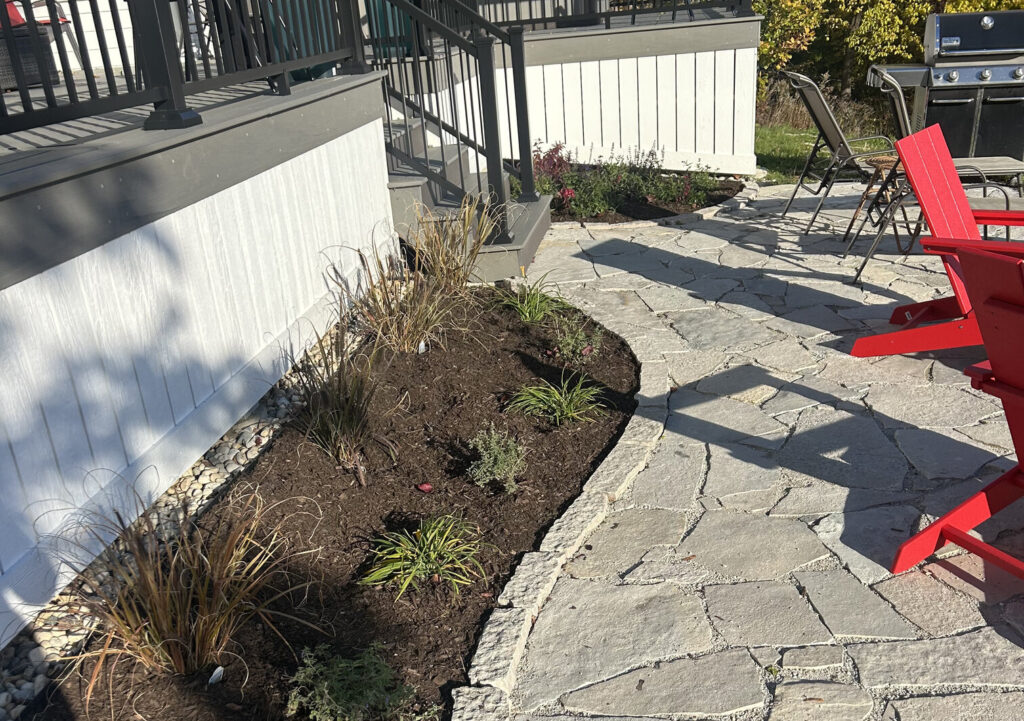
Professional patio installation creates permanent outdoor living spaces through precise construction techniques. The process transforms yards into level surfaces where furniture stays stable, grills and fire pits sit permanently, and families gather comfortably. Construction involves excavating to proper depth for Lake County clay soil, installing crushed stone base in compacted layers, grading surfaces for water drainage, and setting pavers with precise spacing and alignment. Providing patio installation services in Round Lake means understanding that patios require tighter tolerances than other hardscape projects—any settling shows immediately through wobbly furniture or uneven surfaces. Professional installation takes 3-7 days for typical residential patios depending on size and complexity. The result is outdoor space functioning reliably for 30+ years with minimal maintenance beyond occasional cleaning and joint sand refilling.
Why Illinois Patios Fail
⏱️ Timeline Reality: Quality patio installation can’t be rushed. Proper base preparation alone takes 2-3 days for typical patios—shortcuts here cause 90% of premature failures.
Inadequate Base Preparation
Most patio failures trace directly to shortcuts during base preparation. Contractors dig shallow saving time and labor costs. They skip compaction between layers because homeowners can’t see the difference. They use 3-4 inches of base instead of required 6-8 inches because it looks identical initially. These decisions save hours during installation but guarantee problems within 2-3 years. Pavers sink unevenly creating trip hazards. Surfaces become unlevel making furniture wobble. Water pools instead of draining away. Base preparation happens underground where nobody monitors quality. That’s exactly where corners get cut most frequently. We’ve repaired enough failed patios throughout Lake County to recognize every shortcut immediately.
Poor Drainage Planning
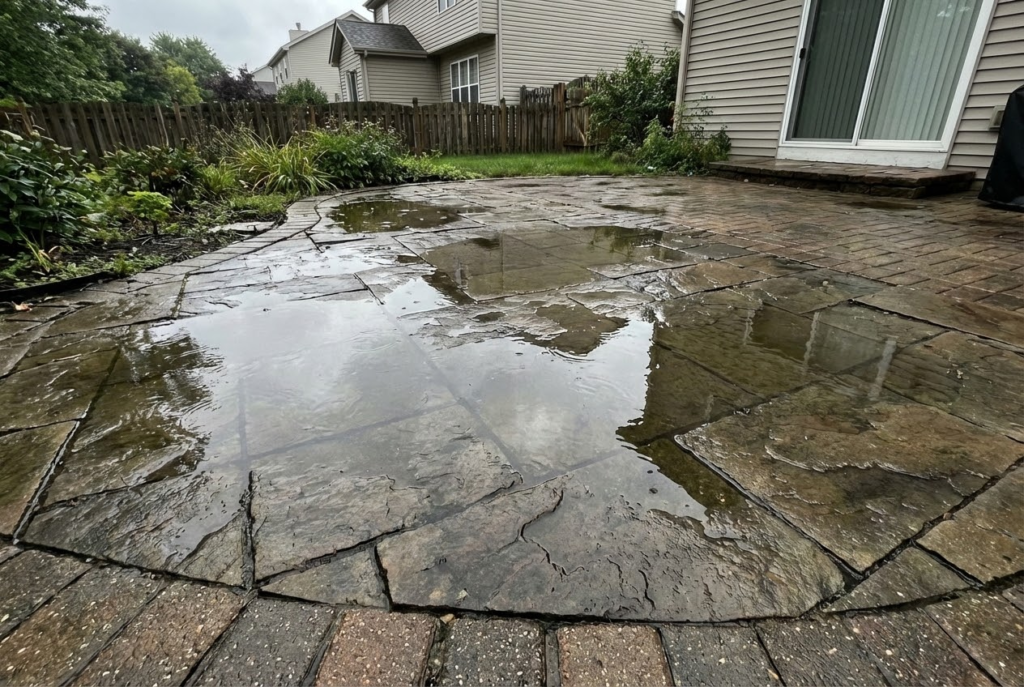
Water destroys patios faster than anything else in Lake County’s clay soil. Poor drainage causes frost heave lifting pavers during winter. It undermines base material creating voids that lead to settling. It creates ice hazards and damages foundations when water runs toward houses. Patios need minimum 2% slope—enough to shed water without being noticeable underfoot. Direction matters enormously. Water flowing toward your house causes foundation problems and basement moisture. Proper edge drainage prevents water from pooling around patio perimeters. Properties with existing drainage problems need those addressed before patio installation or new hardscape just creates additional water issues.
Wrong Materials for Illinois Climate
Material selection determines whether patios survive decades or fail prematurely. Cheap pavers absorb water then crack during freeze-thaw cycles. They lack strength to handle Illinois winters without surface deterioration. Edge restraints matter just as much—flimsy residential products pull loose allowing pavers to spread and shift. Polymeric sand between joints prevents weed growth and washout. Regular sand requires constant maintenance and washes away during heavy storms. Our hardscape installations use commercial-grade materials and ASTM-rated pavers proven effective handling Lake County conditions. Initial material cost differences are minor compared to replacement expenses when inferior products fail.
Our Patio Installation Process
| Project Size | Typical Duration | Base Prep Time | Paver Installation | Finishing Work |
| Small (200 sq ft) | 3-4 days | 1-2 days | 1 day | 1 day |
| Med (400 sq ft) | 5-6 days | 2-3 days | 2 days | 1 day |
| Large (600+ sq ft) | 7-10 days | 3-4 days | 3-4 days | 1-2 days |
Excavation and Base Preparation
⚠️ Illinois Clay Warning: Standard 6-inch base depths used elsewhere fail in Illinois’s clay soil. Proper patio installation requires 8-10 inches minimum preventing the settling that ruins 70% of cheap installations.
Excavation depth determines everything following. Illinois clay soil needs 8-10 inches removed for typical patios—less guarantees settling problems. We excavate to stable subsoil removing organic material and anything compacting unevenly. Crushed limestone goes down in layers, not dumped all at once. Each layer gets compacted thoroughly using plate compactors before adding more. Our installation methods follow industry installation standards for base depth and compaction ensuring long-term stability. Proper base preparation builds solid foundations that won’t shift under weight or compress over time. There’s no fixing inadequate base work without tearing everything out and starting over. This phase requires patience and proper equipment—exactly where cheap installations cut corners.
| Patio Use | Clay Soil Excavation | Base Material Depth | Compaction Passes |
| Light Use | 8 inches | 4-6 inches | 2-3 passes |
| Standard Use | 10 inches | 6 inches | 3-4 passes |
| Heavy Use/Outdoor Kitchen | 12 inches | 8 inches | 4+ passes |
Drainage Planning for Patios
Patio surfaces need grading with minimum 2% slope shedding water without creating noticeable tilt. Nobody should notice the slope when standing there—which means it’s done correctly. Direction matters enormously. Water must flow away from your house, not toward it. Edge drainage sometimes requires gravel trenches or perforated pipe preventing water from pooling around patio perimeters. Properties with existing drainage issues might need those addressed before patio installation through drainage solutions preventing new hardscape from creating additional water problems. Proper drainage planning during installation prevents expensive repairs later when frost heave, undermining, or foundation damage appears.
Material Selection and Pattern Layout
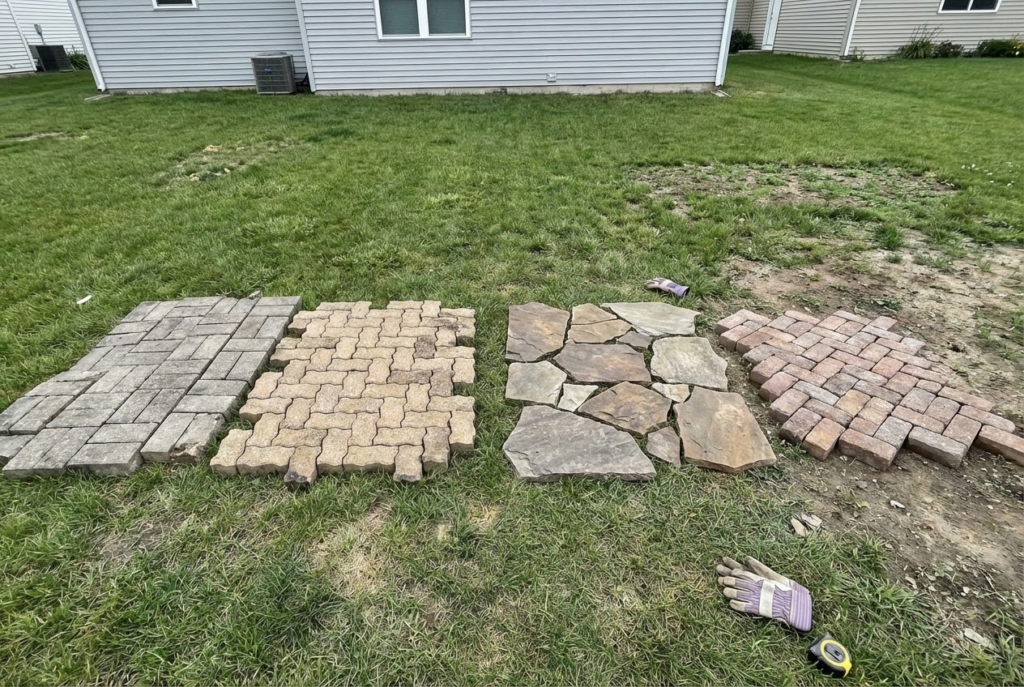
Material choice affects appearance, durability, and long-term costs. Concrete pavers offer consistent sizing and wide color ranges at moderate cost. Natural stone provides unique character but costs significantly more and requires additional installation time. Both handle Illinois weather when installed properly using quality products. Pattern selection depends on patio size and shape—some patterns work better for large spaces, others suit smaller areas or irregular shapes. We help select materials and patterns matching your budget, aesthetic preferences, and how the patio gets used. Outdoor kitchens need different considerations than simple seating areas. Fire pit locations affect layout and material selection around heat exposure.
Paver Installation and Edge Details
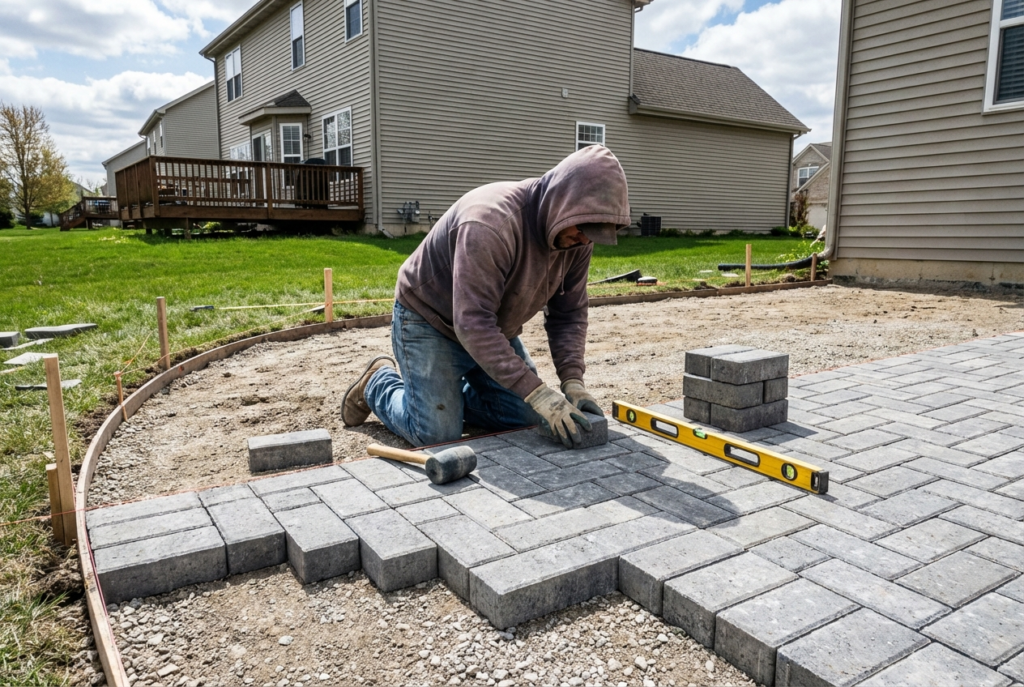
Paver installation requires precision and systematic work. Each piece needs setting level with proper spacing. Patterns must align correctly. Cuts around curves or obstacles should look intentional not haphazard. We work methodically maintaining alignment and checking level constantly. Edge restraints go in before pavers—commercial-grade plastic edging spiked deep into base, not flimsy strips pulling loose after one winter. Edges get hidden under border pavers or covered with soil. Done correctly, restraints are invisible but hold everything in place permanently. After pavers are set, polymeric sand fills joints preventing weeds and washout. This phase separates professional installations from amateur work—the difference shows up in alignment, level surfaces, and clean edge details.
First Season and Long-Term Performance
Normal Settlement vs Installation Problems
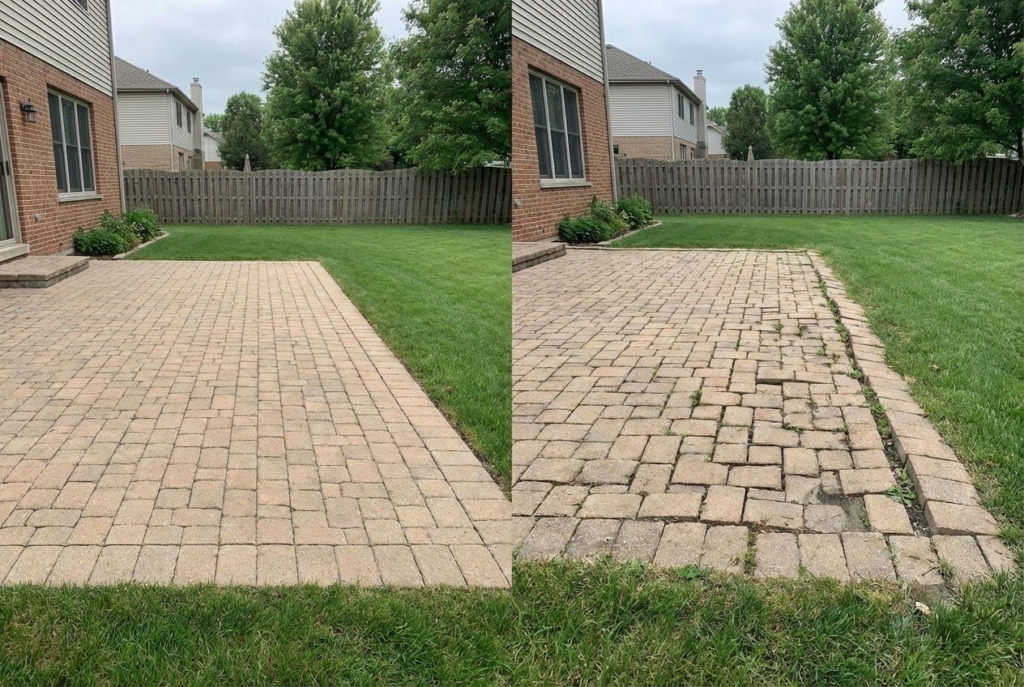
Every patio settles slightly during first season as base material consolidates and pavers seat fully. This is normal and expected with proper installation. Polymeric sand may need light topping off after initial settling. Any minor adjustments get made during first year. Well-installed patios settle evenly and minimally—maybe 1/4 inch uniformly across the surface. Poorly installed patios develop obvious problems quickly. Sections sink creating uneven surfaces. Pavers become unlevel making furniture wobble. Gaps open between pavers. The difference between normal settlement and installation failure becomes apparent within first few months. Quality work settles uniformly then stays stable for decades.
💡 Furniture Test: If your patio makes furniture wobble or shows obvious unevenness within the first year, the installation failed. Proper patios stay level for decades, not months.
Long-Term Durability Expectations
Properly installed patios function for 30+ years with minimal maintenance. That longevity requires base depth matching Lake County clay soil conditions, thorough compaction at every layer, drainage planning preventing water damage, and quality materials handling freeze-thaw cycles. Annual maintenance involves occasional cleaning, joint sand refilling every few years, and removing debris. Pavers may need re-leveling after 15-20 years but the base stays solid. Compare this to cheap installations requiring major repairs within 3-5 years or complete replacement within 10 years. Building it right initially costs more but eliminates ongoing repair expenses and frustration of outdoor spaces failing prematurely. Many projects integrate patios with native plantings creating cohesive outdoor environments requiring minimal maintenance.
Patios Show Every Mistake Immediately
You can hide sloppy work on walkways or distant hardscape. Patios are different. You’re standing on them daily. Sitting furniture on them. Grilling on them. Hosting gatherings. Every imperfection becomes obvious fast—uneven surfaces, wobbly tables, gaps opening between pavers. There’s nowhere to hide poor installation on spaces people use constantly. That immediate visibility makes patio work unforgiving. Everything needs done right because shortcuts show up within months not years. We’ve built enough patios to know which details separate functional outdoor rooms from expensive disappointments that need fixing before they’re even fully paid off.
The Two-Year Test
Poorly installed patios reveal their problems within two years. First winter’s freeze-thaw cycle causes initial settling. Second winter makes it worse. By year two you’re looking at obvious failures—sections sinking, pavers becoming uneven, water pooling, edges spreading. Patios we installed fifteen years ago still function perfectly because base preparation, drainage, and material quality were done right from the start. That’s not luck or chance. It’s understanding what actually prevents premature failure versus what looks adequate initially then falls apart. The two-year mark separates quality installations from expensive mistakes.
Ready to Build Your Patio?
Let’s discuss your outdoor living space plans and property conditions to properly plan your installation project.
Call (847) 546-7353 for patio installation. Serving Round Lake, Lake County, throughout northern Illinois and southern Wisconsin.