Native Plant Design Services in Round Lake IL
Prairie dropseed roots reach fifteen feet deep. That’s why it survives droughts that kill ornamental grasses planted six inches into topsoil. Understanding these differences—how natives actually function versus how they look—separates landscape decoration from ecological design. Thirty years restoring wetlands and prairies for Chicago Botanic Garden, city parks, and private properties means knowing which species colonize aggressively, which need three years to establish, and what your landscape looks like in year five versus installation day. Native plantings improve with age. We design for how they’ll develop, not just how they photograph at install.
What’s Included in Our Native Plant Design Services in Round Lake
Reading Your Property’s Ecology
Sun moves across your yard all day. Morning light is different than afternoon heat. Some spots stay wet in spring but dry out by summer. Trees don’t just make shade—their roots and fallen leaves change what can grow underneath them. Getting these details right means plants establish on their own instead of needing constant help. Wet spots work for swamp milkweed and Joe Pye weed. Dry areas suit little bluestem and prairie dropseed. Shaded ground under oaks needs woodland plants like wild geranium. Most properties have several different growing conditions, not just one. The site visit figures out where each plant type belongs.
Custom Plant Selection
Native plants aren’t one-size-fits-all. Prairie dropseed works great in dry, sunny areas. Sedges handle wet soil. Woodland wildflowers do well under tree canopy. We pick species based on what’s actually happening on your property—sun exposure, drainage, soil type. We’re also thinking about how they’ll look together: bloom times, heights, textures, what the landscape looks like through all four seasons. The goal is plants that establish successfully and look intentional as they mature.
Native vs. Traditional: What Actually Makes Them Different
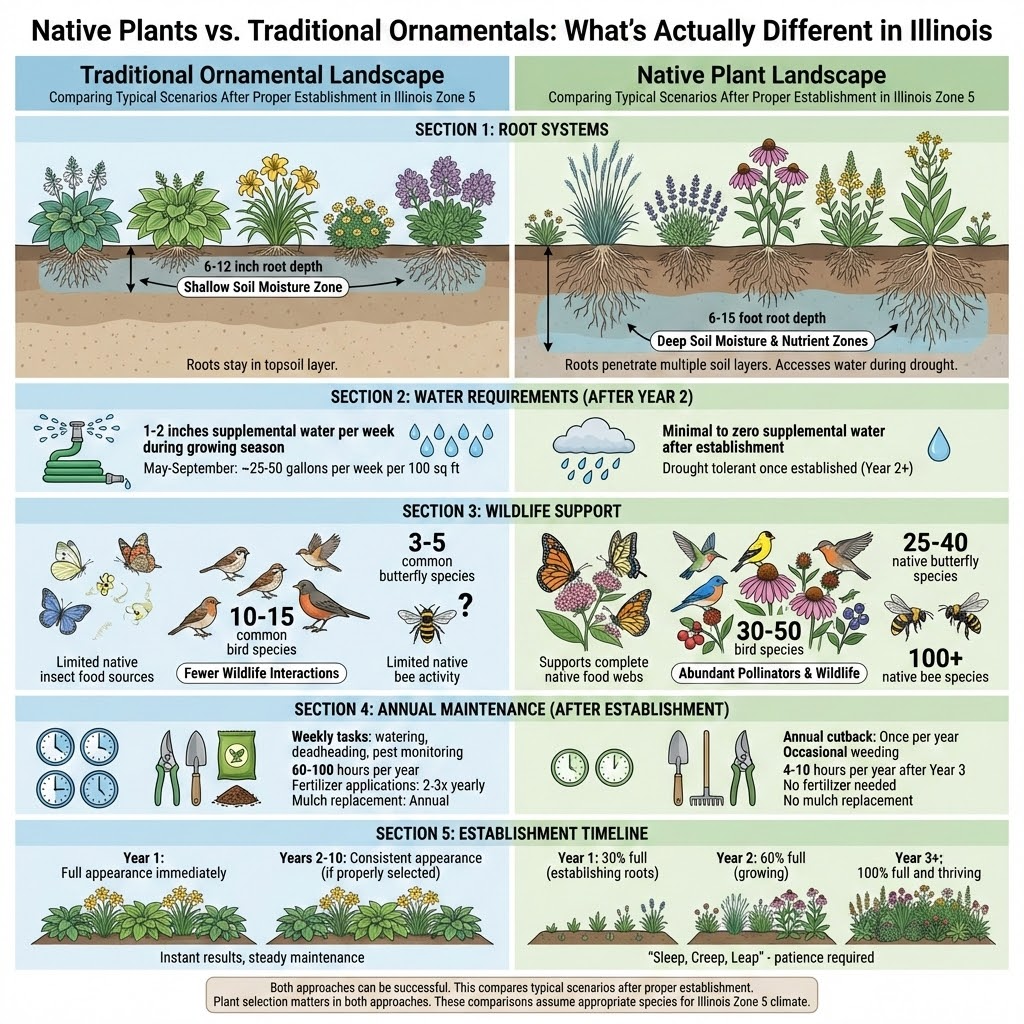
The biggest difference happens underground. Traditional ornamentals send roots 6-12 inches into topsoil. Native prairie plants develop root systems reaching 6-15 feet deep, accessing moisture and nutrients shallow-rooted plants can’t touch. That single difference explains why natives survive droughts, need less water, and require minimal maintenance after establishment.
Illinois Native Plant Communities
Illinois has distinct plant communities that evolved here over thousands of years. Wet prairies with Joe Pye weed and swamp milkweed for areas that stay damp. Mesic prairies with big bluestem and prairie dropseed for average conditions. Dry prairies with little bluestem and purple coneflower for well-drained spots. Oak savanna species like wild geranium and bloodroot under existing trees. We design based on which plant community matches your site, not just throwing random native plants together and hoping they work.
Pollinator & Wildlife Habitat
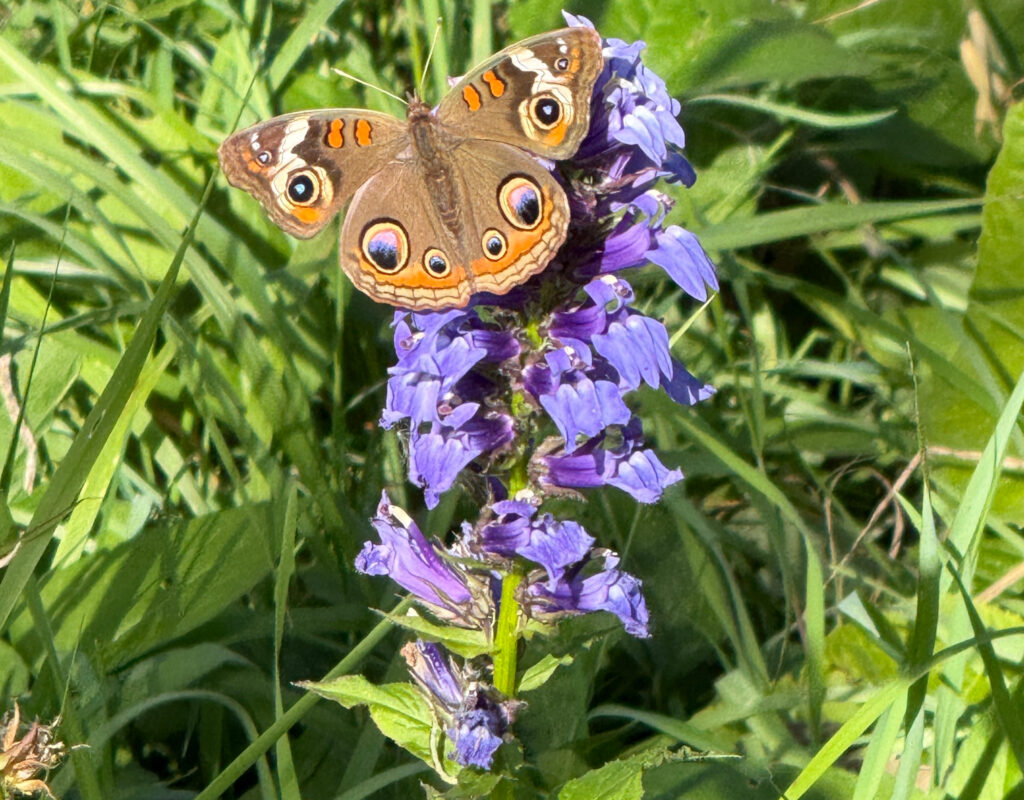
One of the best parts about native plant design is what shows up after. Monarch butterflies on milkweed, goldfinches pulling seeds from coneflowers, native bees working through asters and mountain mint. We design with pollinator support in mind—making sure you’ve got blooms from spring through fall, including host plants for butterfly larvae, and species that provide seeds and shelter through winter. It’s not just about looking good, it’s about creating functional habitat.
Design Plans & Layout
You get a to-scale plan showing what goes where. We map out plant spacing, groupings, and arrangement so you can see what the landscape will look like when everything fills in. Taller plants in back, groundcovers filling gaps, grasses mixed with wildflowers. The plan includes botanical names, common names, and quantities—no guessing during installation. You’ll know exactly what you’re getting.
Establishment & Long-Term Success
Native plants can take 2-3 years to really establish—”first year they sleep, second year they creep, third year they leap.” We design with that timeline in mind, mixing faster-establishing species with slower ones so your landscape doesn’t look empty while everything fills in. We also think about mature size, so plants aren’t crowding each other out in year five. The design accounts for what your landscape will look like not just at installation, but three, five, ten years down the road.
Maintenance Planning
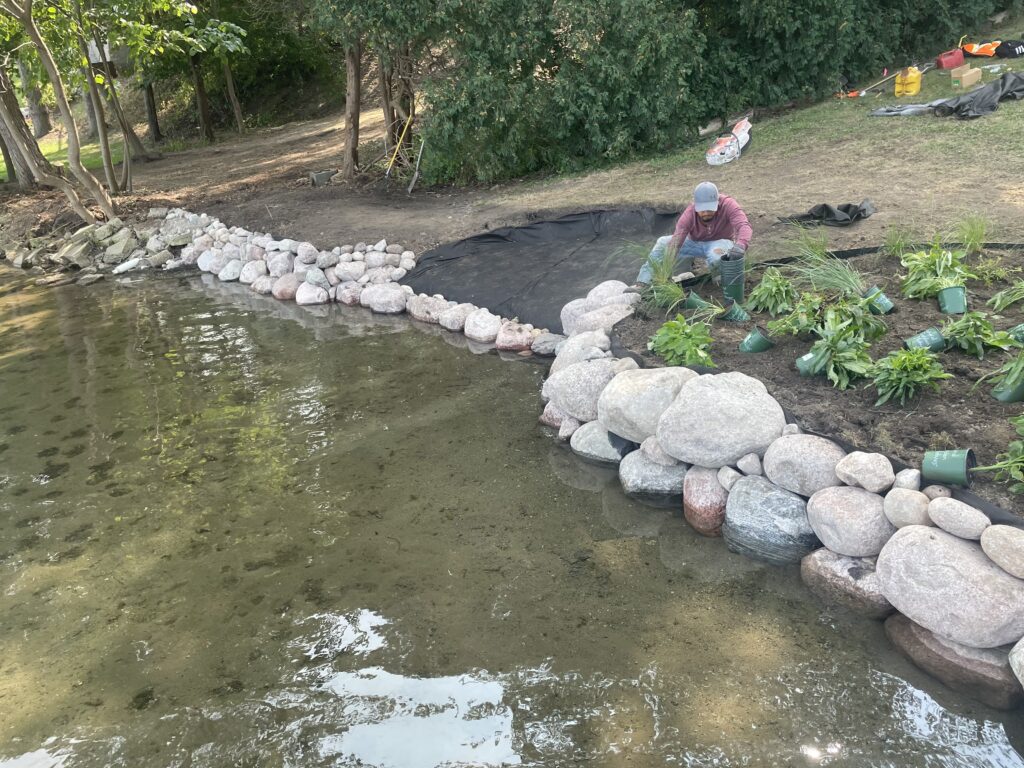
Native plants need less work than traditional landscapes, but they’re not maintenance-free, especially the first couple years while they’re getting established. We walk you through what to expect: when to water, how to handle weeds early on, what long-term maintenance looks like. Most properties need occasional weeding and cutting back dead growth once a year. You’re not spending every weekend out there with a hose.
Why Ecological Training Matters
Native plant design requires understanding succession, plant communities, and long-term development—concepts most landscape designers never studied. Thirty years restoring prairies, wetlands, and shorelines for Chicago Botanic Garden, municipalities, and private properties reveals which species self-seed into stable communities versus which need constant replanting. Residential native landscapes are small-scale ecosystem projects. They need ecological thinking, not just horticulture.
Experience That Shows Up in Results
That background shows up in practical ways. Knowing which plants handle Round Lake’s clay soil without amendments. Understanding that deer ignore certain natives while destroying others. Recognizing when aggressive species like wild bergamot will take over versus when they’ll stay balanced. Properties across 500+ acres of completed restorations demonstrate what works beyond theory—plant communities that self-maintain through natural succession and improve annually instead of declining.
Local Genetics Matter
Purple coneflower looks identical at the nursery whether it came from Illinois or Oregon genetics. Only local ecotypes develop the root systems and disease resistance that ensure long-term survival here. Most designers don’t know to ask where nursery stock originated. That detail determines whether plants thrive or struggle five years later.
Frequently Asked Questions About Native Plants
How long until native plantings look established?
Most native landscapes look sparse year one, fill in significantly by year two, and reach visual maturity by year three. Deep root development happens first, then top growth accelerates.
Do native plants really need less maintenance?
After establishment (2-3 years), native plantings require one annual cutback, no fertilizing, and minimal watering compared to weekly deadheading, mulching, and irrigation traditional landscapes demand.
Can I add native plants to my existing landscape?
Yes, natives integrate well with established beds. Many designs incorporate natives into current plantings or create transition zones between formal areas and naturalized sections.
Why use native plants instead of traditional landscaping?
Native plants develop root systems 6-15 feet deep compared to 6-12 inches for traditional ornamentals. That difference means natives survive droughts, need no fertilizer, require minimal watering, and support local pollinators that evolved alongside them.
Are native plants more expensive than traditional landscaping?
Initial installation costs are similar, but natives eliminate ongoing expenses traditional landscapes require—no annual mulch, fertilizer, or irrigation system costs. Most properties see significant savings starting year two.
Schedule Your Native Plant Consultation
Native landscape projects start with understanding your property’s specific conditions and ecological potential.
Call (847) 546-7353 to discuss native plant design for your property. Serving Lake County, the greater Chicago area, and properties extending into Wisconsin.
Contact us today using the contact form to get started on your native plant landscape design.