
Lake Michigan Bluff Restoration Services
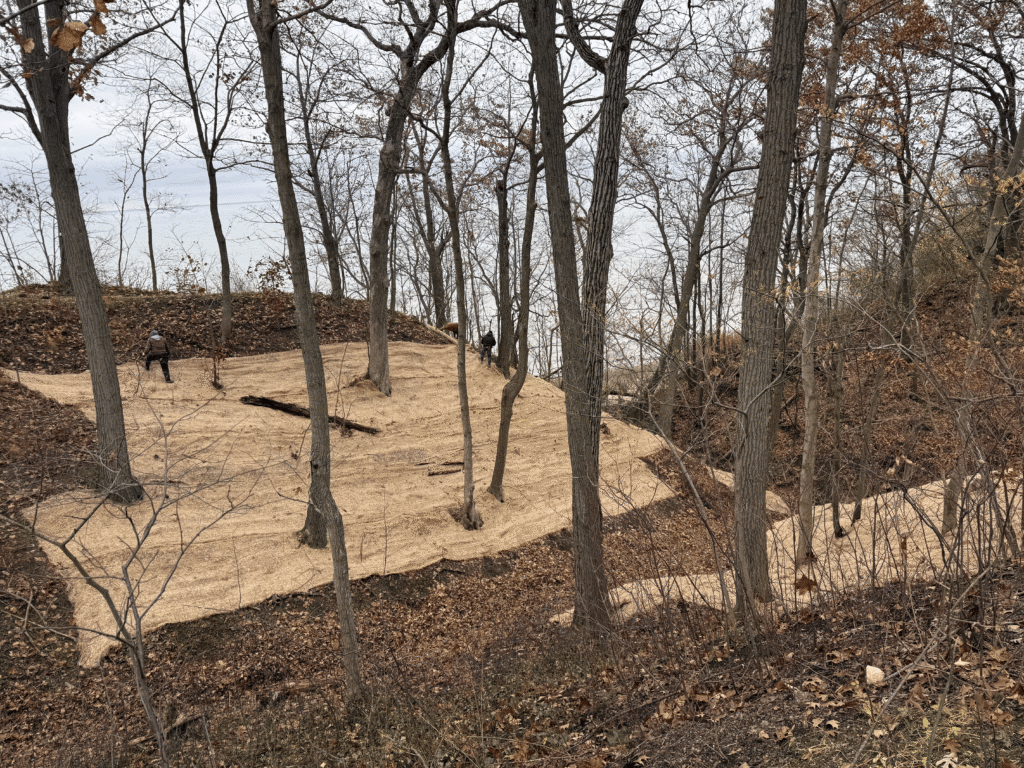
Lake Michigan bluff restoration services require understanding coastal geology that most inland contractors never see. Waves undercut bluffs from below. Rain saturates clay from above. Freeze-thaw cycles crack soil. Tree roots destabilize slopes. All of this happens simultaneously on steep terrain where one mistake triggers catastrophic failure. Then you add regulatory complexity – IDNR permits, Army Corps jurisdiction, municipal steep slope ordinances. North Shore municipalities like Highland Park, Lake Forest, and Lake Bluff have specific requirements for coastal work. Bluff restoration isn’t regular landscaping on a slope. It’s specialized engineering combined with ecological restoration on unstable coastal terrain.
Designing Coastal Bluff Stabilization Systems
Understanding Wave Action and Toe Erosion
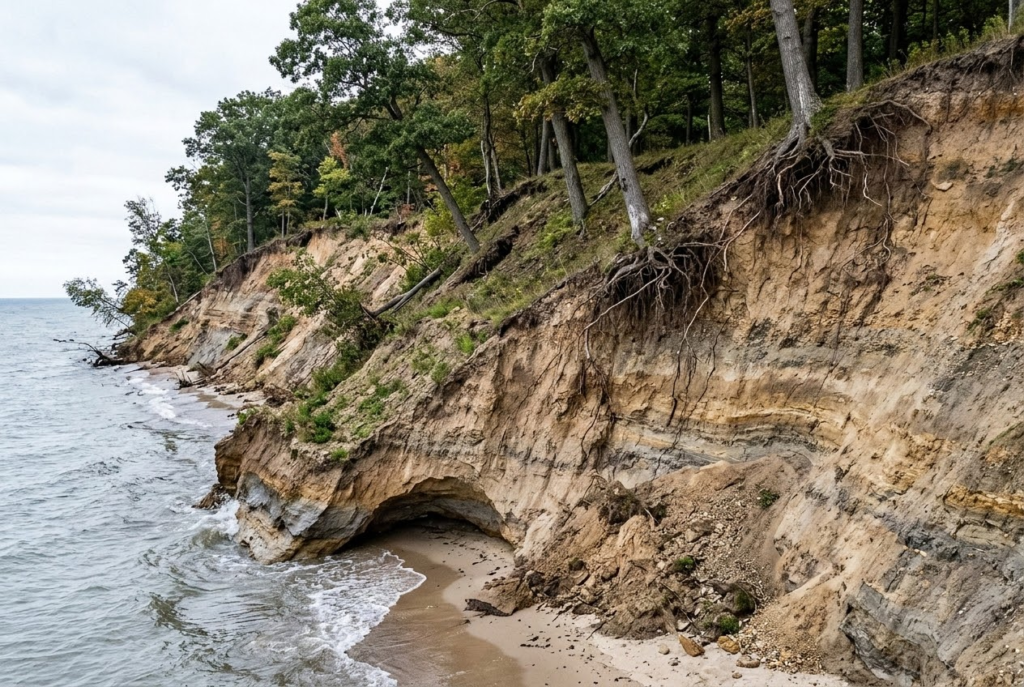
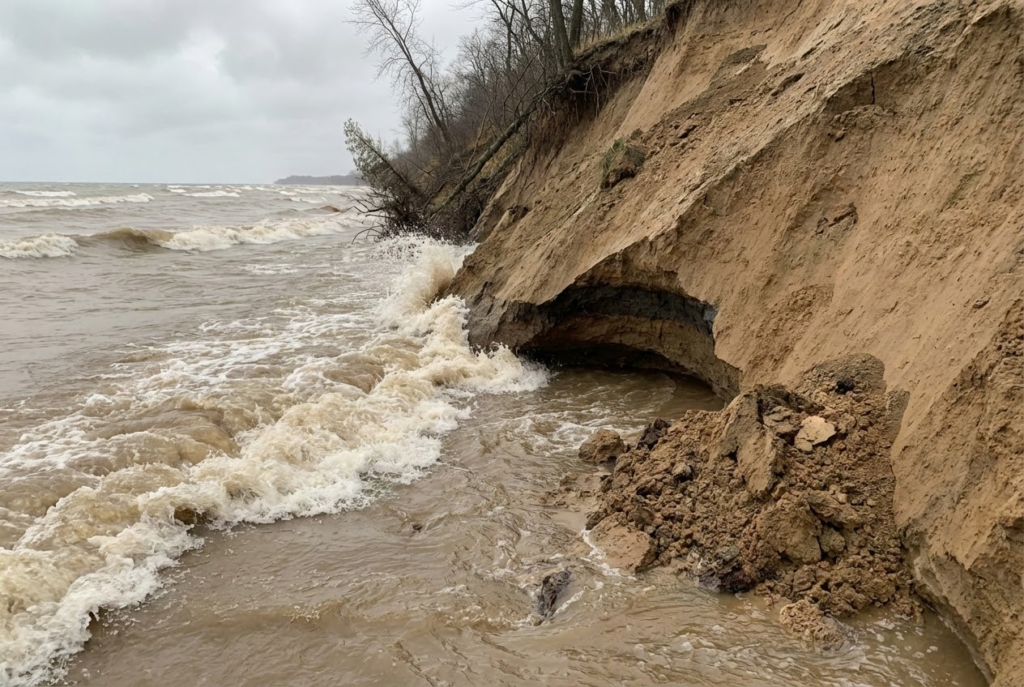
Lake Michigan waves attack bluffs from below. During storms, waves hit the bluff base removing soil and undercutting the slope. This creates overhangs. Eventually gravity wins and the overhang collapses. Then the cycle repeats. Winter ice can make this worse. Ice forms at the waterline, freezes to the bluff, then breaks off when water levels change taking chunks of bluff with it. Most bluff failures start at the toe – the bottom where waves hit. You can stabilize the upper slope perfectly but if wave action continues eroding the base, the whole thing eventually fails anyway. Toe protection is the foundation of any bluff stabilization. This might be riprap, sheet piling, or bioengineering structures designed to dissipate wave energy. Our shoreline restoration planning includes assessing wave exposure and designing toe protection that handles Lake Michigan storm conditions.
Clay Soil Creates Unique Instability
Lake Michigan bluffs are mostly glacial clay. Clay is terrible for slope stability. It holds water like a sponge. When saturated, clay loses strength and becomes slippery. Heavy rain saturates the bluff. The saturated clay layer starts sliding on the dry clay beneath it. Entire sections of bluff can slump downward in rotational failures. You see curved failure scars where the bluff slid. Clay also expands when wet and shrinks when dry. This expansion-contraction cycle creates cracks. Water gets into cracks and freezes. Ice expands and wedges the cracks wider. Over years this breaks the bluff apart.Managing water is critical for bluff stabilization. Surface drainage to keep rain from soaking into the bluff. Subsurface drainage to remove water that does get in. Our stormwater and drainage planning designs systems that prevent water from saturating clay slopes. Subsurface drainage to remove water that does get in. And vegetation with deep roots to hold soil and transpire water. According to the USDA Natural Resources Conservation Service coastal restoration guidelines, managing soil moisture is essential for clay bluff stability.
Navigating Steep Slope Regulations
North Shore municipalities have strict steep slope ordinances. Highland Park, Lake Forest, Lake Bluff, and others regulate any work on slopes steeper than certain grades – usually 12% or 15%. These ordinances control grading, vegetation removal, construction, and restoration techniques. Some municipalities require special permits for any disturbance. Others restrict work to specific times of year. IDNR has jurisdiction over shoreline work below the Ordinary High Water Mark. Army Corps of Engineers regulates any fill or structures in Lake Michigan. All three agencies – municipal, state, federal – have different requirements and different timelines. Getting approvals requires knowing which agency has primary authority and how to satisfy everyone without contradictory requirements. Our ecological restoration planning includes permit coordination navigating these overlapping jurisdictions.
Bioengineering for Slope Stabilization
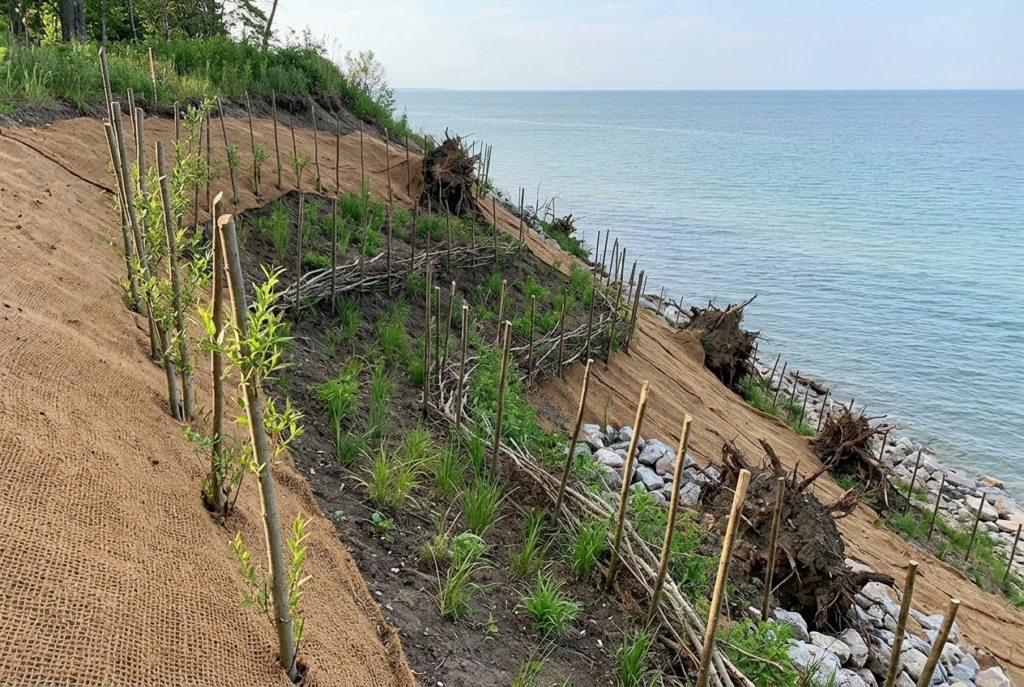
Hard armoring like concrete or steel sheet piling protects bluffs but destroys habitat and looks terrible. Bioengineering uses living plants combined with natural materials for stabilization. Willow stakes driven into slopes root and create living reinforcement. Brush layering alternates soil and branches creating vegetated terraces. Root wads from large trees get anchored into slopes providing immediate stability while vegetation establishes. Live fascines – bundles of willow branches – installed on contour slow runoff and trap sediment. These techniques work on bluffs if designed properly for site conditions. They cost less than hard armoring, create habitat, and improve appearance. Some situations need combination approaches – riprap at the toe for wave protection with bioengineering on upper slopes. The key is matching techniques to specific slope angles, soil types, and erosion forces at each site.
Native Plant Selection for Coastal Slopes
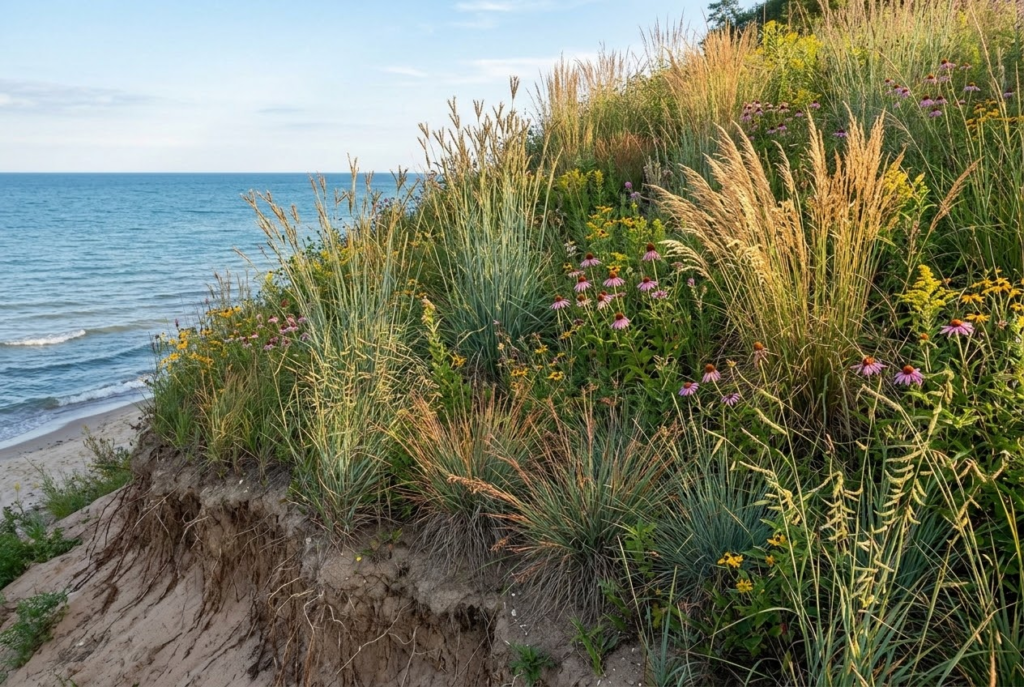
Not all native plants work on bluffs. You need species that tolerate steep slopes, thin soils, salt spray from Lake Michigan, and periodic drought. Deep-rooted prairie grasses like big bluestem and Indian grass work well on upper slopes. Their roots go down 6-8 feet stabilizing soil. Little bluestem and side-oats grama handle drier conditions on south-facing slopes. Pennsylvania sedge works as groundcover in shadier areas. Shrubs like New Jersey tea and leadplant have deep taproots. Small trees like serviceberry or nannyberry provide woody structure without the weight of large trees that can destabilize slopes. Large oaks are beautiful but their weight on unstable bluffs can trigger failures. Plant selection determines whether vegetation helps stabilize or makes problems worse. We design planting plans specific to bluff conditions – not generic native seed mixes that include species that will fail on coastal slopes. Some bluff projects benefit from prescribed fire for vegetation management once stabilization plantings are established.
Planning for Long-Term Monitoring and Maintenance
Bluff restoration doesn’t end at installation. Plants need establishment care for 2-3 years. Invasives get controlled. Failed areas get replanted. Toe protection gets monitored after major storms. Sometimes wave action shifts riprap and it needs repositioning. Drainage systems need checking to ensure they’re still functioning. Slopes get inspected for new failure signs – cracks, slumping, erosion. This monitoring and maintenance is expensive on difficult coastal terrain. Access is hard. Weather limits work windows. But without ongoing care, restorations fail. We create long-term management plans specifying annual inspection protocols, maintenance budgets, and adaptive management strategies. Providing Lake Michigan bluff restoration services means planning for decades of stewardship, not just construction and abandonment. Coastal restoration is a long-term commitment.
Permit Timelines Exceed Erosion Timelines
Bluff restoration permits take 6-18 months to obtain. IDNR reviews take months. Army Corps adds more months. Municipal approvals add more time. Meanwhile your bluff erodes 2-5 feet per year. You start the permit process with a stable-ish bluff. By the time permits arrive, another 10 feet has failed and now the approved plan doesn’t match current conditions. Agencies require plan revisions. More delays. More erosion. We’ve watched homeowners lose 30 feet of bluff while waiting for permission to stop the erosion. The regulatory process assumes bluffs are stable while paperwork processes. They’re not. Bluff failures accelerate once they start. Good restoration planning includes emergency provisions for critical failures and realistic timelines showing agencies that delays increase costs and damage. Sometimes you need to document ongoing failure with photos and measurements to justify expedited review.
One Storm Erases Years of Neglect Consequences
Property owners ignore small cracks and minor slumping for years. Bluff looks mostly fine. Then one major storm hits. Six feet of bluff fails overnight. Suddenly the house is 15 feet from the edge instead of 40 feet. Panic sets in. They want immediate emergency restoration. But emergency work costs triple normal rates. Permits take longer because it’s reactive not planned. And the failure exposed problems that make restoration more complicated and expensive. The crack that seemed minor five years ago was warning sign of deep structural instability. Fixing it then would have cost $30,000. Emergency stabilization after catastrophic failure costs $150,000 and may not even save the house. Bluff problems don’t improve with time. They accelerate. Early intervention when warning signs first appear costs fraction of emergency response after failure.
Plan Your Bluff Restoration
We can assess your coastal property and design restoration plans that handle Lake Michigan conditions while navigating complex permitting requirements.
Call (847) 546-7353 for Lake Michigan bluff restoration planning.
Frequently Asked Questions
How much does Lake Michigan bluff restoration cost?
osts vary widely based on slope height, erosion severity, and site access, but most projects range from $20,000 to $100,000+ for typical residential bluff sections. Every project is different – we provide detailed estimates after site assessment.
Do I need permits for bluff restoration work?
Yes, bluff restoration requires permits from IDNR, Army Corps of Engineers, and local municipalities. Permit approval typically takes 6-18 months.
What causes Lake Michigan bluffs to fail?
Wave erosion undercuts bluffs from below while rain saturates clay soils from above, causing slope failures. Freeze-thaw cycles and vegetation removal accelerate the process.
Can I use regular landscaping contractors for bluff work?
No, bluff restoration requires specialized coastal expertise that regular landscaping contractors don’t have. Unqualified contractors can cause expensive failures.
How long does bluff restoration take?
Permitting takes 6-18 months, construction takes 2-8 weeks, and plant establishment requires 2-3 years. Total timeline is typically 3-5 years from planning to completion.