Invasive Species Management Services in Round Lake, IL
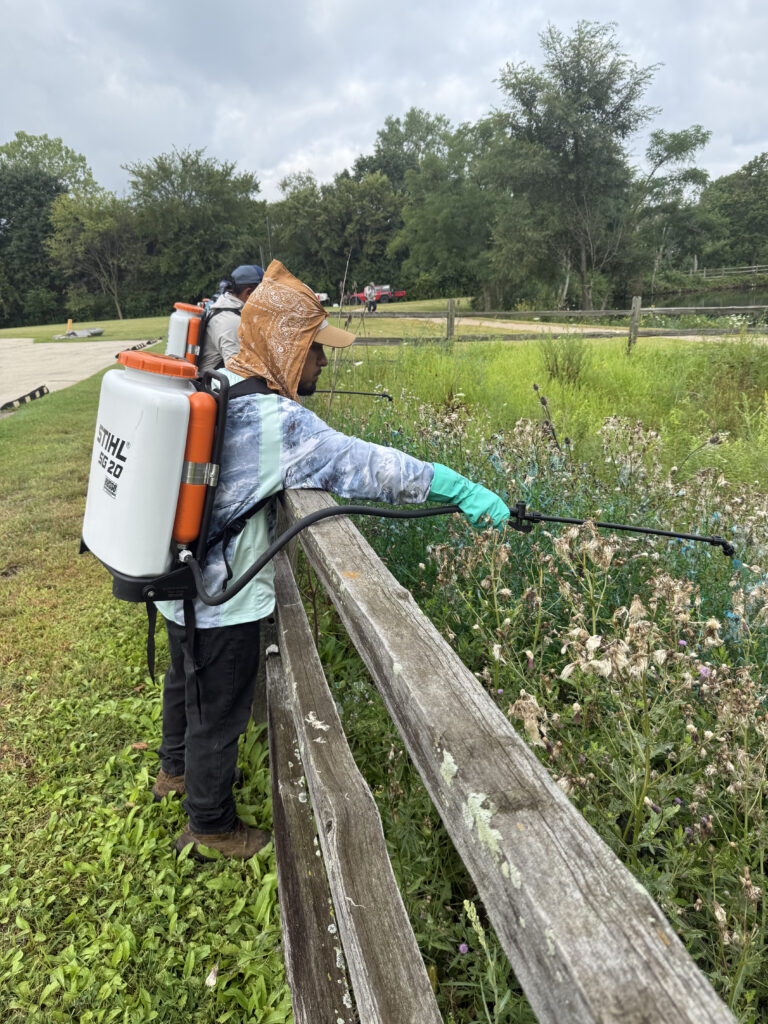
Invasive species management services in Round Lake remove plants that take over entire properties within a few years. Buckthorn and honeysuckle don’t ask permission—they just spread. They grow faster than native plants. They produce more seeds. They create shade blocking everything underneath. Before you notice, half your property is thick buckthorn nobody can walk through. Native plants are gone. Wildlife leaves because invasives don’t provide food they need. We identify problem species, remove them completely, treat stumps preventing regrowth, and restore areas with natives that belong here.
Removing Invasive Species Permanently
Identifying Problem Species
Most people can’t tell invasive species from natives until someone points them out. Buckthorn looks like just another shrub. Honeysuckle seems harmless. Garlic mustard blends into ground cover. Then you learn these plants dominate entire properties throughout Lake County. Buckthorn creates impenetrable thickets choking out everything else. Honeysuckle vines smother trees and shrubs. Garlic mustard releases chemicals preventing other plants from growing. Providing invasive species management in Round Lake means recognizing dozens of problem species at different life stages. Our identification follows invasive species identification resources ensuring accurate species recognition and appropriate removal methods. Some invasives spread through seeds. Others regrow from root fragments. Each requires specific removal approaches. Proper identification determines whether management succeeds or wastes time fighting plants the wrong way.
Buckthorn Removal and Control
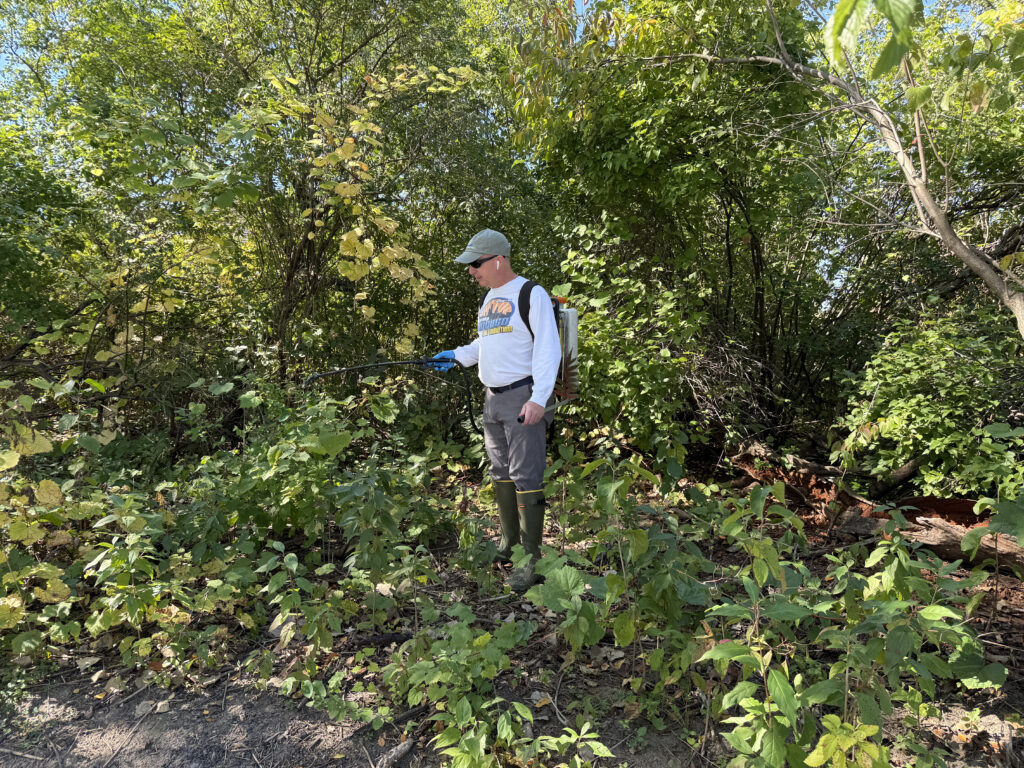
Buckthorn dominates more Lake County properties than any other invasive. This shrub forms dense stands blocking light to ground level. Nothing grows underneath mature buckthorn groves. Birds spread seeds making infestations expand rapidly. Small buckthorn seedlings pull easily. Larger shrubs need cutting then stump treatment preventing regrowth. Cut buckthorn without treating stumps and it resprouts vigorously within months. We cut invasives at ground level then apply herbicide to fresh stumps. This kills root systems preventing regrowth. Properties with severe buckthorn infestations may need multiple treatments over several years addressing new seedlings germinating from existing seed banks. Removing mature buckthorn opens areas for native plant restoration creating diverse landscapes instead of single-species wastelands.
Honeysuckle and Woody Vine Management
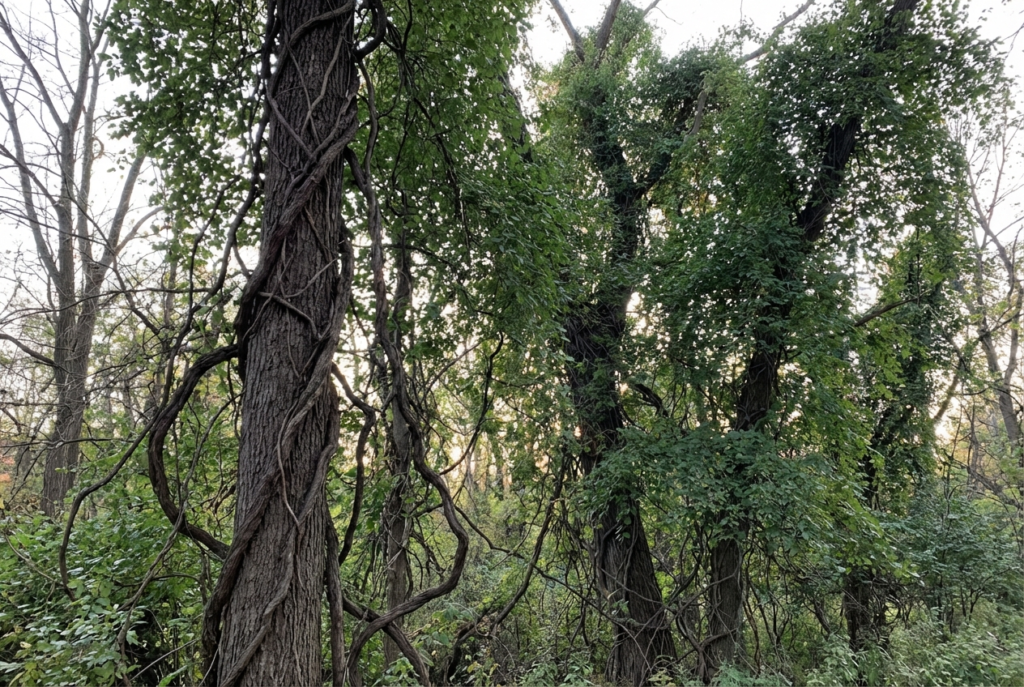
Honeysuckle takes two forms—shrub honeysuckle growing as bushes and vine honeysuckle climbing trees. Both varieties spread aggressively throughout Lake County. Shrub honeysuckle grows dense blocking native plant growth. Vine honeysuckle smothers trees eventually killing them through shading and weight. Management requires complete removal including root systems. Cut honeysuckle resprouts just like buckthorn needing stump treatment. Vine honeysuckle wound around tree trunks needs careful removal preventing tree damage. Some infestations involve vines reaching 30 feet up tree canopies requiring specialized equipment and techniques. Our native plant services work often involves removing honeysuckle first then establishing species that prevent reinvasion through dense native growth.
Herbaceous Invasive Control
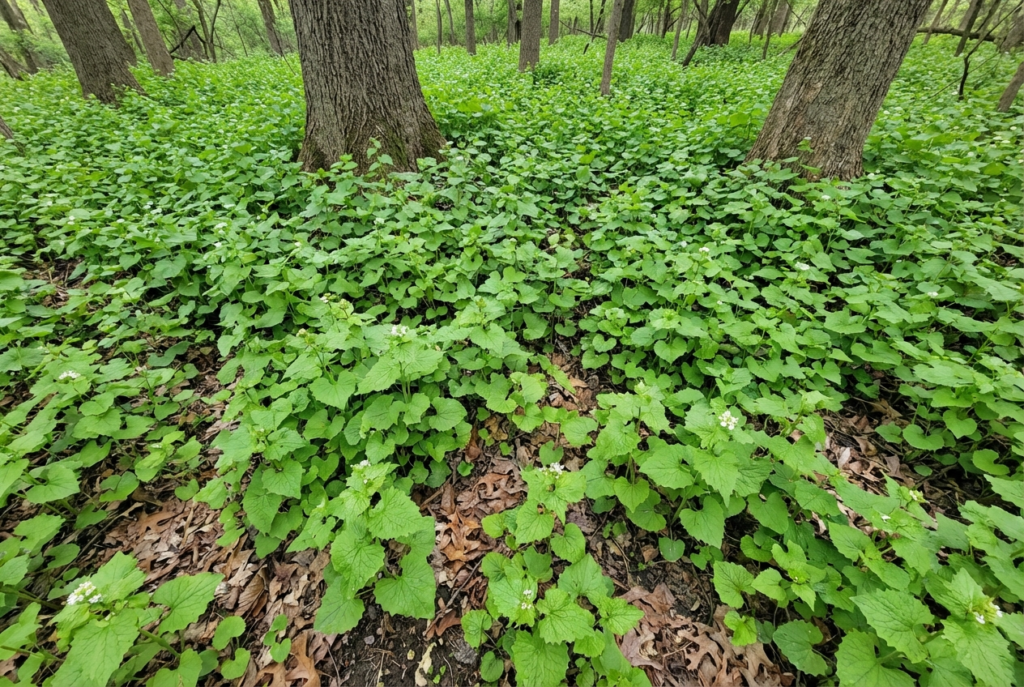
Garlic mustard, dame’s rocket, and other herbaceous invasives spread through properties creating monocultures. These plants grow close to ground making removal labor-intensive. Garlic mustard produces thousands of seeds per plant building soil seed banks lasting years. Removal timing matters enormously—pulling garlic mustard after seed production just spreads seeds further. We target herbaceous invasives during specific growth stages preventing seed production. Some species need multiple years of management exhausting seed banks before native plants establish. Chemical control works but requires careful application avoiding damage to desirable plants growing nearby. Hand pulling remains most effective for small infestations or sensitive areas where herbicide use isn’t appropriate.
Tree of Heaven and Woody Invasives
Tree of heaven spreads rapidly through root suckers and prolific seed production. Cut one tree and root suckers create dozens more. This growth pattern makes removal complicated requiring systemic herbicide treatments killing entire root systems. Similar challenges apply to other woody invasives spreading vegetatively. Autumn olive, multiflora rose, and burning bush all regrow aggressively after cutting. Management strategies target root systems not just above-ground growth. Some species need repeated treatments over multiple growing seasons ensuring complete eradication. Properties with extensive woody invasive infestations may need phased removal preventing erosion on bare slopes and allowing gradual native restoration rather than sudden removal creating unstable conditions.
Seed Bank Management
Invasive plants produce tremendous seed quantities remaining viable in soil for years or decades. Removing mature plants stops new seed production but doesn’t eliminate seeds already in soil. These seed banks germinate over time requiring ongoing management preventing new invasions. We monitor treated areas identifying new seedlings before they mature and produce more seeds. Early detection makes removal easier and less expensive. Some properties need several years of follow-up management exhausting seed banks completely. This long-term approach prevents situations where initial removal seems successful then properties revert to invasive dominance within seasons because seed banks weren’t addressed. Integration with erosion control methods prevents disturbed soil from washing away during multi-year management programs.
Native Restoration After Removal
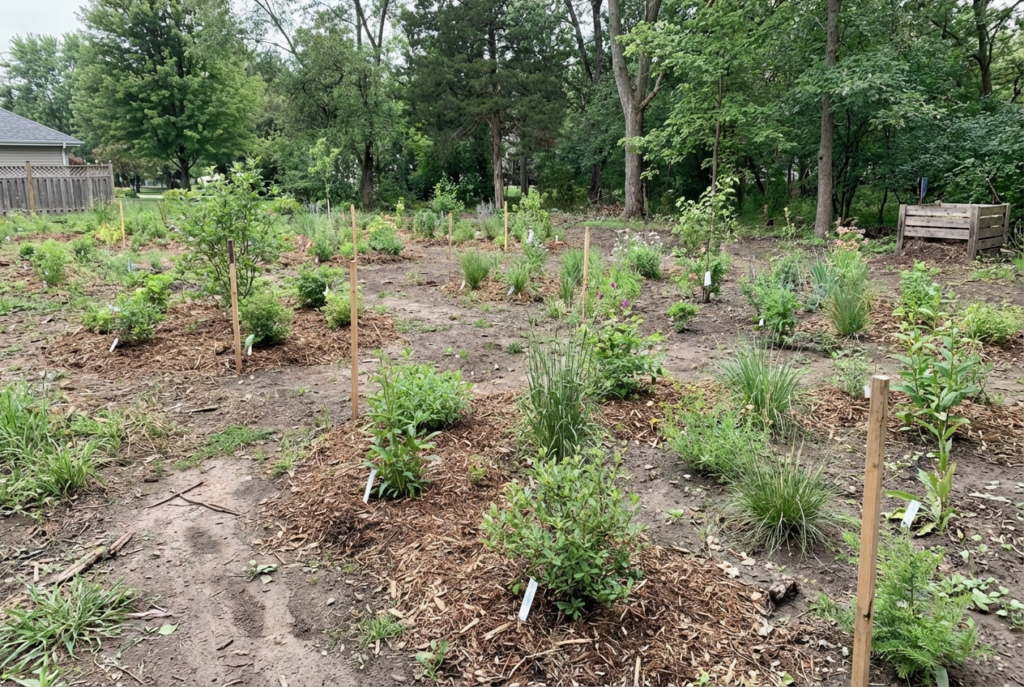
Removing invasives creates opportunities but doesn’t guarantee native plants return naturally. Disturbed areas may fill with different invasives or weedy species unless actively restored. We combine invasive removal with native plantings establishing species that outcompete future invasions. Dense native groundcovers prevent weed establishment. Native shrubs and trees create canopy shading out sun-loving invasives. Proper restoration transforms properties from invasive-dominated wastelands into diverse ecosystems supporting wildlife. Sometimes restoration integrates with prairie installation or other landscape projects creating functional outdoor spaces while preventing invasive species return through competitive native plant communities.
By the Time You Notice Buckthorn, It Already Won
Here’s how invasives take over. Year one: few small buckthorn seedlings nobody worries about. Year two: those seedlings are now shrubs producing thousands of seeds. Year three: hundreds of new seedlings appear across the property. Year four: dense thickets form blocking access to parts of your yard. Year five: you’re looking at removal costs ten times what early intervention would have cost. This pattern repeats on properties throughout Lake County. People notice invasives way too late. The plants already established seed banks. They already created dense growth. They already outcompeted natives. Early removal costs hundreds. Late removal costs thousands. The difference is recognizing the problem before invasives gain the advantage they never give back.
One Invasive Plant Becomes Ten Thousand
Buckthorn produces 3,500 seeds per plant annually. Honeysuckle produces similar numbers. Garlic mustard tops 5,000 seeds per plant. Do the math. Five buckthorn shrubs produce 17,500 seeds in one year. Even with 95% mortality that’s still 875 new plants next season. Those plants mature and produce their own seeds. The numbers become exponential fast. This is why properties go from “few invasive plants” to “completely overrun” within a few years. Removing invasives isn’t gardening. It’s biological warfare against species reproducing faster than you can pull them. Properties where we removed invasives five years ago stay clear because we eliminated seed sources before exponential growth took over.
Stop Invasives From Taking Over
Invasive species don’t stop spreading. Remove them before they become impossible.
Call (847) 546-7353 for invasive species management in Lake County.