Drainage Solutions Design Services in Round Lake, IL
Water always finds the lowest point. When that’s your foundation, basement, or the middle of your yard, you’ve got problems. Drainage issues don’t fix themselves—they get worse as soil compacts and erosion deepens channels. Most properties need grading adjustments, strategic swales, or rain gardens positioned where water naturally wants to go. The solution isn’t guessing with a shovel. It’s understanding how water moves across your specific property during heavy storms, where it’s coming from, and engineering landscape solutions that redirect flow permanently. Thirty years of solving drainage problems across Illinois means knowing which solutions work in clay soil versus sandy conditions, and what actually prevents water from pooling again next spring.
Solving Water Problems Permanently
Mapping Water Movement
Here’s what most people miss: drainage problems rarely start where you see standing water. That puddle in your backyard? It’s there because water’s flowing from your roof, through your downspouts, across compacted soil that won’t absorb it, and pooling in the lowest spot it can find. Sometimes your neighbor’s sump pump is dumping onto your property. Sometimes the whole street drains into your yard. Walking the property during an actual rainstorm reveals things you’d never catch on a sunny day. Water doesn’t lie—it shows you exactly where it wants to go.
Identifying Root Causes
Fixing drainage means solving the actual problem, not just moving it somewhere else. People love quick fixes—adding soil to a low spot, extending a downspout ten feet. Then they call back next spring because now a different area floods. Clay soil around Round Lake makes this worse. It absorbs water slowly, so even moderate rain overwhelms it. The real solution usually involves multiple changes working together: regrading here, adding a swale there, maybe a rain garden where water naturally collects. Band-aids don’t work. Comprehensive fixes do.
Engineered Grading Solutions
Grading sounds simple until you try it. Slope too much and water rushes off, creating erosion. Slope too little and it sits there. You’re working around existing trees, buried utilities, property lines, and landscaping people want to keep. Sometimes grading alone solves everything—reshape the yard so water flows away from the house toward the street or a drainage swale. Other times it’s one piece of a bigger solution. Proper grading becomes especially critical around patio installations where water must drain away from hardscapes to prevent settling and damage. The tricky part is getting enough fall to move water without creating new problems downstream.
Rain Gardens and Bioswales
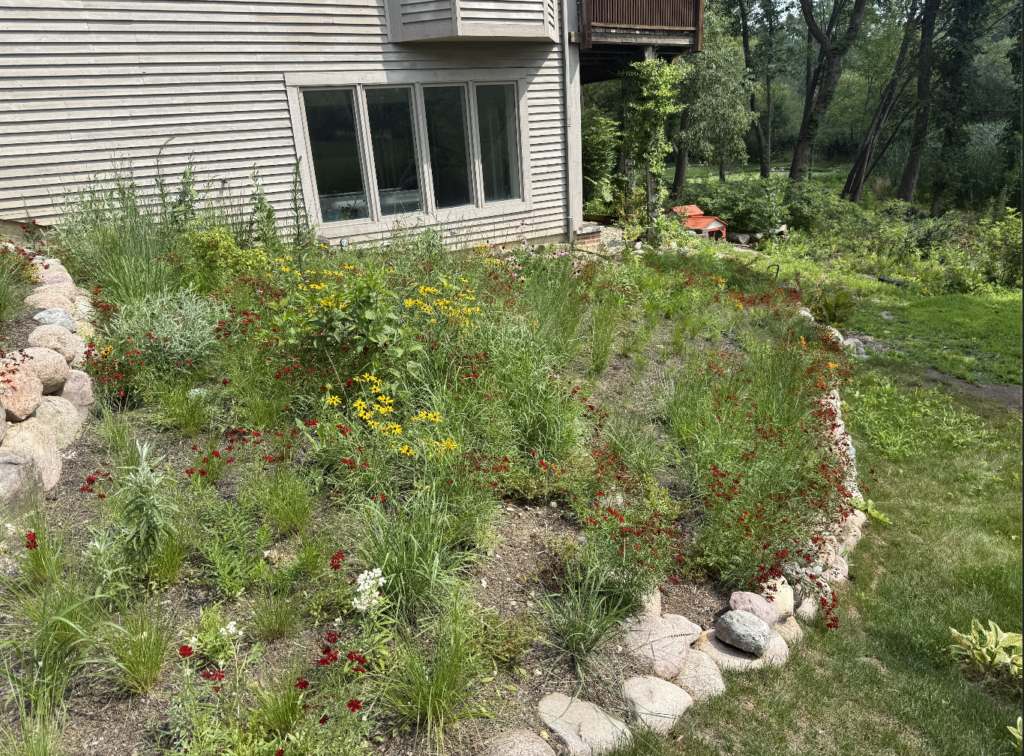
Rain gardens work brilliantly when positioned correctly. Put them where water already goes naturally and they’ll capture runoff, let it soak in slowly, and look intentional instead of accidental. Bioswales—basically shallow planted ditches—move water from one spot to another while filtering out pollutants. Both beat traditional drainage because they handle water on-site instead of just pushing it to the street. Native plantings in these areas tolerate being underwater one week and bone dry the next. Regular landscape plants? They’d rot or die.
French Drains and Underground Solutions
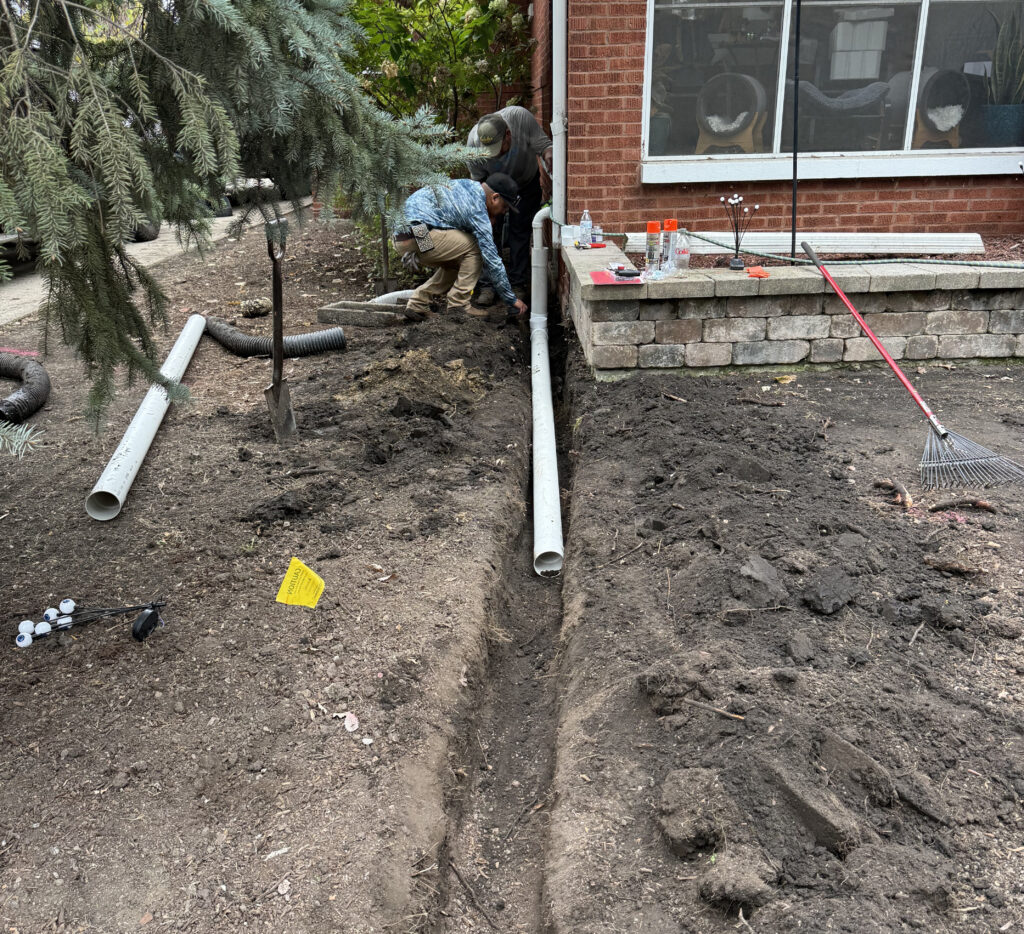
French drains get recommended constantly, often when they’re not needed. Yes, they work great for persistent wet spots or foundation drainage. But they’re also expensive, require excavation, and clog if installed wrong. The gravel needs to be clean, the pipe needs proper slope, and discharge has to go somewhere legal—not your neighbor’s yard. We’ve seen plenty installed backwards or with inadequate slope. Then they’re just expensive gravel-filled trenches doing nothing. When you actually need them, though, nothing else works as well for subsurface water problems.
Erosion Control Methods
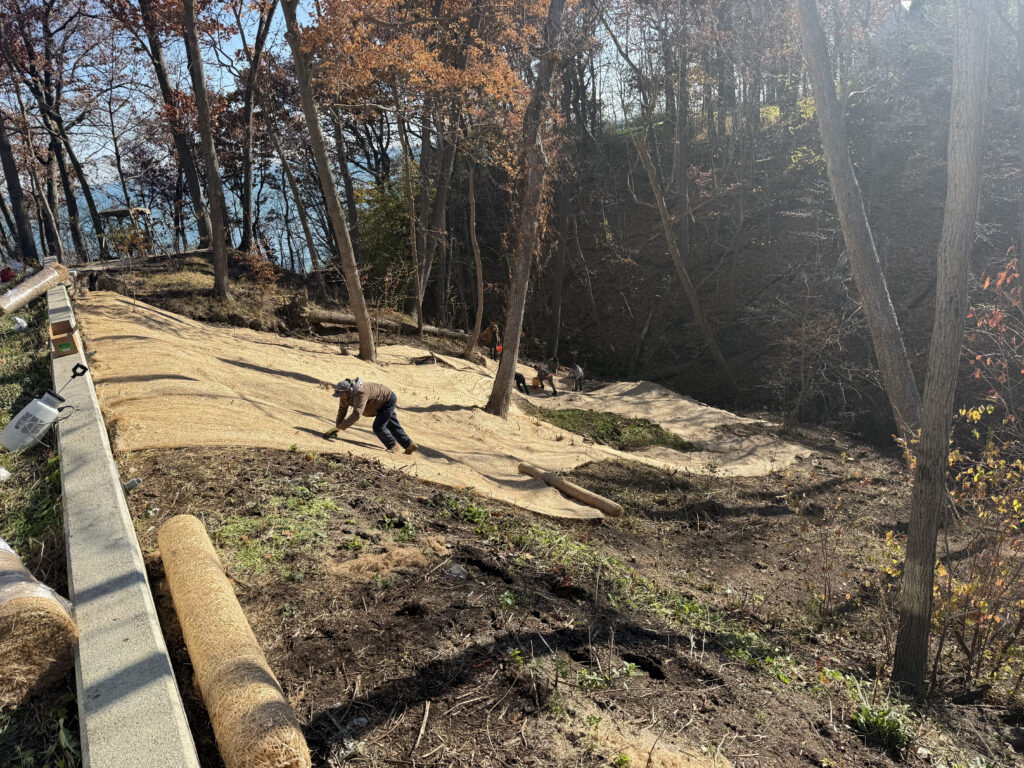
Erosion happens fast. One heavy storm can wash away soil that took years to build up. Steep slopes erode worse. Concentrated water flow cuts channels. Bare soil disappears. The fix depends on severity. Sometimes it’s as simple as extending downspouts and adding stone splash blocks. Other times you need erosion fabric, terraced planting beds, or riprap in swales. Steep hills might need retaining walls. Solutions follow erosion control standards to ensure soil stabilization meets both aesthetic and environmental requirements. The goal is slowing water down and protecting soil. Vegetation helps long-term, but it takes time to establish. Meanwhile, you need temporary protection.
Long-Term Performance Planning
Drainage solutions either work for decades or fail within a few years. The difference is usually installation quality and realistic maintenance planning. Swales fill with leaves and debris—someone needs to clean them occasionally. French drains can clog if the wrong gravel gets used. Rain gardens need weeding until plants take over. Good designs account for these realities upfront instead of assuming everything will maintain itself perfectly. Drainage solutions often integrate with complete landscape design to ensure grading, plantings, and hardscapes work together cohesively. Soil settles. Plants grow. Conditions change. Solutions need to handle that without failing.
Three Decades Solving Lake County Drainage Problems
Drainage issues around Round Lake share common patterns. Heavy clay soil that won’t absorb water. Properties in low spots collecting runoff from surrounding yards. Developments where builders graded for construction convenience, not long-term drainage. Thirty years working across these conditions means recognizing problems quickly and knowing which solutions actually last. Not every property needs French drains. Not every wet spot requires regrading. Experience separates necessary fixes from expensive overkill.
Understanding What Works in Clay Soil
Lake County clay soil behaves differently than sand or loam. It holds water, compacts easily, and drains slowly even when properly graded. Solutions that work elsewhere often fail here. Rain gardens need specific soil amendments to function in clay. Grading requires steeper slopes than sandy soil. French drains clog faster without proper installation. These aren’t theoretical problems—they’re conditions we’ve solved hundreds of times across residential and municipal properties.
Designing for Permanent Solutions
Quick fixes create temporary relief followed by recurring problems. Comprehensive drainage design addresses root causes: where water originates, how it moves across the property, where it can appropriately discharge, and what happens during severe storms that exceed normal capacity. Plans account for soil settling, vegetation growth, and maintenance realities. The goal is systems that function decades later without constant intervention or expensive repairs.
Schedule Your Drainage Assessment
Drainage problems start with a thorough drainage assessment to understand your property’s specific water movement patterns and soil conditions.
Call (847) 546-7353 to discuss our drainage solutions design services in Round Lake and working throughout Lake County, the broader northern Illinois region, and Wisconsin.