
Drainage solutions and installation in Round Lake, IL
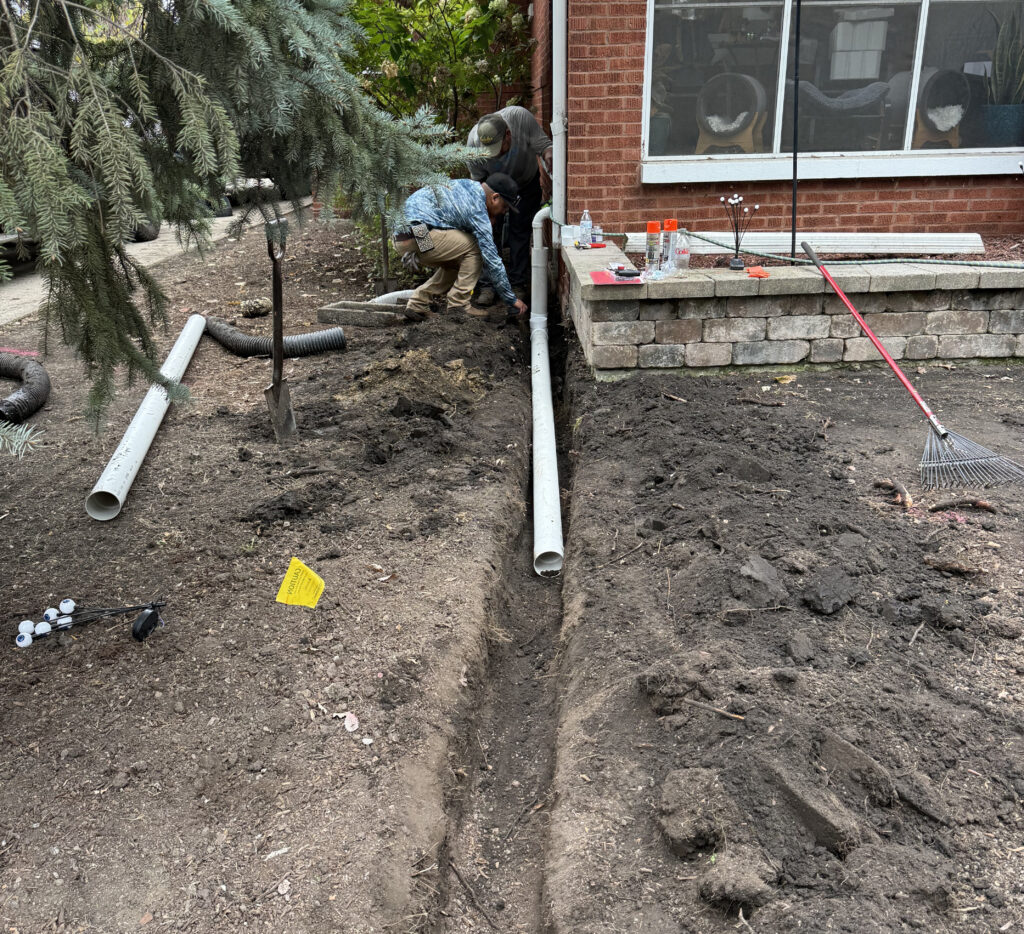
Drainage solutions and installation in Round Lake fix yards that turn into ponds after every rain. You can’t use outdoor space when it’s always muddy. Basements flood. Foundations crack. Plants drown. Water finds every weak spot on your property and makes it worse. We install systems that move water away from houses, stop flooding, and end mud problems. French drains, catch basins, and proper grading work in Lake County’s clay soil where water sits instead of draining naturally.
Installing Drainage Systems That Work
Why Water Refuses to Drain in Lake County
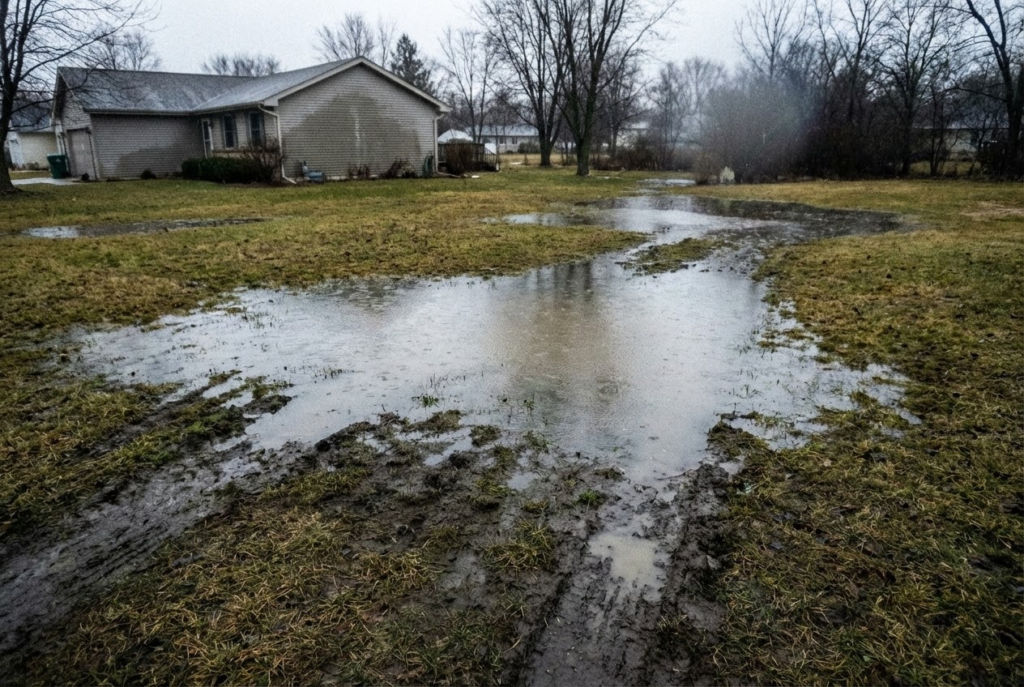
Lake County sits on clay soil that repels water like plastic. Rain hits the surface and sits there. Clay particles pack tightly leaving almost no space for water to move through. This means every property fights the same battle—water pools, lawns stay soggy for days, and basements flood during heavy storms. Traditional solutions like adding topsoil don’t work because water still hits clay underneath and stops moving. Effective drainage requires systems that collect water at the surface and move it somewhere else entirely. Understanding clay behavior determines whether drainage solutions actually function or just look good initially then fail within seasons.
French Drain Installation for Clay Soil
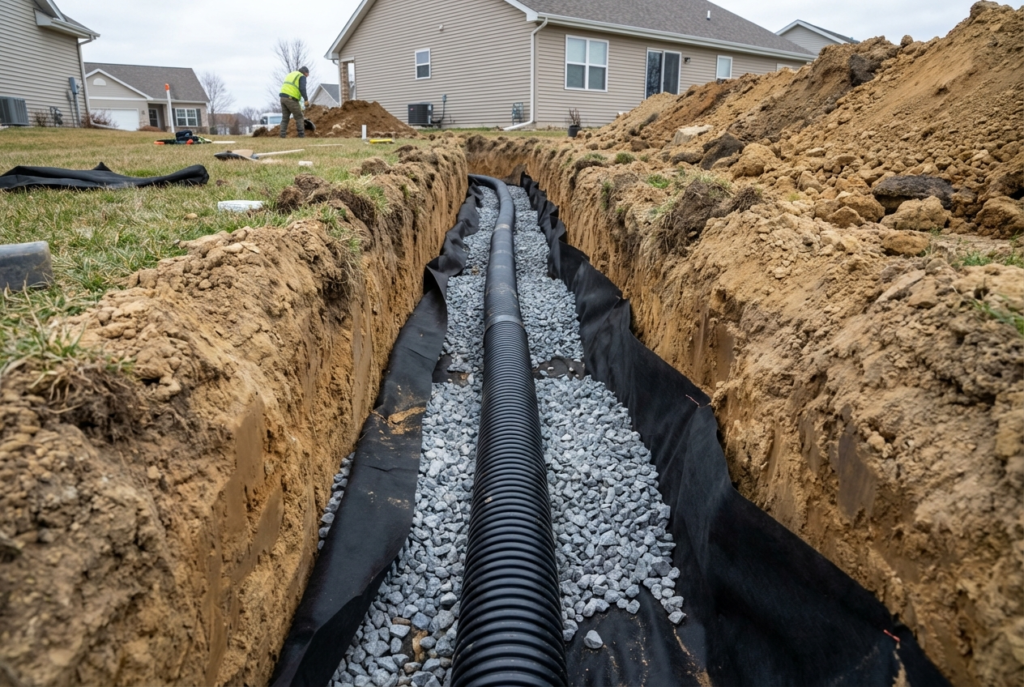
French drains collect and redirect water underground before it causes surface problems. Installation involves digging trenches to stable depth, installing perforated pipe wrapped in fabric, surrounding pipe with clean gravel, and connecting to outlets moving water off property. Depth matters in clay soil—shallow French drains fill with silt quickly becoming useless. We typically dig 18-24 inches deep reaching more stable soil and creating adequate capacity. Providing drainage solutions and installation in Round Lake means understanding that proper slope ensures water flows toward outlets instead of pooling in low spots. French drains work for foundation drainage, yard water collection, and preventing soggy lawn areas. They’re invisible once installed but handle tremendous water volumes during storms.
Catch Basins and Surface Drainage
Catch basins collect surface water before it floods yards or enters buildings. These grated structures sit at ground level capturing runoff then directing it into underground pipes leading away from problem areas. Strategic placement matters enormously—basins need positioning where water naturally flows during storms. Installing them randomly throughout yards wastes money without solving problems. We identify actual flow patterns then place basins intercepting water before it reaches vulnerable areas. Surface grading works with catch basins directing water toward collection points. Sometimes properties need multiple basins handling different drainage areas. Underground piping connects everything moving collected water to appropriate discharge points away from structures and property lines.
Downspout Extensions and Foundation Protection
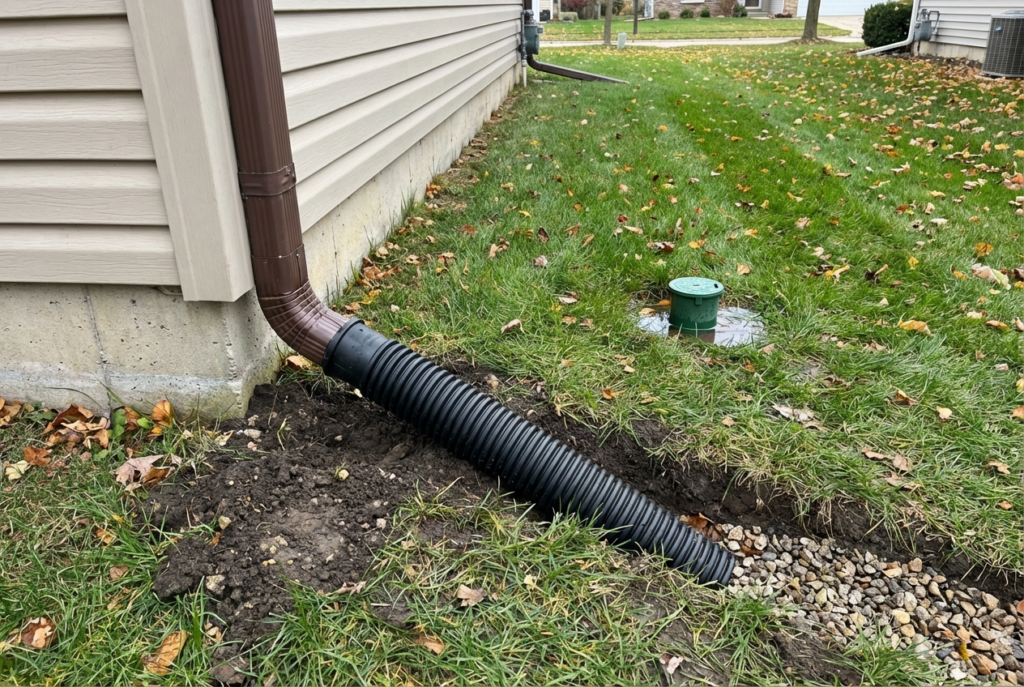
Downspouts dump roof water directly against foundations unless extended properly. This concentrated water flow causes most basement leaking and foundation problems. Simple downspout extensions move water 6-10 feet from houses preventing immediate issues. Underground extensions work better connecting downspouts to drainage systems carrying water much farther away. Properties with finished basements or chronic moisture problems need underground connections protecting foundations completely. Clay soil makes this critical—surface extensions still leave water pooling near houses during heavy rain. Our hardscape installations often integrate drainage extensions creating comprehensive water management around homes.
Grading and Swale Construction
Proper grading directs surface water away from houses and vulnerable areas without requiring underground systems. This involves reshaping ground slopes ensuring water flows toward safe discharge areas rather than pooling. Swales—shallow channels—guide larger water volumes during storms. They look like natural landscape features but function as critical drainage components. Our drainage design follows green infrastructure drainage standards for sustainable water management practices. Creating effective grades requires understanding subtle elevation changes and how water behaves across properties. Too steep and erosion problems develop. Too flat and water still pools. Lake County properties often need both grading corrections and structural drainage handling different water management aspects. Some properties combine grading with rain gardens, which provide natural water management features. Sometimes grading work integrates with erosion control methods stabilizing slopes while improving drainage.
Channel Drains for Hard Surfaces
Driveways, patios, and walkways need different drainage than yard areas. Channel drains—long grated trenches—collect water from hard surfaces preventing flooding and ice problems. They install along pavement edges, across driveway entrances, or at patio perimeters. Water flows through grates into channels then exits through connected piping. These systems prevent water from running toward garages, pooling on patios, or creating ice sheets across walkways during winter. Installation requires precise grading ensuring water flows toward drains instead of away. Properties with extensive hardscaping often combine channel drains with other drainage methods creating complete water management.
Sump Pump Discharge Systems
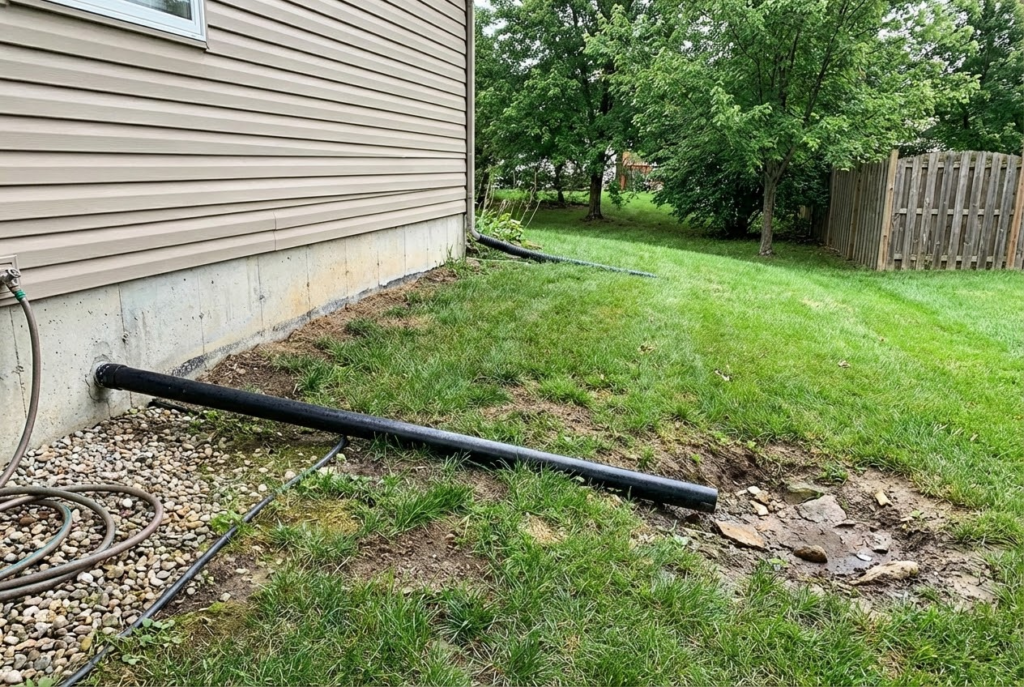
Sump pumps remove basement water but need proper discharge systems. Pumping water out your foundation then letting it soak back into soil defeats the purpose. Discharge lines need carrying water far enough from houses that it can’t return causing the same flooding. Underground discharge lines work best staying hidden while moving water to safe locations. We connect sump discharge to existing drainage systems when possible creating comprehensive solutions. Some properties need dedicated discharge areas directing water toward storm sewers, drainage ditches, or natural discharge points. Improper discharge causes neighbor disputes and recurring basement problems making professional installation worth the investment.
Water Damage Starts Small Then Gets Expensive Fast
First year you notice soggy spots in the lawn after rain. Annoying but manageable. Second year water pools longer and basement smells musty. Third year foundation cracks appear and sump pump runs constantly. Fourth year you’re getting quotes for foundation repair costing $15,000. What started as a $3,000 drainage problem became a $20,000 crisis because water got ignored. This progression happens on dozens of properties every year throughout Lake County. Nobody plans to let it get that bad. They just keep thinking it’ll improve on its own or they’ll deal with it next year. Water doesn’t wait. It finds every weakness—foundations, basements, crawl spaces—and makes them worse until something fails expensively.
Water Is Patient But Relentless
You can ignore drainage problems. Water can’t ignore gravity. It keeps flowing toward the same spots every storm. It keeps saturating the same foundation walls. It keeps pooling in the same low areas turning them into permanent mud pits. Eventually something gives—foundation cracks, basement floods, or yard becomes unusable swamp. We’ve installed drainage systems on properties where homeowners waited five years hoping problems would resolve naturally. They never do. Water always wins the waiting game. Properties where we installed drainage ten years ago still function perfectly because systems were designed correctly and built properly from the start. The water still comes. The systems still handle it.
Fix Your Drainage Problems
Water isn’t going to stop pooling on its own. Let’s install drainage that actually works.
Call (847) 546-7353 for drainage solutions and installation in Round Lake, Illinois, and parts of southern Wisconsin.