
Swale, River, and Creek Restoration Services in Round Lake, IL
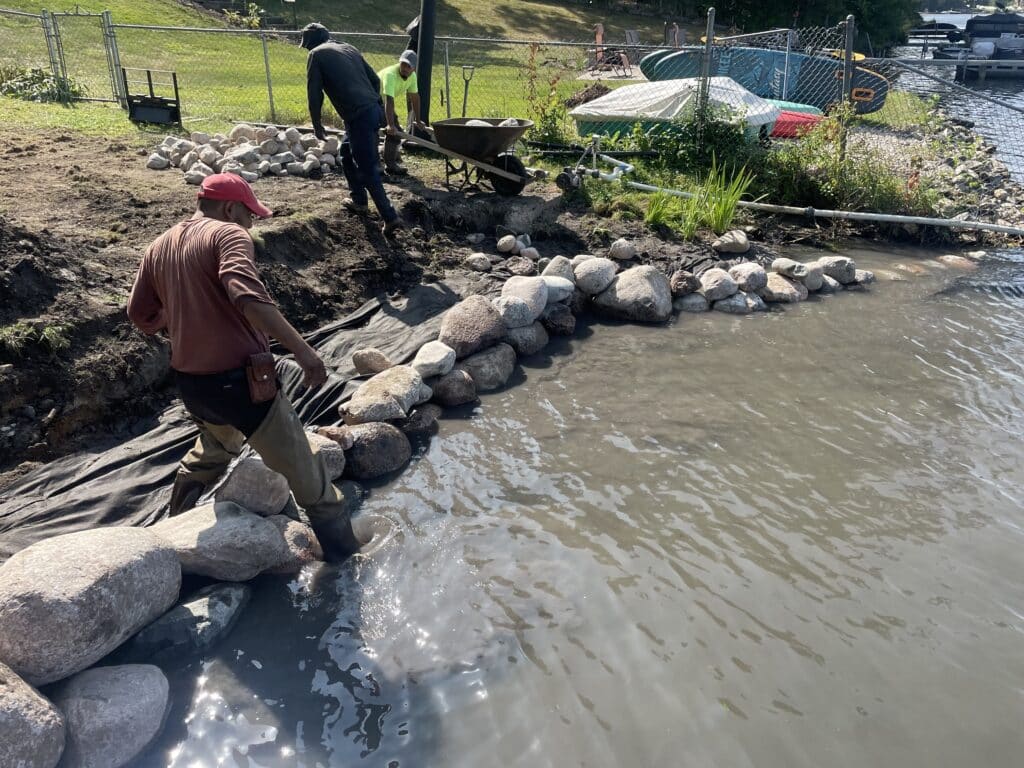
Swale, River, and Creek Restoration Services in Round Lake mean planning projects that actually fix erosion and flooding instead of creating concrete channels that make problems worse. Most stream restoration fails because engineers design for maximum water flow speed. Fast water carves deeper channels and causes worse erosion downstream. Real restoration slows water down, lets it spread out during floods, and reconnects streams to their floodplains. We design systems that work with water instead of fighting it.
Creating Creek and River Restoration Plans
Why Concrete Channels Make Everything Worse
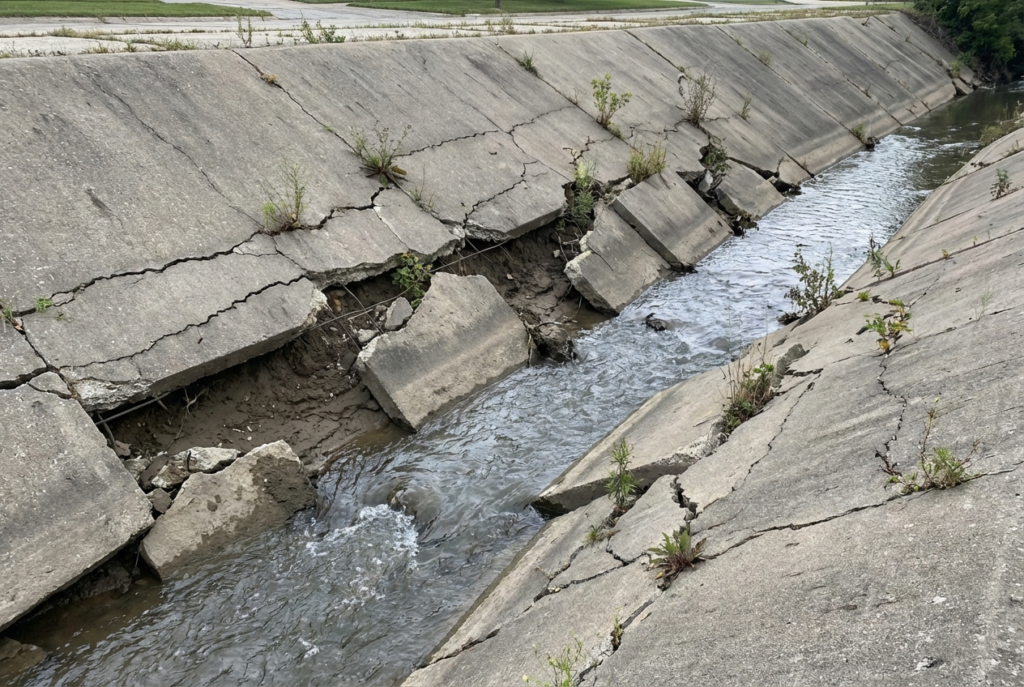
Engineers love concrete channels because water moves through them fast. That’s exactly the problem. Fast water has more energy. More energy means more erosion downstream. You fix flooding in one spot by creating worse flooding somewhere else. Concrete channels also disconnect streams from their floodplains. During storms, water can’t spread out naturally. It stays in the channel, moving faster and faster, carving deeper and deeper. Twenty years later the concrete cracks. Erosion underneath undermines the whole structure. Then you have concrete rubble and a destroyed stream. Natural streams meander, slow down, and spread out during floods. That’s not a design flaw. That’s how they’re supposed to work. Our planning for environmental systems starts by understanding that fighting water always fails eventually.
Understanding Why Streams Erode
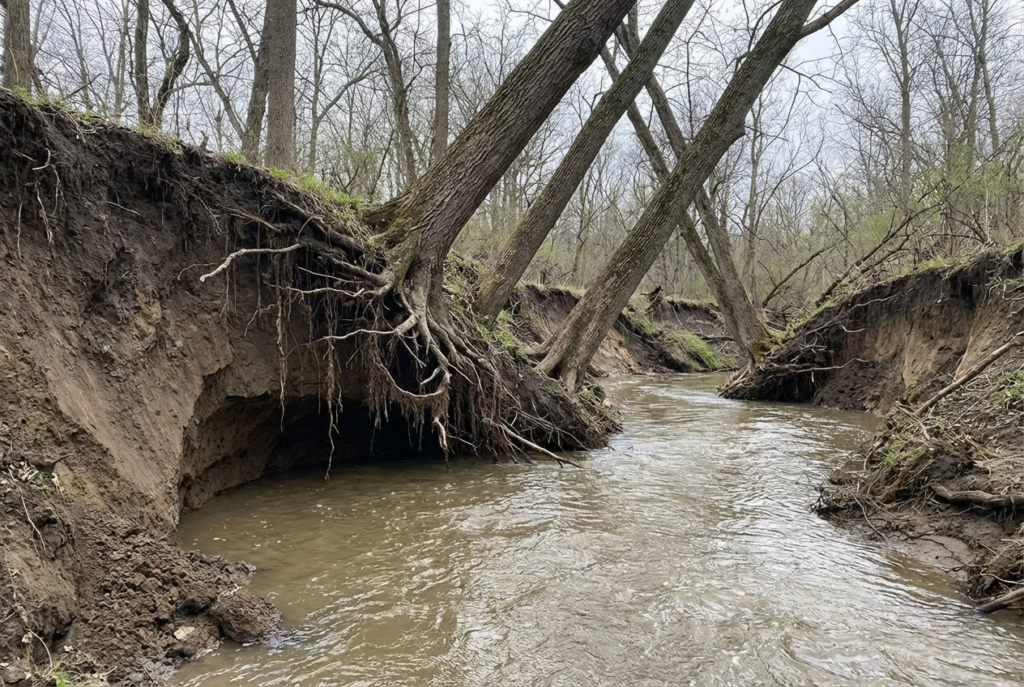
Streams erode because something changed upstream. Maybe development added more pavement. Now rain runs off faster instead of soaking into ground. The stream gets more water in shorter time. Or maybe someone straightened the channel 50 years ago. Straightened streams flow faster. Fast flow picks up more sediment. That sediment erodes banks downstream. Sometimes the problem is culverts or bridges that squeeze water through narrow openings. Water speeds up going through the restriction. Then it slows down on the other side and dumps all the sediment it’s carrying. You can’t fix stream erosion without understanding what changed to cause it. Treating symptoms without fixing causes wastes money. We assess entire watersheds to identify what’s actually driving erosion before designing any restoration work.
Floodplains Are Features Not Problems
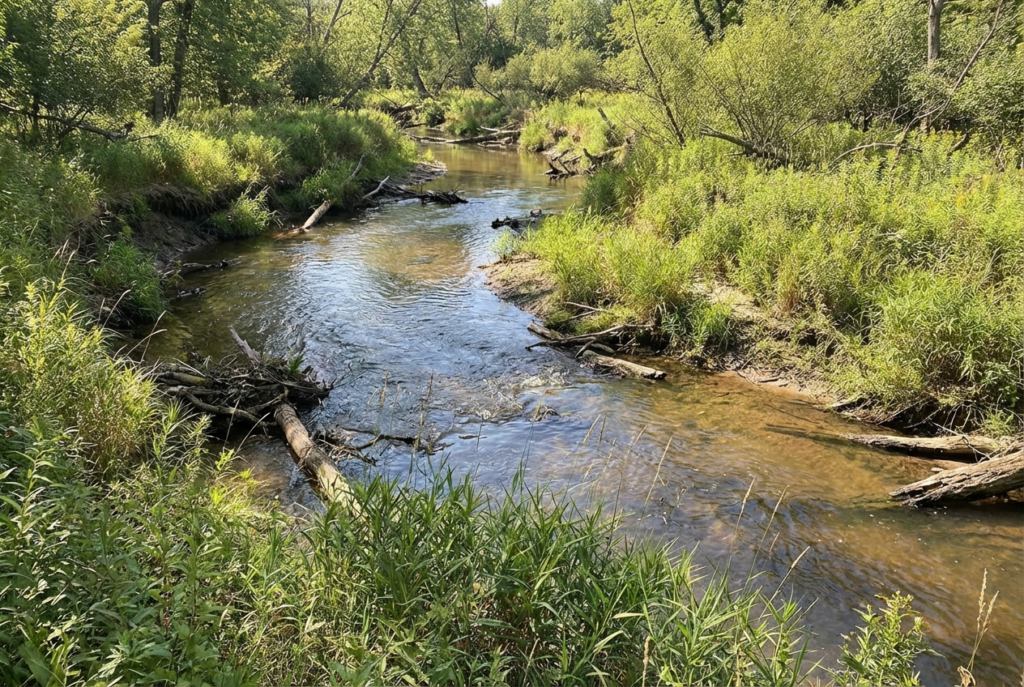
Most people see floodplains as problems needing solutions. Wrong. Floodplains are how streams handle big storms without destroying themselves. During normal flow, water stays in the main channel. During floods, water spreads across the floodplain. This slows the water down. Slow water drops sediment instead of eroding banks. Floodplain vegetation absorbs energy and filters pollutants. When you disconnect streams from floodplains by building high banks or levees, you force all flood water to stay in the channel. Channel can’t handle that much water moving that fast. Erosion accelerates. Downstream flooding gets worse. Good restoration plans reconnect streams to floodplains. Let water spread out naturally during storms. According to the EPA’s stream restoration guidelines, floodplain reconnection is essential for long-term stream stability. Our restoration design services include grading plans that allow controlled floodplain access.
Sizing Channels for Actual Hydrology
Most restoration projects use standard engineering formulas for channel sizing. Those formulas assume steady predictable flow. Lake County streams don’t work that way. They’re dry or barely flowing most of the year. Then huge storms dump inches of rain in hours. The stream goes from trickle to torrent in minutes. Standard formulas size channels too small because they average out these extremes. Small channels get overwhelmed during actual storm events. We design channels based on real Lake County rainfall patterns, not textbook formulas. This means wider shallower channels that look oversized during normal flow but handle storm flows without eroding. Channel dimensions need to account for 2-year, 10-year, and 25-year storm events. All three behave differently and the channel has to handle all of them.
Bioengineering Instead of Riprap
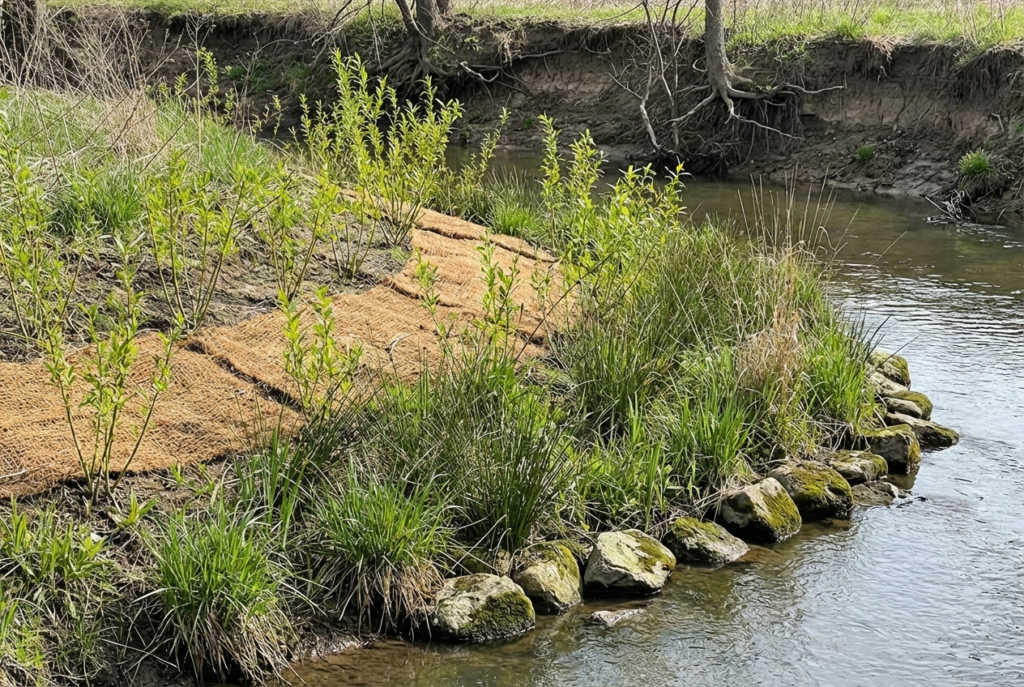
Riprap is expensive and often unnecessary. Dump rock along eroding banks and you’ve protected that specific spot. But you haven’t fixed why erosion is happening. The stream just erodes somewhere else. Rock also creates fast flow and harsh habitat. Nothing lives on riprap slopes. Bioengineering uses plants, logs, and root wads to stabilize banks while creating habitat. Willow stakes root and grow into living bank protection. Log structures slow water and trap sediment. Native plants establish root systems that hold soil better than rock. This approach costs less and creates better stream function. Some situations need rock for immediate protection. But combining rock with vegetation provides both short-term stability and long-term sustainability. Our prescribed fire planning can be coordinated with stream restoration when both are needed on the same property.
Planning for Maintenance Reality
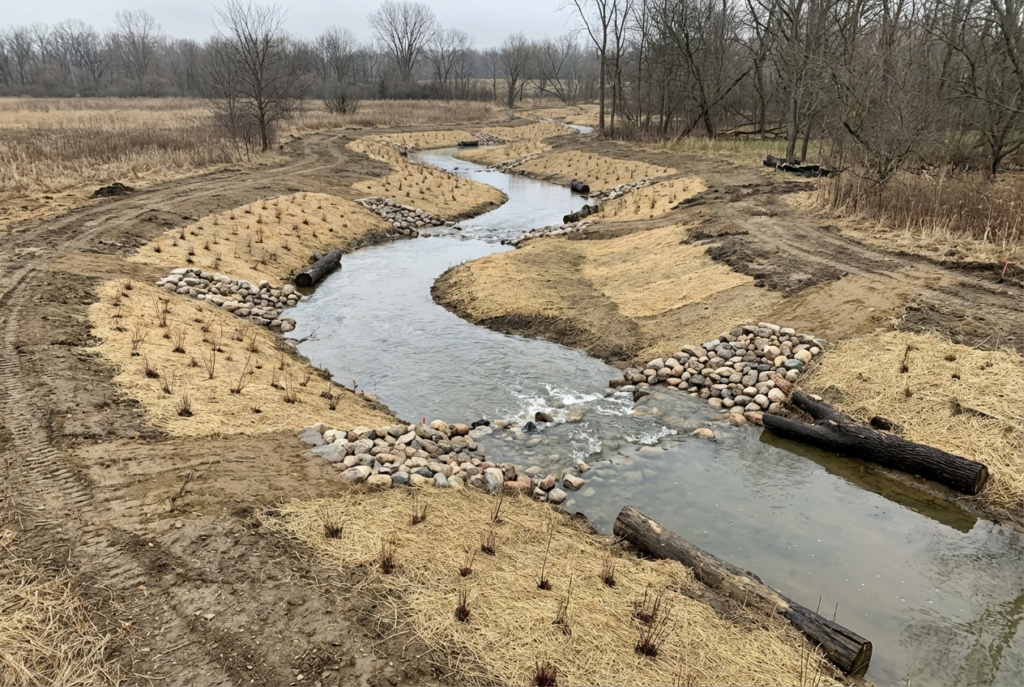
Stream restorations don’t maintain themselves. Vegetation needs time to establish. During the first few years, you need to manage invasives, replant areas that fail, and monitor for unexpected erosion. Log structures shift during big floods and may need adjustment. This ongoing work costs money and requires commitment. Most restoration plans ignore maintenance. They show beautiful finished conditions but no plan for getting there or keeping it functional. We write maintenance plans specifying what work happens each year, who does it, and what it costs. Providing swale, creek and river restoration services in Round Lake means planning for 5 to 10 years of management, not just construction and walking away.
Downstream Neighbors Blame Everything On You
Stream restoration projects become scapegoats for every flooding problem within a mile. You restore 200 feet of creek to reduce erosion. Two years later someone downstream floods during a massive storm. They blame your restoration project even though their flooding has nothing to do with your work. The timeline doesn’t matter. The hydrology doesn’t matter. You touched the creek so obviously you caused their flooding. We’ve watched municipalities face lawsuits over restorations that actually reduced flooding but got blamed anyway because perception beats science in court. Good restoration plans include pre-project documentation of existing conditions, flow monitoring showing what the project actually changed, and clear communication with all downstream property owners before work starts. This prevents liability issues when inevitable floods happen and neighbors look for someone to sue.
Multiple Agencies Will Fight Over Jurisdiction
Creek restoration touches Army Corps wetland jurisdiction, Illinois EPA water quality rules, county stormwater regulations, and sometimes FEMA floodplain management. Each agency has different definitions of what counts as a stream. Each wants different permits. Each has different timelines. Corps says project needs individual permit. EPA says it’s exempt. County says you need additional permits Corps didn’t mention. Getting all agencies to agree takes months and multiple plan revisions. We’ve seen projects delayed two years because agencies couldn’t decide whose rules applied. Or worse – project gets built following Corps permit then EPA shows up afterward saying different rules should have applied. Navigating these contradictions requires knowing which agency actually has authority and how to satisfy everyone without getting stuck in regulatory limbo.
Plan Your Creek Restoration
We can assess your stream and create restoration plans that handle regulatory complexity while preventing downstream liability issues.
Call (847) 546-7353 for creek and river restoration planning in Lake County.